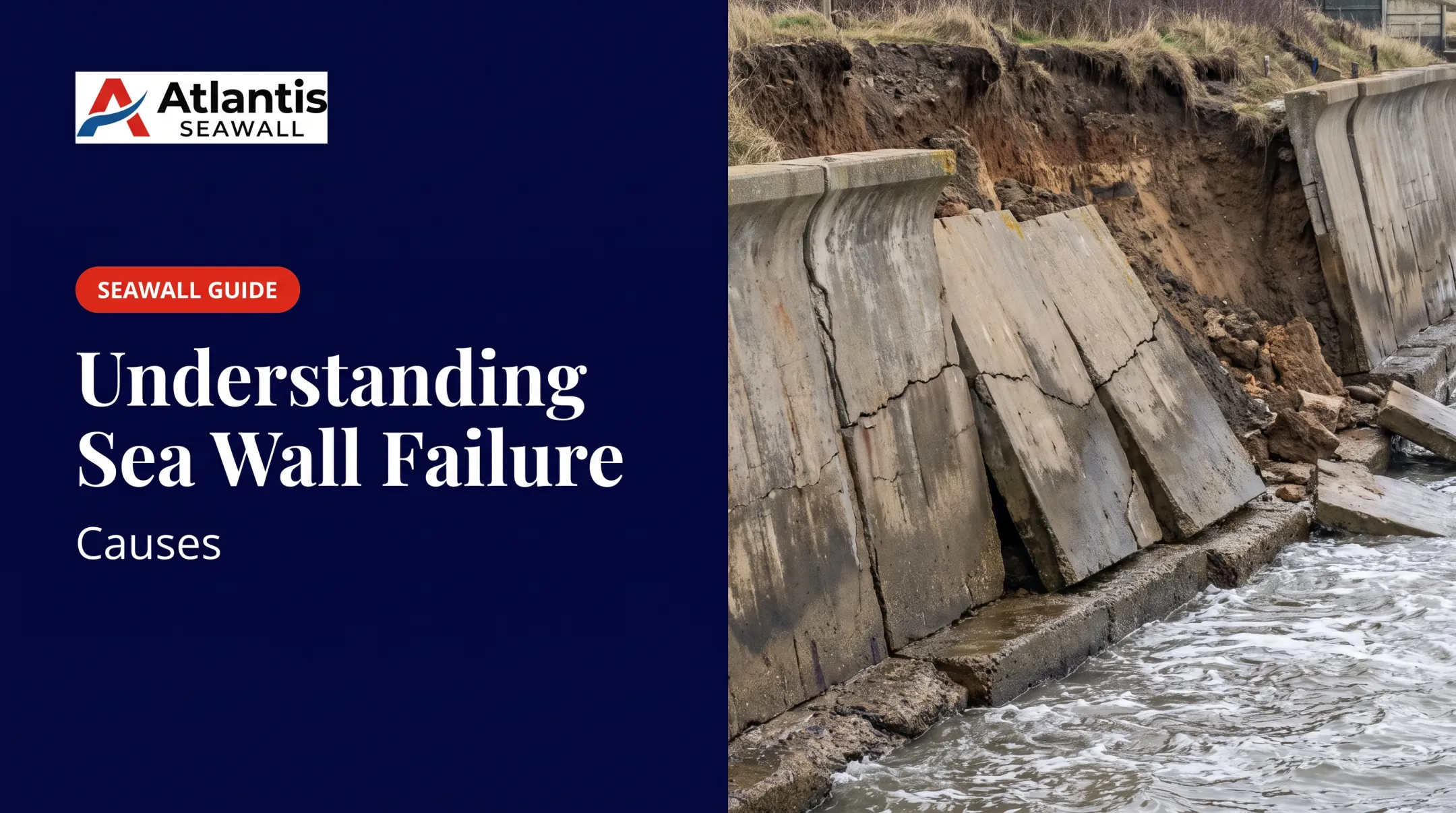
Owners, contractors, marinas, and public agencies face the same risks: lost backfill, wall rotation, property damage, unsafe working conditions, and faster shoreline erosion. Even a 360-foot steel anchored bulkhead at a Charleston, South Carolina terminal failed suddenly, according to an ASCE forensic case study.
This article covers how these walls carry load, why they fail, what to watch for, how to prevent problems, and what to do once you suspect one.
Key Takeaways
- An anchored bulkhead is a system: wall, wale, tie rods, anchor, soil, and drainage.
- Leaning, settlement, sinkholes, and soil loss can signal a developing failure.
- Evaluate water pressure, scour, corrosion, loads, and defects together, not alone.
- Have an engineer assess significant movement before excavating, tightening, or replacing anything.
What an Anchored Bulkhead Is and How It Carries Load
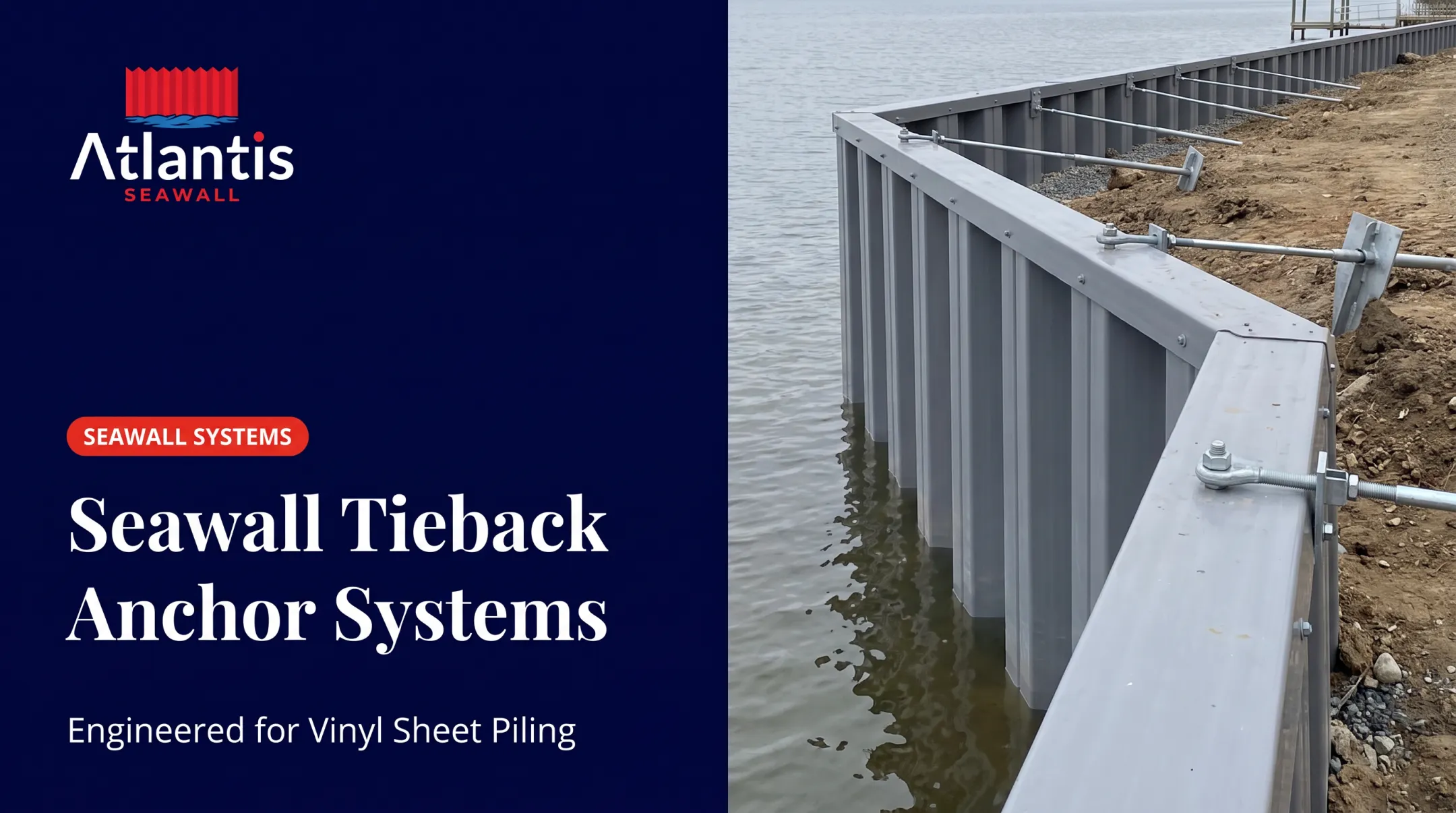
An anchored bulkhead is a sheet-pile or similar retaining wall supported near its top by tie rods. The rods connect to anchors, deadmen, anchor piles, or another anchorage system behind the wall.
The Load Path
Force moves through the system in a chain:
- Retained soil and water push laterally on the wall.
- Sheet piles and the wale collect that force and pass it to the tie rods.
- The anchor mobilizes resistance in the soil behind the wall.
- The embedded lower portion of the wall relies on passive soil resistance.
A cantilever wall depends on embedment alone. An anchored wall adds anchor support, and a USACE coastal manual notes that wales distribute lateral loads to the anchors. Use it for terminology, not for current design calculations.

What the Design Must Account For
- Wall height and retained and water-side levels
- Soil properties and embedment depth
- Surcharge loads behind the wall
- Corrosion exposure
- Wave or current action
- Changes at the toe, such as dredging or scour
Free-earth-support and fixed-earth-support methods are analytical models for wall behavior and embedment. They do not replace a site-specific design review.
Common Causes of Anchored Bulkhead Failure
Rarely does one mechanism act alone. Published evidence on how often each cause occurs is thin, so diagnosis needs site evidence, not assumptions.
Connection and Tie-Rod Deterioration
Tie rods, wales, bolts, and plates can corrode, fracture, loosen, or pull through. Risk rises where hardware stays wet, sits in the splash zone, or lacks corrosion protection.
Steel sheet piles lose wall thickness too. WSDOT's corrosion design table gives marine-condition design loss rates from 0.001 in./year for undisturbed embedded steel to 0.006 in./year in the splash zone. These are design values, not universal rates, and they do not apply to tie rods.
Anchor-System Failure
- Deadman rotation, sliding, or pullout
- Anchors too small, too shallow, or too widely spaced
- Poor soil confinement
- Placement too close to the retained-side failure zone
Toe and Embedment Problems
Insufficient embedment, weak lower soils, scour, dredging, or toe erosion can reduce passive resistance. The wall then rotates or slides.
Water Pressure
Pressure behind the wall rises when:
- Drainage is blocked
- Utilities leak
- Groundwater rises
- Water levels change rapidly
- Water is trapped behind the wall
Seepage can also carry soil out through joints or defects.
Loads and Site Changes
Common overload sources include:
- Vehicles, buildings, and stored materials
- Cranes and new docks
- Grading changes
- Ice, waves, and currents
- Nearby construction
Any of these can push a wall past its design capacity.
Construction and Material Defects
- Damaged or incompletely engaged interlocks
- Poor alignment
- Unsuitable or carelessly placed backfill
- Weak connection details
- Deterioration missed during maintenance
Warning Signs and How to Diagnose a Failing Bulkhead
Signs on the Wall
- Progressive leaning, bowing, or bulging
- Displaced sheets or open interlocks
- Separated caps or broken wales
- Unusual vibration
- Movement that increases after storms or water-level changes
A wavy or bowed wall top may point to defective tieback rods or deadmen, according to New York Sea Grant. It is a warning, not proof of which component failed.
Signs in the Ground
- Settlement or depressions behind the wall
- Sinkholes and tension cracks
- Tilted fences or slabs, damaged paving
- Exposed utilities
- Soil disappearing through joints or into the water
Sea Grant guidance describes sinkholes forming when scour removes fill from behind a bulkhead. Sonar and diver inspection can reveal where material has been lost.
Signs at the Anchor
- Sagging or displaced tie rods
- Cracked or shifted anchor blocks
- Pulled plates or missing hardware
- Severe corrosion
- Soil movement along the anchor line
Muddy discharge, cloudy water, and recurring wet spots are not cosmetic. They may mean internal erosion or drainage failure.
A Practical Inspection Sequence
- Record movement and water levels.
- Photograph cracks and exposed components.
- Compare conditions with older records.
- Inspect accessible connections without disturbing them.
- Get professional measurements if movement is suspected.
Do not excavate behind the wall, loosen tie rods, load the area, or enter unstable zones just to investigate.
For rapid movement, major settlement, sudden soil loss, exposed utilities, or threats to people and structures, call a qualified professional and the appropriate local emergency or permitting authority.

How to Prevent Anchored Bulkhead Failures
Investigate Before You Design
Establish site conditions before choosing materials:
- Soil layers and groundwater
- Retained and dredged elevations
- Water levels and surcharge loads
- Scour potential and corrosion exposure
Design the Whole System Together
Sheet-pile section, embedment, wale, tie rods, anchor type and spacing, connections, drainage, backfill, toe protection, and construction sequence all interact.
Federal synthetic-sheet-piling specification UFGS 31 41 16.16 treats anchorage type, size, and location as design items. It also calls for free-draining backfill and weep holes where indicated.
Control Water
- Use suitable backfill and filters
- Install weep or drain systems where appropriate
- Control grading and prevent utility leaks
- Check that outlets stay clear
Build It to Plan
- Verify pile alignment and embedment
- Protect interlocks during driving
- Confirm anchor locations and elevations
- Connect or tension tie rods per engineered requirements
- Document as-built conditions
Atlantis Seawall vinyl panels use an interlock design that permanently pairs sections. The 50-year limited transferable warranty applies under normal conditions, approved engineering design and criteria, and proper use; faulty installation is excluded.
Maintain and Review Changes
Inspect the wall on a set schedule:
- Monitor corrosion
- Check anchor and wale connections
- Track movement
- Clear drainage paths
Reassess after storms, dredging, flooding, or nearby construction. Have an engineer review any plan to add structures, vehicles, fill, docks, or landscaping on the retained side.
Verify applicable building code (the 2024 IBC routes retaining walls to Section 1807.2, though not as a marine-specific rule), local permits, manufacturer installation guidance, and project engineering standards. Work in navigable waters may trigger Section 10 or Section 404 review.

What to Do After Failure Is Suspected
Reduce Risk First
- Keep people and equipment away from unstable areas
- Stop activities that add load or vibration
- Protect exposed utilities only if it is safe
- Document conditions without disturbing the wall or anchors
Get a Professional Assessment
Bring in a qualified engineer before any repair work starts. The assessment should cover:
- Original plans and site history
- Water and soil conditions
- Movement monitoring data
- Exposed components and drainage
- Geotechnical or structural analysis as needed
Repair, Partial Replacement, or Full Replacement
The choice depends on:
- Extent of movement
- Anchor system condition
- Remaining wall capacity
- Access and future loads
- Environmental exposure
- Whether the root cause can be stabilized
Adding new facing or tightening a visible tie rod can hide, rather than fix, inadequate embedment, anchor pullout, drainage pressure, scour, or soil loss.
Where Vinyl Sheet Piling Fits
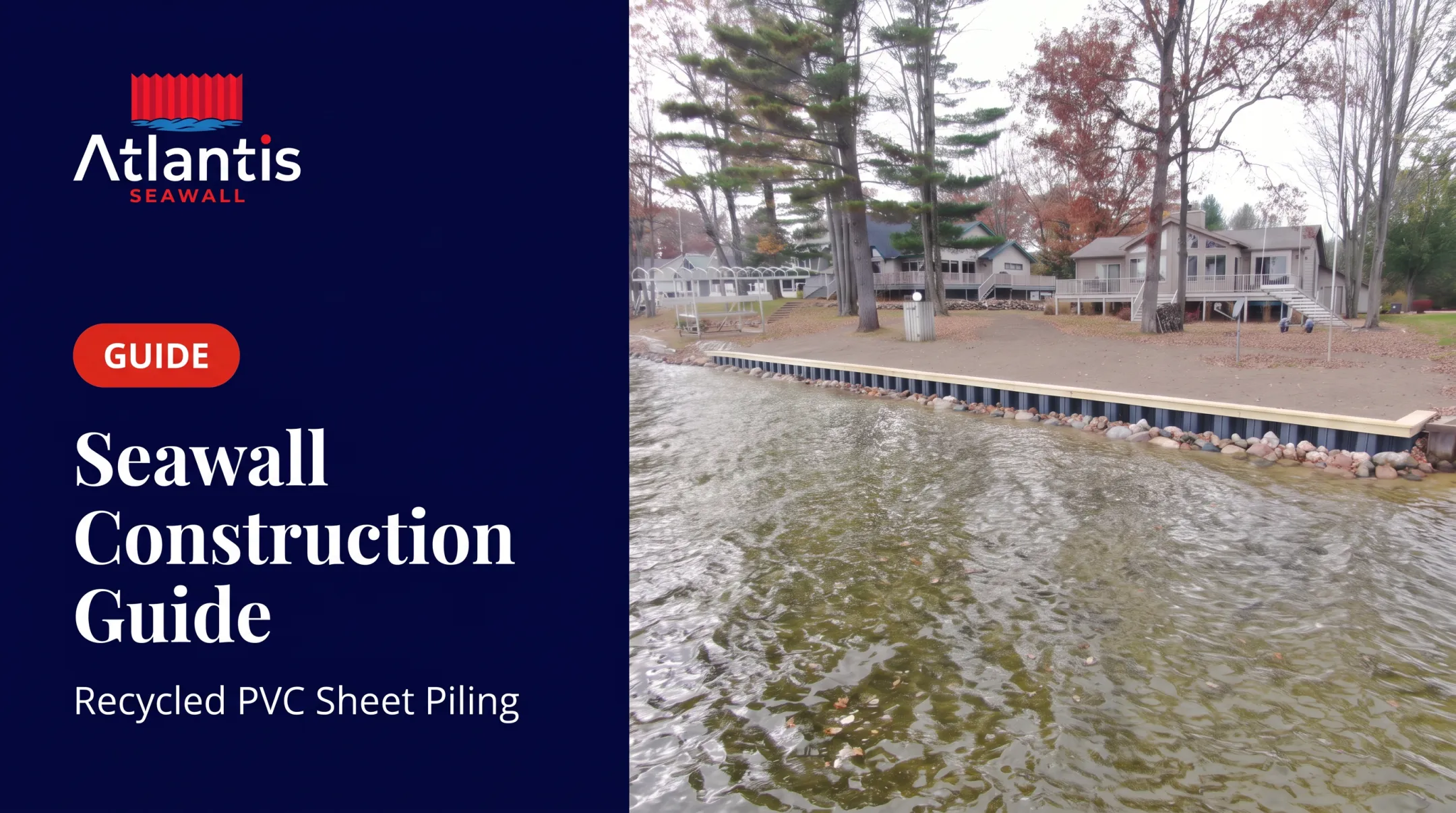
When partial or full replacement is required, vinyl sheet piling is one option for new bulkhead facing. Atlantis Seawall manufactures USA-made, recycled PVC vinyl sheet piling in Cleveland, Ohio. Standard lengths run 8 to 30 feet, custom lengths come in 1-foot increments, and shipping to contractors and waterfront projects runs coast to coast, typically 5 to 7 days.
The panel, anchorage, embedment, and installation method still have to match site-specific engineering conditions.
Frequently Asked Questions
What is an anchored retaining wall?
It is a retaining wall supported by anchors or tiebacks installed behind it. They transfer lateral earth and water pressure into surrounding soil or another designed anchorage system.
What causes an anchored bulkhead to fail?
Common contributors include tie-rod or anchor deterioration, inadequate embedment, drainage pressure, scour, weak soils, surcharge loads, construction defects, and unplanned site changes. Site evidence should identify which applies.
How can you tell if an anchored bulkhead is failing?
Watch for leaning or bowing, settlement, cracks, sinkholes, soil loss, corrosion, damaged connections, seepage, and displaced anchor components. Any of these warrants professional evaluation.
Can an anchored bulkhead be repaired?
It depends on the failure mechanism, movement, remaining capacity, anchor condition, access, and site constraints. Get an engineered assessment before choosing a repair.
Are vinyl sheet piles suitable for anchored bulkheads?
They can be for some shoreline and retaining applications. Federal specification language notes PVC walls are typically more economical as anchored systems, but panel capacity, embedment, anchorage, soil, water, loading, and local requirements must be evaluated per project.
When should a professional inspect an anchored bulkhead?
After visible movement, soil loss, storm damage, flooding, scour, dredging, major nearby construction, or corrosion. Call immediately when people, structures, or utilities may be at risk.