Introduction
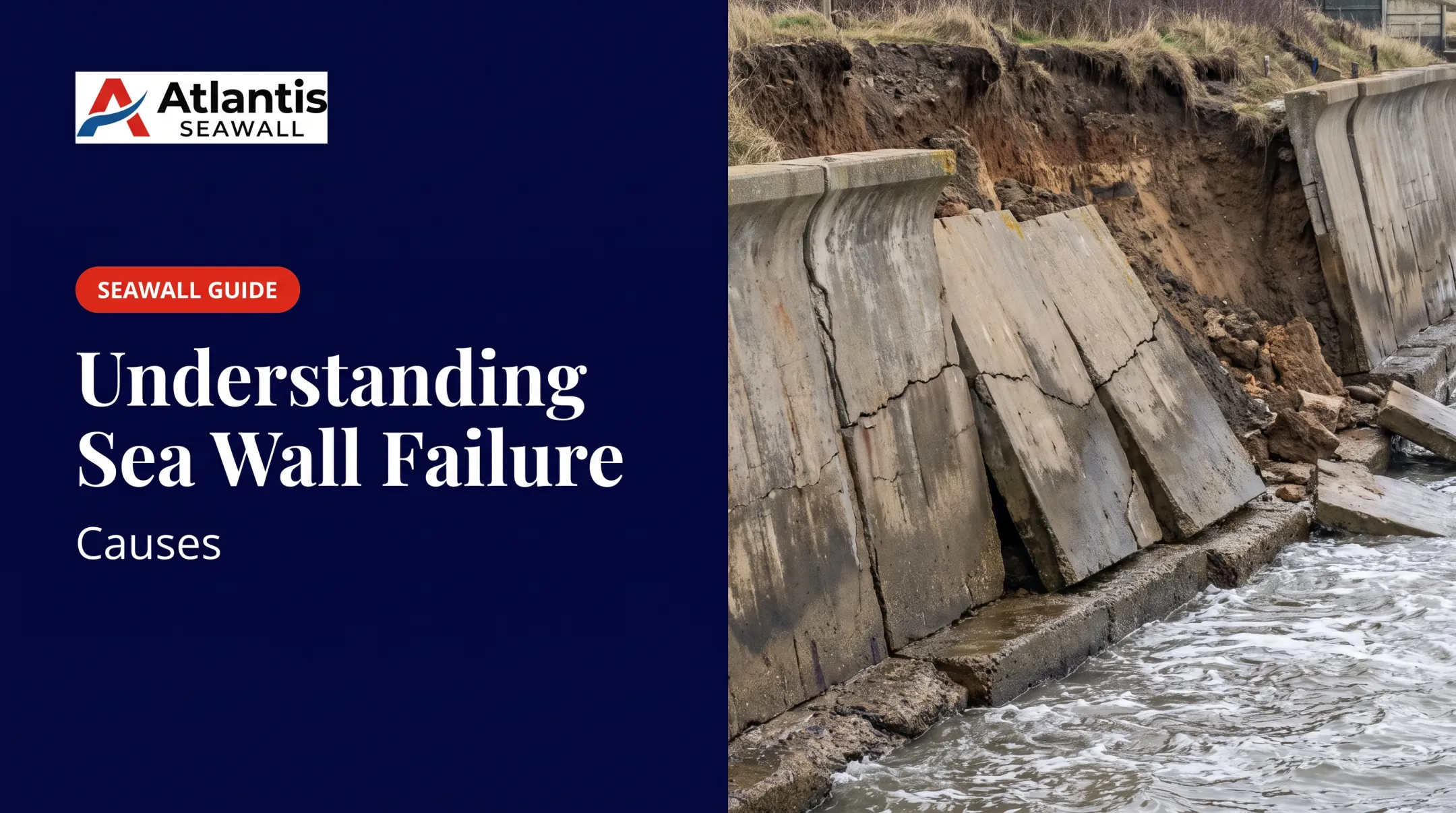
A seawall can look fine from the dock while it slowly loses the fight underneath. Lateral soil pressure, saturated backfill, toe scour, waves, and surcharge loads all push the wall toward the water, often a fraction of an inch at a time.
A seawall tieback anchor system is a structural support that connects the wall to a secure anchor zone inland, so the load goes into the ground instead of the wall alone. This article covers how tiebacks work, the main system types, warning signs, design considerations, and what to ask before approving a project.
Key Takeaways
- Tiebacks move lateral loads from the wall into stable ground behind it.
- Common options: deadmen, helical, driven or mechanical, and grouted anchors.
- Anchor type, spacing, and capacity come from site-specific engineering, not a universal rule.
- Drainage, wall condition, corrosion protection, and permits matter as much as the anchor.
What Are Seawall Tieback Anchor Systems and How Do They Work?
What a Tieback System Includes
Most systems share the same load path. The wall takes soil, water, and wave loads. A waler (a horizontal structural member) spreads those loads along the wall. Tie rods or tendons carry the tension inland to an anchor, and the soil around that anchor closes the loop.

Typical components:
- Wall connection, brackets, and bearing plates
- Waler or other load-distribution member
- Tie rod or tendon
- Inland anchor point
- Corrosion-protection hardware
The distinction matters. The rod or tendon carries tension. The deadman, helical anchor, pile, or ground anchor is what develops resistance in the soil or rock.
How Tiebacks Stabilize a Seawall
Lateral earth pressure, water pressure from differential head, surcharge, and waves all push the wall waterward. Per USACE guidance, wave impacts can raise backfill pressure and required anchor forces, and toe scour can reduce effective embedment.
Each anchor type resists differently:
- Deadmen: buried mass plus passive soil resistance
- Helical anchors: bearing on helix plates
- Grouted anchors: bond between grout and ground along a bonded length
- Mechanical anchors: a driven plate set in place and proof-loaded
In every case the anchor must sit beyond the active failure zone, or full resistance can't be assumed.
Tiebacks Compared With Cantilevered Seawalls
A cantilevered wall relies on soil interaction and embedment alone. An anchored wall adds one or more devices to hold it back.
| Factor | Cantilevered | Anchored |
|---|---|---|
| Support | Embedment and wall stiffness | Embedment plus landward anchors |
| Property space | No tieback zone needed | Needs room inland |
| Excavation | Minimal | Depends on anchor type |
| Typical use | Lower exposed heights | Greater heights or heavier loads |
USACE notes anchored bulkheads are often used where greater heights are necessary. No universal height trigger exists, so the engineer decides.
Types of Seawall Tieback Systems
Concrete Deadman Anchors
A buried concrete block or plate, linked by a tie rod, resists movement through its weight and the passive resistance of surrounding soil. Deadmen suit new construction, when the trench is open anyway. Retrofitting one behind an existing wall can mean heavy excavation, equipment access, and landscaping restoration.
Helical Tieback Anchors
A helical anchor is a steel shaft with one or more helical plates, rotated into the ground and connected to the wall or waler. It often suits retrofits, tight access, and sites that need less excavation.
Verify before relying on one:
- Confirm installation torque records
- Review the soil profile
- Check corrosion protection
- Require load testing
The CHANCE design manual lists marine bulkheads among helical tieback uses, but its torque-capacity relationships are manufacturer- and site-specific.
Driven, Mechanical, and Grouted Anchors
- Driven anchor piles are pushed or hammered into place.
- Mechanical anchors use a driven plate that is rotated or set with a pull rod, then tested to establish holding capacity.
- Grouted ground anchors transfer tendon tension through grout in a bonded length, beyond the critical failure surface.
These can work in variable soils, active waterfronts, short construction windows, or where a deadman is impractical, subject to engineering and permitting.
How to Compare Tieback Types
| Factor | Deadman | Helical | Driven/Mechanical | Grouted |
|---|---|---|---|---|
| Installation | Excavate and bury | Rotate in | Drive and set | Drill, tendon, grout |
| Excavation | High | Low | Low | Moderate (drilling) |
| Retrofit fit | Difficult | Often good | Possible | Possible |
| Verification | Engineer-specified | Torque and load tests | Proof loading | Proof/performance tests |
Soil or rock compatibility, access, disruption, and corrosion exposure vary by site, so confirm each with the engineer.
Permanent and Temporary Tieback Arrangements
Some tiebacks are permanent structural elements; others support temporary construction stages. General FHWA ground-anchor guidance describes permanent systems as typically 75 to 100 years of service life and temporary anchors as commonly 18 to 36 months. Those are general ground-anchor figures, not seawall warranties.

Permanent installs need design life, corrosion allowance, protective coatings, and inspection access spelled out in the engineer's specifications.
When Does a Seawall Need Tiebacks?
Tiebacks in New Seawall Construction
An engineer may specify tiebacks when embedment and soil resistance alone fall short. Common triggers:
- Tall exposed wall height
- Heavy retained soil loads
- Weak or variable soils
- Limited embedment
- Waves or currents
- Nearby structures
- Added surface or vessel loads
Warning Signs on an Existing Seawall
Call a professional if you see:
- Leaning, bowing, or wavy panels
- Widening cracks or separated sections
- Cap rotation or damaged walers
- Exposed or corroded rods
- Sinkholes, settlement, or backfill loss
- Sediment or water moving through joints
A Florida municipal seawall manual (Holmes Beach) lists many of these, and mentions traditional or helical tiebacks as possible supplemental support in cracked areas. That is a local example, not proof every damaged wall can be retrofitted.
When Tiebacks May Not Be the Right Solution
Tiebacks can fail to solve the problem when:
- The wall is too deteriorated to carry connection loads
- There's no landward room beyond the active zone
- Utilities or property lines conflict
- Soil is unstable
- Environmental rules restrict work
Tiebacks also don't replace toe embedment. Scour can undermine it. Depending on findings, a better answer may include:
- Drainage work
- A different anchoring method
- Partial replacement
- A cantilevered design
- Full replacement
Seawall Tieback Design and Installation Considerations
Site Investigation and Load Assessment
Engineers evaluate the conditions that drive anchor design:
- Wall geometry, height, and embedment
- Retained soil, groundwater, and water levels
- Soil or rock conditions and erosion
- Adjacent structures and surcharges
- Waves, currents, and mooring loads where relevant
That work sets required anchor capacity, length, embedment, inclination, spacing, connection forces, and safety factors. Useful US references include USACE EM 1110-2-2504 and EM 1110-2-1614, FHWA GEC-4, and PTI DC35.1-14. Some are older editions, so confirm governing codes with the engineer.
Wall Connections and Load Distribution
Rods, tendons, brackets, plates, walers, and caps spread tension into the wall. Concentrated forces can overstress a panel or cap if connection details aren't engineered for that wall material. An aging or weakened wall face may need reinforcement before new tiebacks can attach.
Installation Sequence and Verification
A typical sequence:
- Site survey and utility review
- Engineering and permitting
- Access preparation
- Anchor installation
- Wall connection
- Controlled stressing or loading, where specified
- Testing and documentation
- Restoration
Acceptance methods depend on anchor type. For grouted anchors, FHWA describes proof tests to 1.33 times design load with a 10-minute hold and creep limits. Those criteria aren't general rules for deadmen, driven plates, or helical anchors, which use torque records, pull tests, or proof loading as specified.

Drainage, Corrosion, and Construction Safety
Tiebacks do not replace drainage. USACE recommends regularly spaced weep holes in tight walls, backed by a filter that prevents backfill loss. Relief measures reduce hydrostatic pressure.
For corrosion, plan for:
- Corrosion-resistant materials and coatings
- Encapsulation and sacrificial allowances
- Isolation of dissimilar metals
- Protection in tidal and splash zones, where unprotected steel corrodes quickly
Excavation safety matters too. Section 10 and Section 404 federal permits may apply, along with state and local approvals. Not every repair triggers 404, so confirm locally.
Long-Term Performance and Material Selection
Matching the Anchor to the Seawall
Anchors, panels, cap, waler, hardware, drainage, soil, and embedment work as one system. Whether tiebacks can be added to a given wall depends on:
- Corrosion on existing components
- Interlock condition
- Panel stiffness
- Existing wall movement
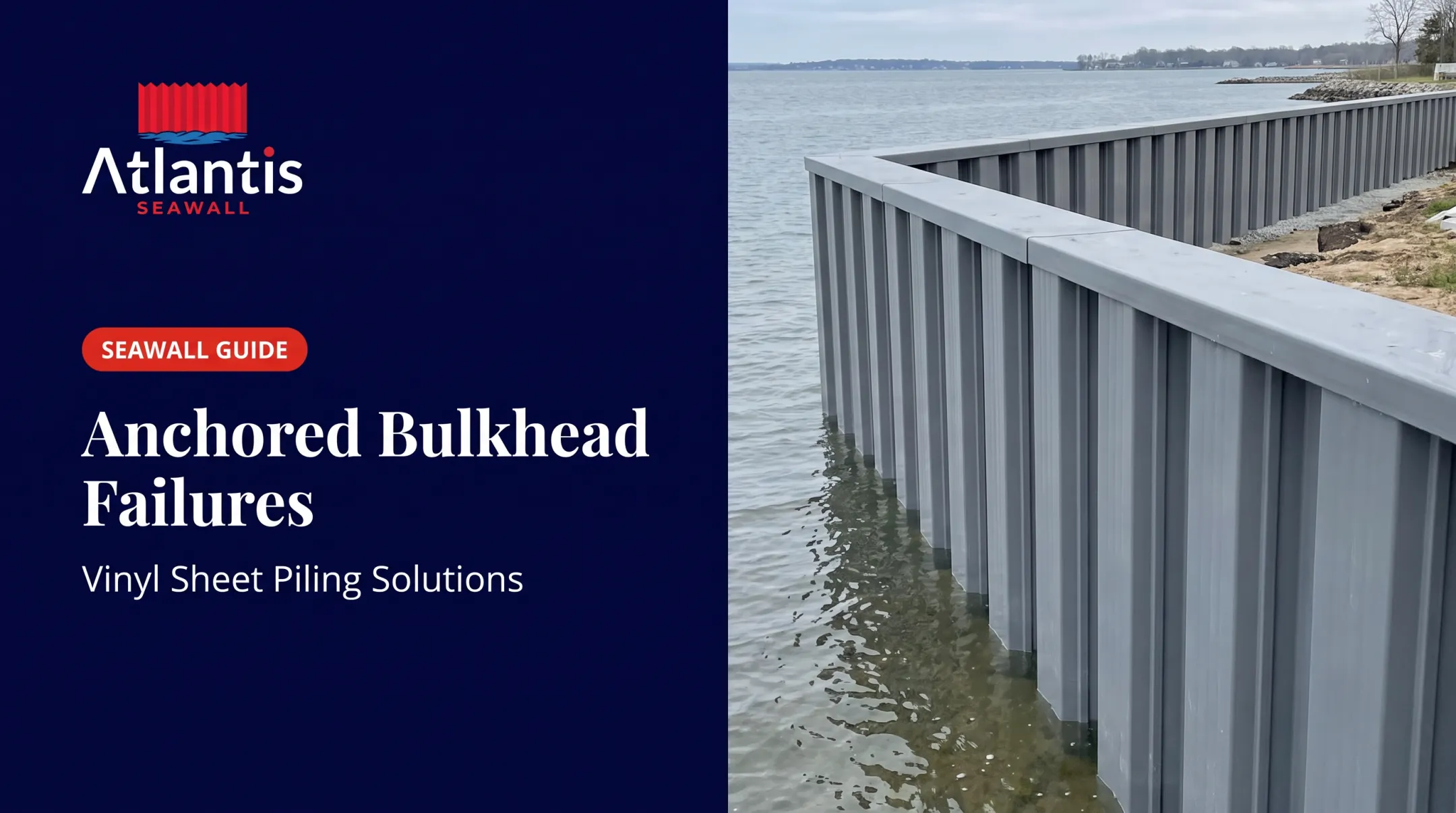
How Vinyl Sheet Piling Fits Into an Anchored System
Atlantis Seawall manufactures recycled PVC vinyl sheet piling in Cleveland, Ohio, and ships nationwide. These panels can serve as the wall-facing material in a system with engineer-designed tiebacks, but they do not replace engineered anchors.
Relevant product details:
- 12-inch Z-channel panels with permanent interlocks
- Lightweight panels for easier handling
- Standard lengths of 8 to 30 feet, with custom lengths in 1-foot increments
- 50-year limited transferable warranty
Federal specification UFGS 31 41 16.16 for synthetic sheet piling requires drawings to identify walers and tie rods or soil anchors, including size, spacing, and location. Confirm compatibility, connection details, and structural requirements for each project.
Questions to Ask Before Approving a Tieback Project
Ask your engineer or contractor for:
- Design basis and soil information
- Anchor capacity and layout
- Wall connection details
- Testing plan
- Corrosion protection and drainage approach
- Permit responsibilities
- Access requirements
- Maintenance expectations and warranty documents
Frequently Asked Questions
What are seawall tiebacks?
Tiebacks are rods, tendons, or other tension members connecting a seawall to an inland anchor. They resist lateral soil and water pressure.
What are the different types of seawall tiebacks?
Common options are concrete deadmen, helical anchors, driven or mechanical anchors, and grouted ground anchors. Selection depends on soil, access, wall condition, and design loads.
Are seawall tiebacks permanent?
Many are designed as permanent supports, but that depends on design life, corrosion protection, materials, and inspection. Some only support temporary construction.
Can seawall tiebacks be added to an existing seawall?
Often, especially with limited-excavation systems. The wall, soil, access, utilities, and wall-to-anchor connection must be evaluated first.
What signs suggest a seawall tieback system is failing?
Leaning, bowing, cracks, cap or waler movement, exposed or corroded rods, backfill loss, sinkholes, settlement, and new water behind the wall.
How are seawall tiebacks designed?
Engineers use wall geometry, soil and groundwater, water forces, surcharges, access limits, and corrosion exposure to set capacity, spacing, connections, and testing for the specific site.