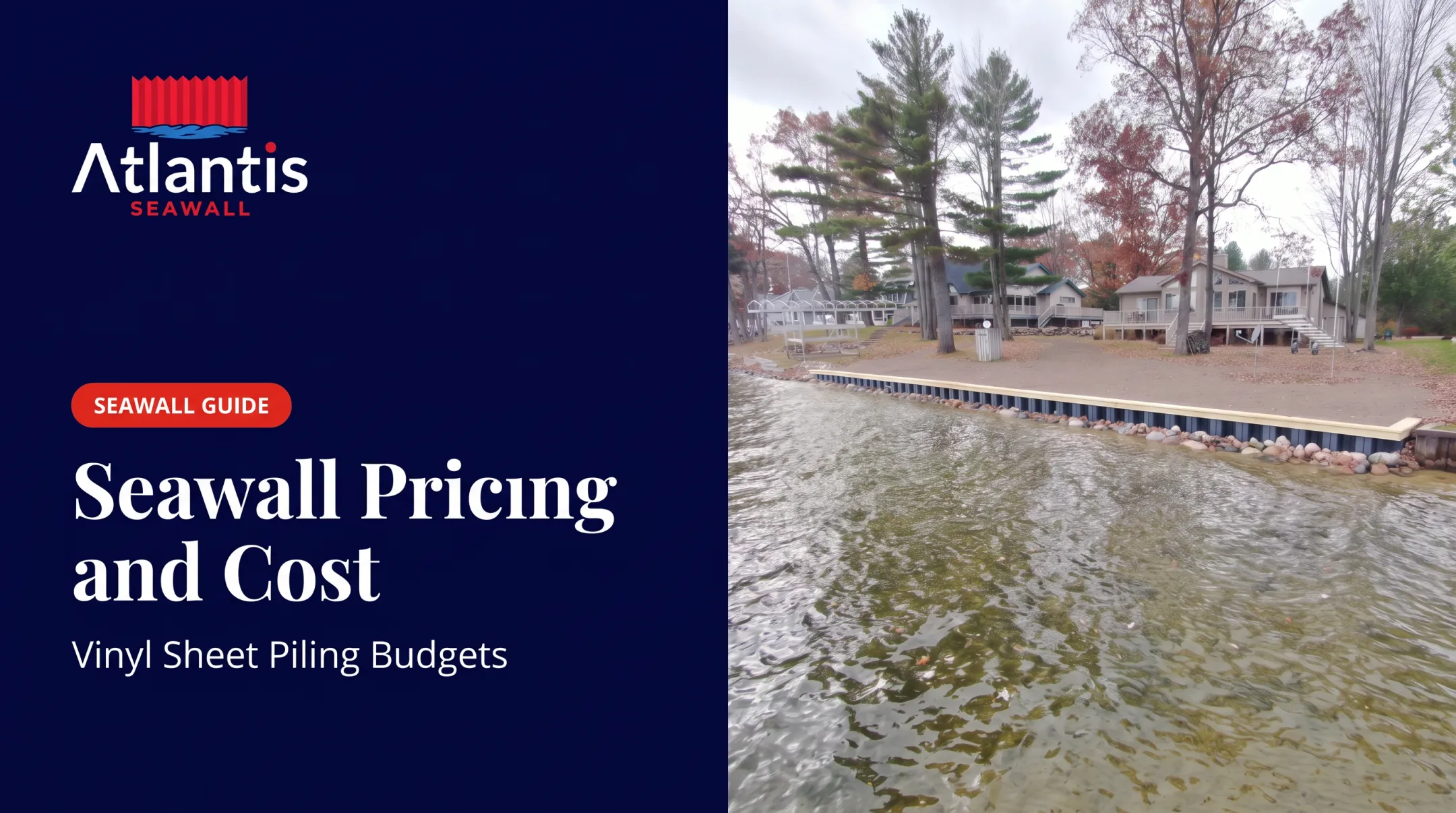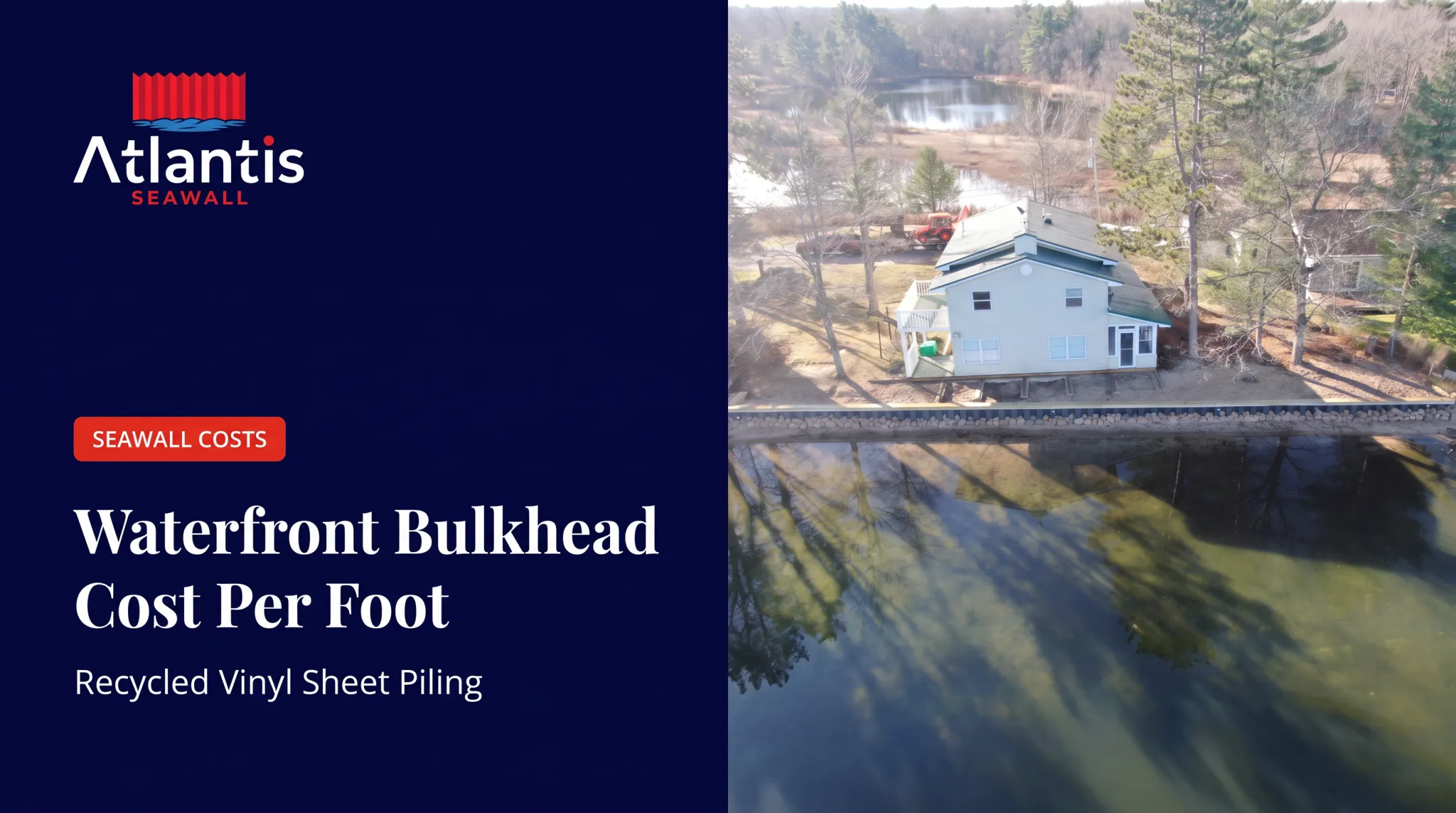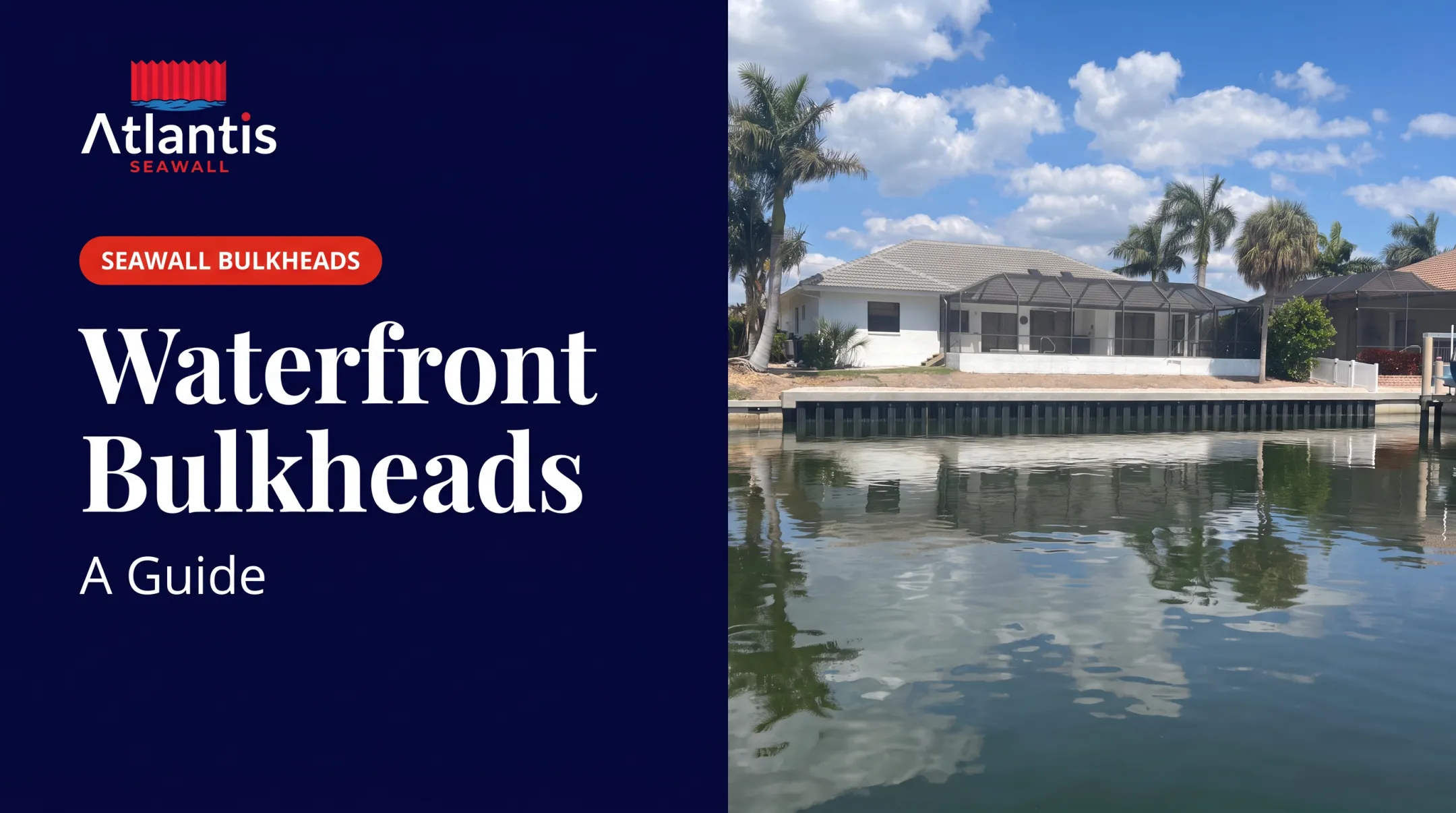

No single national price exists for a shoreline replacement. Cost swings with linear footage, wall height, material, soil and water conditions, site access, labor, permits, and related structural work. A quote that looks cheap can leave out the parts that matter most.
Below: total project pricing, cost per linear foot, materials, site preparation, repair-versus-replacement decisions, and how to compare contractor estimates.
Key Takeaways
- Residential shoreline projects typically run $15,000-$60,000, with a broad $100-$800 per linear foot estimate.
- Length, height, material, access, soil, water exposure, permits, and anchoring drive the price.
- Basement bulkhead doors are a separate, far smaller project.
- The lowest bid can cost more if it omits drainage, tiebacks, removal, restoration, or engineering.
How Much Does Bulkhead Replacement Cost in 2026?
HomeAdvisor's seawall estimator gives $100-$800 per linear foot and $15,000-$60,000 for a typical residential project, with a $25,000 average. Treat that as a screening figure, not a bid. It doesn't spell out what's included.

What the numbers do and don't tell you
- Material-only pricing: No reliable current national price per foot for sheet piling is published. One vinyl supplier said in 2024 that market volatility kept it from listing prices.
- Installed pricing: The $100-$800 range blends labor, equipment, and materials with unclear inclusions.
- Large projects: A 2025 engineer's estimate for a ~225-foot harbor wall in Pass Christian, Mississippi, came to about $2.86 million, covering concrete sheeting, anchors, debris removal, fill, paving, design, inspection, and contingency.
Before you compare quotes, confirm whether each figure covers:
- Engineering and permits
- Equipment, demolition, and disposal
- Tiebacks, caps, and drainage
- Grading and restoration
Basement bulkhead doors are a different project
A basement bulkhead is an exterior cellar entrance. Forbes Home reports roughly $900-$1,750 to replace one. Use that data only if a cellar door is what you're pricing.
Project tiers
- Basic: A short, accessible wall with stable soil, no dock interference, and minimal restoration tends to land near the low end.
- Standard residential: Sheet piling, installation, anchoring, a cap, old-wall removal, and restoration usually land in the middle of published ranges.
- Complex: Taller walls, poor access, heavy equipment, severe erosion, docks in the way, engineering, permitting, or structural repairs push costs well above typical ranges.
Key Cost Factors and Project Cost Breakdown
The budget covers more than visible wall panels. Materials, preparation, installation, regulatory work, and restoration all count.
Bulkhead Length, Height, and Structural Requirements
Linear footage multiplies material, labor, mobilization, and equipment time. Height matters even more. Taller walls retain more soil and water pressure, so they need heavier sheet profiles and stronger anchoring.
The USACE sheet-pile design manual lists wall elevation, soil profile, groundwater and seepage, water levels, and surcharge loads as design inputs. That's why site-specific design matters.
Components that add cost when the site requires them:
- Tiebacks and deadmen
- Walers (wales)
- Caps and reinforcement
- Drainage
- Scour protection at the toe
A short lakefront wall with easy truck access is a different job from a long wall along a canal, marina, river, or exposed shoreline. The second needs more equipment, more engineering, and more contingency.
Material Selection and Build Quality
HomeAdvisor's published per-foot estimates by material (not purchase prices, and inclusions are unspecified):
| Material | Estimate per linear foot | Durability notes |
|---|---|---|
| Timber | $150-$500 | Decay is a maintenance concern |
| Steel | $250-$700 | Strong and long-lasting; may need cathodic protection against corrosion |
| Concrete | $200-$800 | Long service life; higher initial cost than steel |
| Vinyl/PVC | $200-$600 (5-ft wall) | Corrosion and rot resistant; USACE's dated guidance limits many flexible sections to low walls and light loads |
| FRP composite | Request manufacturer quotes | One manufacturer predicts 75+ years; that's a product claim |

There is no uniform lifespan that applies to every material. NC Sea Grant cites about 25 years for bulkheads generally, depending on composition, site, and maintenance.
Vinyl suits projects where rot and corrosion are the main worry, but engineering requirements and local rules decide the final choice. Heavier or more specialized systems are sometimes necessary, especially for tall walls or heavy loads.
If you're comparing supplier quotes, Atlantis Seawall makes USA-made, 100% recycled PVC sheet piling in Cleveland, Ohio. Its 12-inch by 9-inch Z-profile comes in 300, 400, 450, 500, and 600 grades, with standard lengths of 8-30 feet and free custom cuts in 1-foot increments.
It carries a 50-year limited transferable warranty. Check the profile's engineered capacity against your design loads.
Site Conditions, Access, and Existing-Wall Removal
Soil type, erosion, water depth, wave and boat-wake exposure, freeze-thaw, groundwater, and contamination all affect design and cost. NOAA's port-inspection guidance notes that currents, waves, and prop wash can remove bottom material and cause undermining and sinkholes.
Access matters just as much:
- Narrow lots, steep banks, and adjacent structures
- Utilities, landscaping, docks, and lifts
- Barges, cranes, excavators, or pumps. New York Sea Grant notes that waterfront work may need them.
Demolition, old-material extraction, disposal, dewatering, excavation, backfill, grading, and shoreline restoration should be separate line items. Disposal rules for treated wood vary by jurisdiction; California, for example, regulates it as a special waste. No reliable national rate exists for these items, so price them from the actual site.
Labor, Engineering, Permits, and Project Administration
No authoritative national benchmark for labor and equipment rates or seasonality exists. Ask for local, itemized figures covering mobilization, travel, equipment, and schedule assumptions. Contractor availability and the season can shift pricing.
You may also need a survey, geotechnical review, marine or structural engineering, drawings, and inspections.
Permits vary by state, municipality, water body, and scope. Federal Nationwide Permit 13 for bank stabilization took effect March 15, 2026, but it carries conditions and isn't blanket authorization. State examples show how different the rules are:
- Ohio: Lake Erie erosion-control structures need a permit, with plans by an Ohio-registered professional engineer.
- New York: A general permit covers in-place or landward replacement of functional bulkheads, with exclusions.
- Virginia: A joint application is reviewed by local wetland boards and state and federal agencies.
Confirm who handles permit applications, agency coordination, inspections, and fees: you or the contractor.
Cost Breakdown: What the Estimate Should Include
A solid itemized estimate has these categories:
- Inspection, survey, engineering, and design
- Materials: sheet piling, caps, anchors, tiebacks, fasteners, drainage components
- Mobilization, equipment, labor, installation, and water access
- Removal, disposal, excavation, backfill, grading, and restoration
- Permits, inspections, testing, and environmental compliance
- Contingency for hidden erosion, unstable soil, damaged anchors, utilities, or surprises after removal
Most of this is one-time cost. Inspections, coatings, repairs, drainage maintenance, and component replacement recur.
Compare lifecycle cost, not purchase price: expected service life, maintenance, repair frequency, warranty terms, and environmental performance. Read warranty terms closely. Atlantis Seawall's, for example, may provide a prorated refund or replacement product but excludes labor and reinstallation costs.
How to Estimate the Right Bulkhead Replacement Budget
Start with fit, not price. The budget has to reflect what the wall protects, the site risks, the design requirements, and the service life you expect.
Document the project first
- Measure or confirm approximate linear footage and height.
- Photograph leaning, bowing, corrosion, rot, cracks, washout, sinkholes, exposed anchors, cap separation, and drainage problems.
- Record access conditions, nearby docks or structures, water depth, utilities, and any permits or engineering documents.
Repair, partial replacement, or full replacement
Watch for conditions that push the job from repair toward partial or full replacement:
- Ground divots, leaning, bowing, and wobbling (NC Sea Grant)
- Decayed timber or badly corroded steel that may need replacement (USACE)
- Structural failure, soil loss, or water intrusion
NOAA notes that earlier detection improves the chance of a cheaper repair. When those problems show up, have a qualified marine contractor or engineer inspect the wall.
Get comparable, itemized quotes
Give every bidder the same scope, then confirm each quote states:
- Material type, profile, thickness or design spec, dimensions, and anchoring method
- Demolition, disposal, equipment, mobilization, labor, permitting, engineering, restoration, and warranty
- Assumptions, exclusions, allowances, lead times, payment schedule, and how concealed conditions are handled
New York Sea Grant advises against choosing on price alone. Also weigh performance, durability, maintenance, installation risk, warranty, supplier reliability, shipping, and long-term cost.

For supplier planning, Atlantis Seawall offers recycled PVC vinyl sheet piling, custom lengths, and US shipping. In Ohio, installation is coordinated through partner installers. Elsewhere, pair the materials with a qualified local installer.
What Most People Miss About Bulkhead Replacement Cost
- A per-foot figure isn't an all-in price. Engineering, permits, mobilization, equipment, removal, anchors, caps, drainage, dock work, restoration, and contingency often sit outside that number, as the Pass Christian estimate shows.
- Waiting narrows your options. Leaning, washout, voids, exposed tiebacks, and water intrusion let soil loss spread. NOAA notes that earlier detection improves the odds of a less expensive repair instead of full replacement.
- New panels alone may not fix the problem. Failed tiebacks, poor drainage, unstable soil, damaged caps, and scour at the base can destroy a new wall.
- The word "bulkhead" skews comparisons. A basement door and a shoreline wall differ in materials, labor, equipment, permits, and pricing.
Conclusion
Bulkhead replacement cost in 2026 depends on wall size, material, site conditions, access, structural design, permitting, and restoration. An itemized, site-specific estimate and a lifecycle comparison tell you far more than a generic per-foot price or the lowest bid.
To learn about vinyl sheet piling and bulkhead materials, contact Atlantis Seawall at 216-550-5737 or Bob.F@seawallusa.com. Materials ship across the US, and installation is coordinated in Ohio only.
Frequently Asked Questions
How much does it cost to replace a bulkhead?
Residential shoreline projects commonly range from $15,000 to $60,000, averaging about $25,000 according to HomeAdvisor. Separate the base cost per foot from the all-in total, which includes labor, engineering, permits, access, removal, anchoring, and restoration.
How much is a bulkhead per foot?
Estimates run $100-$800 per linear foot, depending on material, height, structural needs, region, and access. The figure may cover only the base wall, not the complete project.
What happens to a yard without a bulkhead?
An unprotected shoreline can erode, lose soil, wash out, and develop unstable grades, damaging landscaping and structures. Get a qualified inspection before conditions worsen.
What is a bulkhead for a basement?
It's an exterior cellar-door entrance, not a shoreline retaining wall. Price it based on the door, concrete, labor, disposal, and waterproofing.
How often do bulkheads need to be replaced?
Timing depends on material, installation quality, water and soil conditions, maintenance, storm exposure, and movement. NC Sea Grant cites about 25 years for bulkheads generally. Inspect regularly and separate repairs from end-of-life replacement.
What material should I use for a bulkhead?
Vinyl, timber, steel, concrete, and composite each fit different sites, exposures, and budgets. Compare durability, maintenance, and lifecycle value, and have a qualified professional confirm the system.