
The biggest source of confusion is scope. One quote covers materials only. Another covers excavation, base, drainage, and backfill. Comparing the two is how budgets break.
This guide covers sourced 2026 price ranges, cost components, material options including vinyl, budgeting methods, and the questions to ask before you accept a quote.
Key Takeaways
- Angi's 2026 data puts the average U.S. project near $6,082, with installed pricing of $15-$50 per square foot.
- Height, length, material, soil, drainage, access, permits, and engineering drive price.
- A decorative garden wall, an engineered slope wall, and a waterfront structure sit in different cost categories.
- Paying for engineering and drainage up front often costs less than rebuilding a failed wall.
How Much Does a Retaining Wall Cost? (Pricing Overview)
Retaining walls have no fixed price. Every published figure should say whether it covers materials only, labor only, or the fully installed job. Most national figures come from consumer cost aggregators, so treat them as directional rather than as contractor bids.
Misreading an estimate has real consequences:
- Drainage and site preparation get underbudgeted.
- A wall is chosen that can't carry the soil load.
- Maintenance, repair, disposal, and replacement costs go unplanned.
Typical Cost Range
Angi's 2026 data draws on 2,556 verified projects:
| Measure | 2026 estimate |
|---|---|
| Total project | $6,082 average; $3,191-$9,202 range |
| Installed, per square foot | $15-$50 |
| Per linear foot, 2-ft-high wall | $40-$200 |
| Per linear foot, 2-6 ft high | $40-$360 |

No authoritative national source publishes tiered "basic, standard, complex" bands, so the tiers below describe project profiles rather than invented price brackets.
Headline figures often leave out excavation, drainage, reinforcement, engineering, permits, delivery, grading, restoration, and taxes. Ask each bidder what's inside.
Entry-Level or Basic Retaining Wall
This is a short, accessible, lightly loaded wall with a simple layout, such as a low garden bed border or a small yard terrace. It sits at the low end of the per-square-foot ranges above.
It may suit a capable homeowner or a contractor on a simple job. Confirm whether the price includes base preparation and drainage, because those are the items most often skipped.
Mid-Range or Standard Retaining Wall
Think of a professionally installed residential, pond, canal, or light commercial wall of moderate height with standard drainage and reinforcement. Several line items push a project here:
- Higher-quality materials
- Excavation and site preparation
- Difficult access or delivery
- Installation labor
Reinforcement such as rebar or geogrid typically adds about $1-$5 per square foot, per Angi.
High-End, Advanced, or Engineered Retaining Wall
Tall walls, steep slopes, heavy surcharge loads, poor soil, tiered designs, waterfront exposure, and tight access all push a project into engineered territory. These jobs need stamped plans and sometimes specialized equipment.
Don't blend these into one national average with ordinary landscape walls. Angi lists structural engineering at $350-$750, but that is a consumer estimate and may not cover full stamped retaining-wall plans.
Key Factors That Affect Retaining Wall Cost and Full Cost Breakdown
Price comes from technical, site, operational, and lifecycle decisions. Material cost is only one piece.
Type or Configuration of Retaining Wall
Angi's per-square-foot estimates by type:
| Type | Estimate | Notes |
|---|---|---|
| Interlocking concrete block | $15-$35/sq ft | Modular; reinforced-soil versions common above about 5.5 ft |
| Poured-in-place concrete | $20-$45/sq ft | Cantilever designs can reach 30 ft or more |
| Precast concrete panels | $25-$40/sq ft | Structural design governs |
Gravity walls rely on mass and are normally under 8 ft. Gabions work as mass gravity walls. Anchored systems help where excavation room is limited.
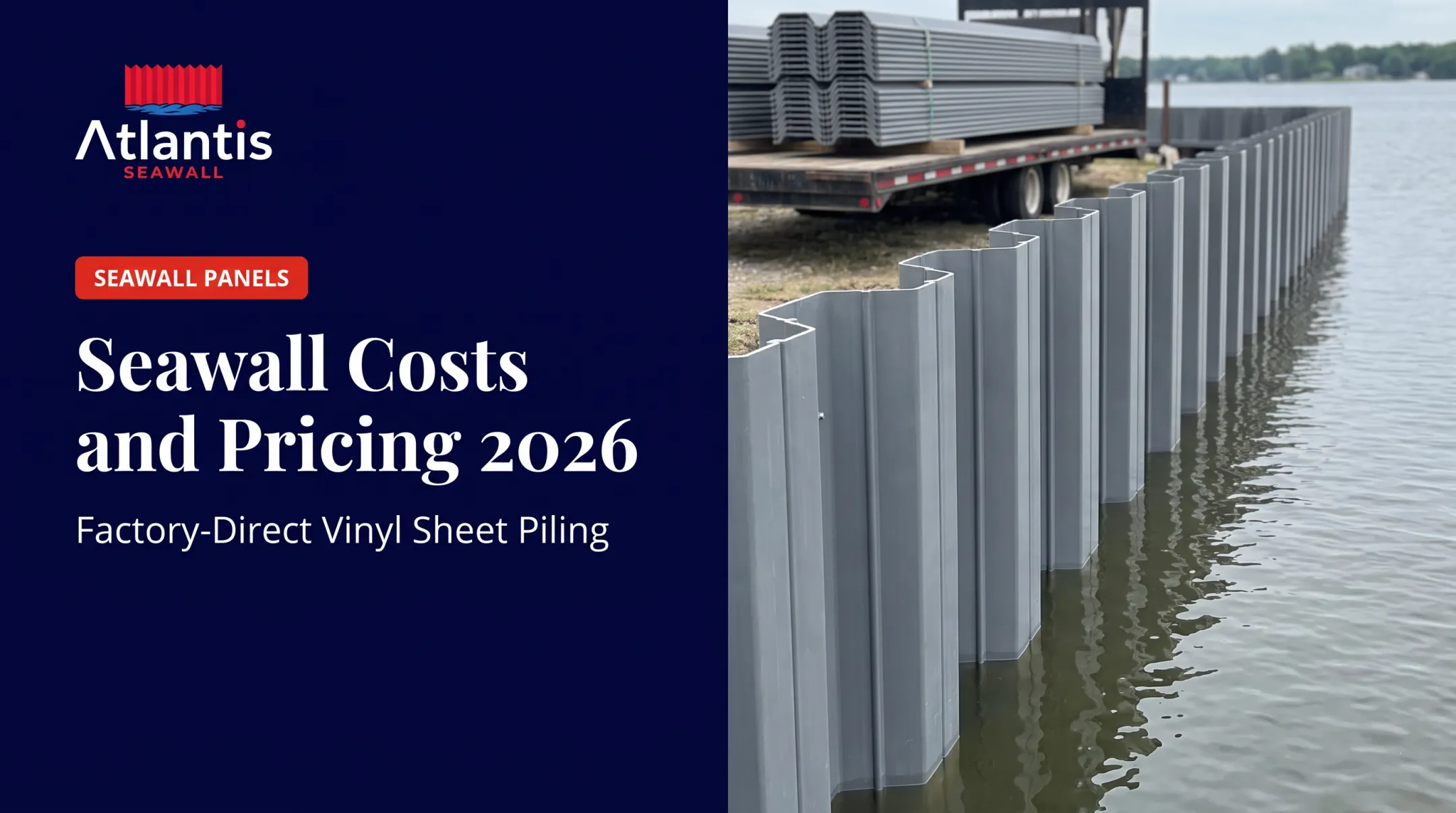
Timber, steel, and vinyl sheet piling appear mostly in water-adjacent work. Los Angeles Angi figures (local, not national) show vinyl at $10-$20 and steel at $20-$175 per square foot.
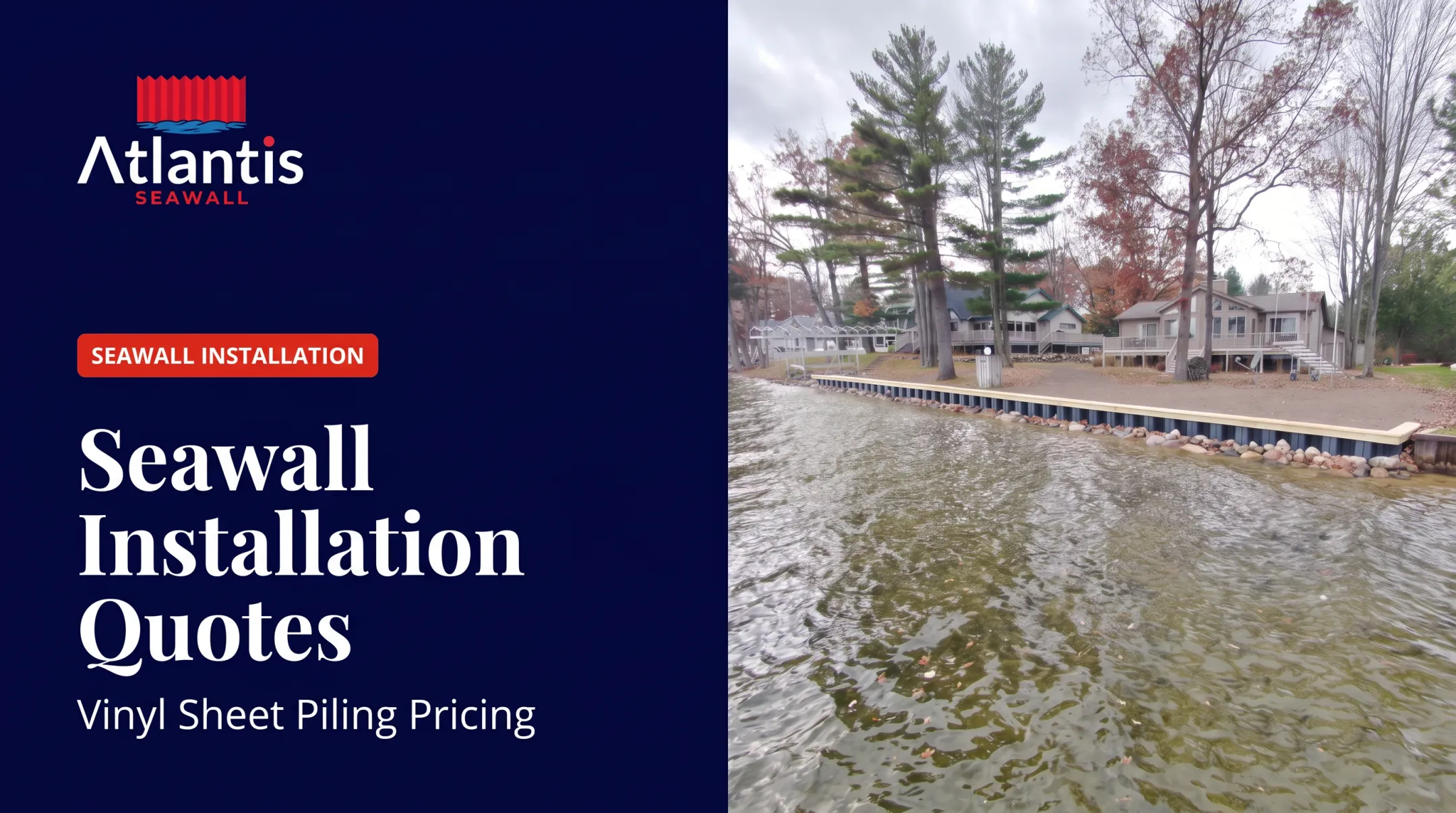
Vinyl sheet piling can suit space-constrained, erosion-control, pond, canal, or waterfront applications. Suitability still depends on wall height, soil pressure, water conditions, loads, and engineering.
Size, Capacity, and Scale
Length, exposed height, retained soil volume, surcharge loads, and tiers all raise material, labor, equipment, and delivery costs.
To measure, multiply exposed length by exposed height. For stepped walls, add the face areas of each section. Linear-foot pricing ignores height, so compare it only between walls of similar height and loading.
Angi's $15-$50 per square foot converts to roughly $161-$538 per square meter. Verify that the bid uses wall-face area.
Material, Components, Build Quality, and Customization
Compare upfront price against service life, rot or corrosion resistance, handling, and maintenance:
- Timber: needs proper preservative treatment, especially in ground contact or marine exposure.
- Steel: corrodes faster in salt, brackish, or contaminated water.
- Segmental block: shows more deterioration along drainage paths and in salt exposure.
Custom lengths, corners, curves, finishes, and nonstandard site conditions all change the quote.
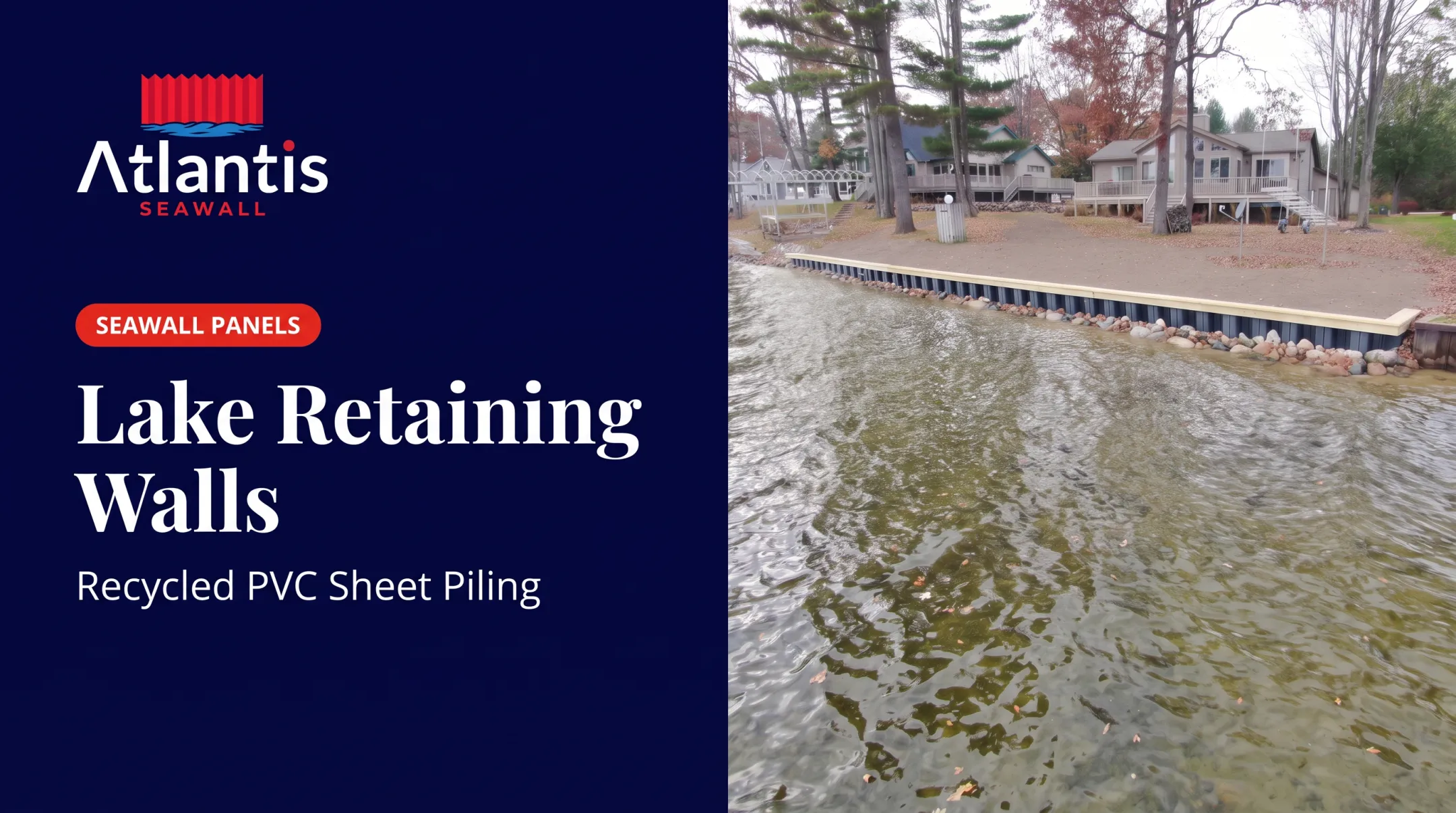
For waterfront and pond work, Atlantis Seawall's USA-made recycled PVC vinyl sheet piling is one option to compare. Its 400 Series is 0.400 inch thick, 12 inches wide, and 9 inches deep, with a 50-year limited transferable warranty.
That warranty is conditional and excludes improper installation and unintended uses, so it is not a guaranteed service life. Confirm current specifications, availability, and suitability before you commit.

Installation, Site Preparation, Drainage, and Compliance
These can each be separate line items:
- Excavation: $150-$220 per cubic yard
- Drainage: $10-$80 per linear foot
- Grading: $900-$3,000
- Waterproofing: $2-$10 per square foot
- Backfill, compaction, embedment, spoil removal, and restoration
Drainage matters most. USACE guidance identifies improper drainage among major causes of retaining-wall failure.
Codes vary locally. The 2021 IRC exempts walls of 4 ft or less from permits unless they support a surcharge such as a driveway or building. Taller walls, walls supporting structures, and walls near water may need professional design. Permit fees range widely, from about $50 to $450 per Angi.
Full Cost Breakdown
Sort every quote into four buckets so you can compare consistently:
- Initial purchase: materials, connectors, caps, reinforcement, drainage components, delivery, taxes, freight or minimum-order charges.
- Installation and setup: survey, design, excavation, base or embedment, equipment, labor, backfill, compaction, restoration.
- Operating and maintenance: inspections, drainage upkeep, vegetation control, cleaning, corrosion or rot checks.
- Upgrades and replacement: reinforcement, component replacement, removal, disposal, or full rebuild.
Repairs and removal are real numbers. Angi puts repairs at $450-$950 on average, and removal at about $2,200-$4,500.
Low-Cost vs. High-Cost Retaining Walls: What's the Difference?
Compare on total value, not purchase price. The cheapest material may be wrong for a structural or water-exposed wall. No national ranking scores lifecycle value by wall type, so match each option to your site conditions.
Performance
A budget wall suits low heights, light loads, good drainage, and simple sites. A higher-cost wall adds engineered design, stronger materials, reinforcement, and specialized installation, which expands what it can handle on tall, loaded, or difficult sites.
Durability
Cheaper systems can be prone to rot, corrosion, cracking, shifting, or water pressure problems, depending on material and installation. Premium options resist more of these, but verify service-life claims against current manufacturer or industry data and read warranty exclusions.
Precision and Quality
Budget walls use standard dimensions and simple layouts. Poor fit or thin preparation is the risk. Higher-cost work brings site-specific design, custom components, quality control, accurate installation, and documentation.
Maintenance Needs
Budget materials may need sealing, treatment, or repair, though not all behave the same. Durable materials with professional installation can reduce upkeep, but every retaining system still needs drainage and inspection.
Long-Term Value
A low price makes sense for a small, low-risk wall. It stops making sense when repeated repairs or a failure erase the savings. FHWA notes longer design lives, such as 100 years, can suit walls supporting bridges, buildings, or critical utilities.

How to Estimate the Right Budget and What Most People Miss
The right budget fits the wall's purpose, site, service life, and code requirements. The lowest quote rarely does.
Factors to Consider
- Use and load: soil only, or a driveway, building, pond, canal, or shoreline?
- Dimensions and conditions: length, exposed height, embedment, slope, soil, water exposure, flooding.
- Material and quality: appearance, strength, durability, warranty, recycled content, delivery.
- Infrastructure: equipment access, staging space, utilities, drainage outlet, permits, contractor capability.
- Long-term costs: inspection, repair, removal, and the cost of failure.
What Most People Miss
- Hidden line items: Material price can hide labor, freight, excavation, drainage, reinforcement, engineering, permits, restoration, and disposal.
- Cheap but wrong: Skipping checks on soil pressure, water management, warranty, and installer experience invites failure.
- Balance: Don't buy premium features the site doesn't need, and never cut drainage, engineering, or structural components.
Ask every bidder these questions:
- What height, face area, and surcharge assumptions did you use?
- Are stamped plans, permits, and inspections included?
- Does the price cover excavation, base, drainage, backfill, reinforcement, grading, and spoil removal?
- Are delivery, waterproofing, demolition, and disposal included?
- What warranty exclusions apply?
Conclusion
Retaining wall cost in 2026 depends on wall type, dimensions, material, site conditions, drainage, engineering, installation, and lifecycle needs. A reliable budget separates material-only pricing from installed pricing and compares quotes with the same scope of work.
For pond, canal, or waterfront projects, you can request a project-specific material quote from Atlantis Seawall. The company manufactures in Cleveland, Ohio and ships across the United States. In Ohio, sales and installation are coordinated through a network of local partner installers.
Frequently Asked Questions
How much is a retaining wall per m2?
U.S. estimates are quoted per square foot. Angi's installed range of $15-$50 per square foot equals about $161-$538 per square meter. Confirm whether the bid is wall-face area and includes materials, labor, and site work.
Which retaining wall is cheaper?
Simple, low-height systems cost least. In Angi's Los Angeles table, vinyl and gabion both start at $10 per square foot. Site conditions, drainage, lifespan, and installation often outweigh material price.
Is vinyl a good investment?
It can be for water-exposed sites, thanks to light handling, water resistance, and low maintenance. Confirm design suitability and engineering for your specific wall, since long-term value depends heavily on site conditions.
How long does vinyl last?
Atlantis offers a 50-year limited transferable warranty, but that is conditional coverage, not a guaranteed lifespan. Actual life depends on the product, exposure, installation quality, and application.
How thick should a 2m retaining wall be?
Thickness can't be set safely from height alone. It depends on soil, drainage, loads, material, foundation, reinforcement, and local code. A 2 m (about 6.5 ft) wall exceeds the IRC's 4-ft permit exemption, so get site-specific engineering.
What is the 1/3 rule for retaining walls?
The commonly cited guideline sets base width near one-third of wall height, and a related gravity-wall criterion requires the resultant load to fall within the middle third of the base. Both are rules of thumb, not substitutes for engineered design, drainage planning, or local code.