Introduction
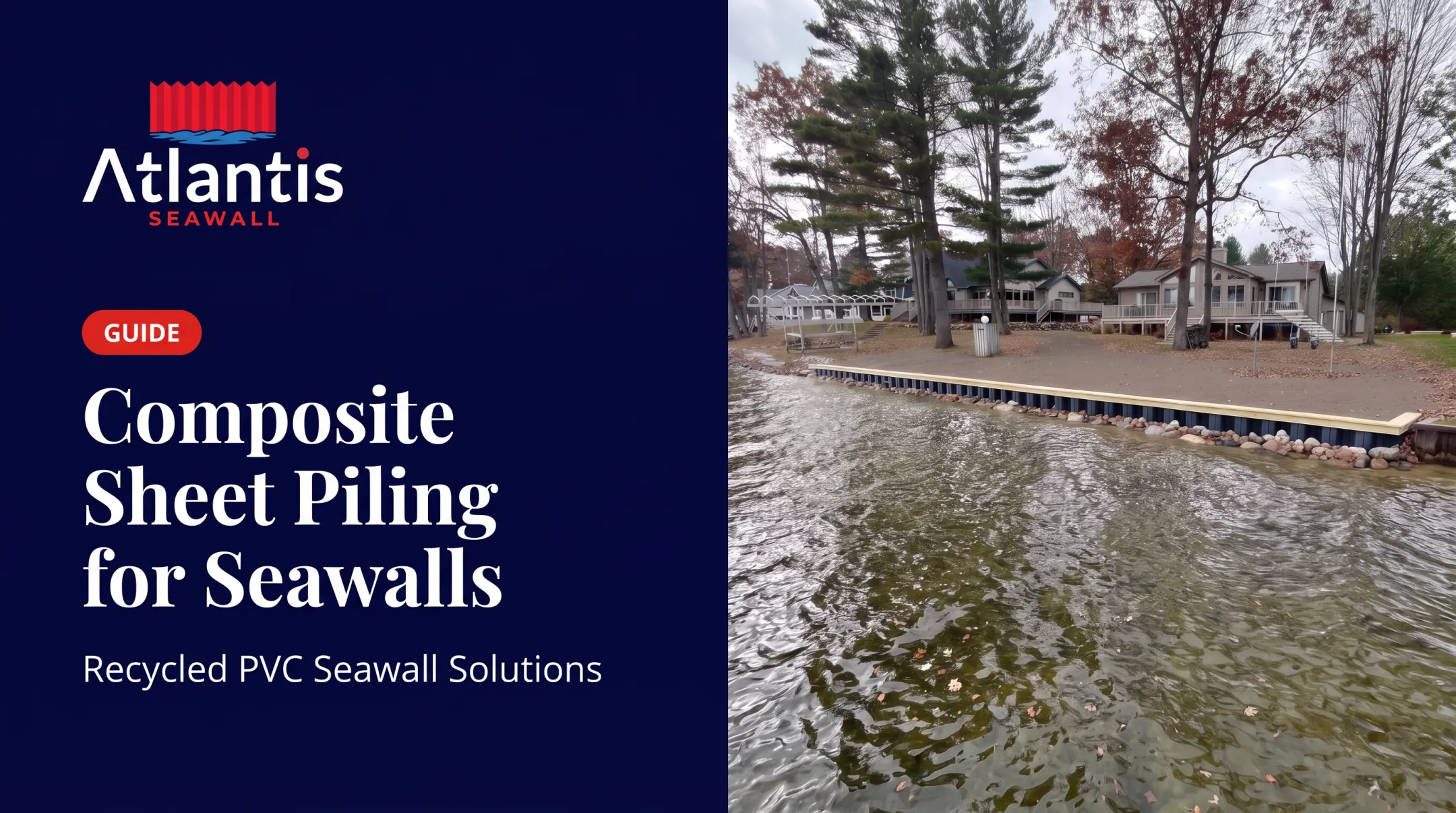
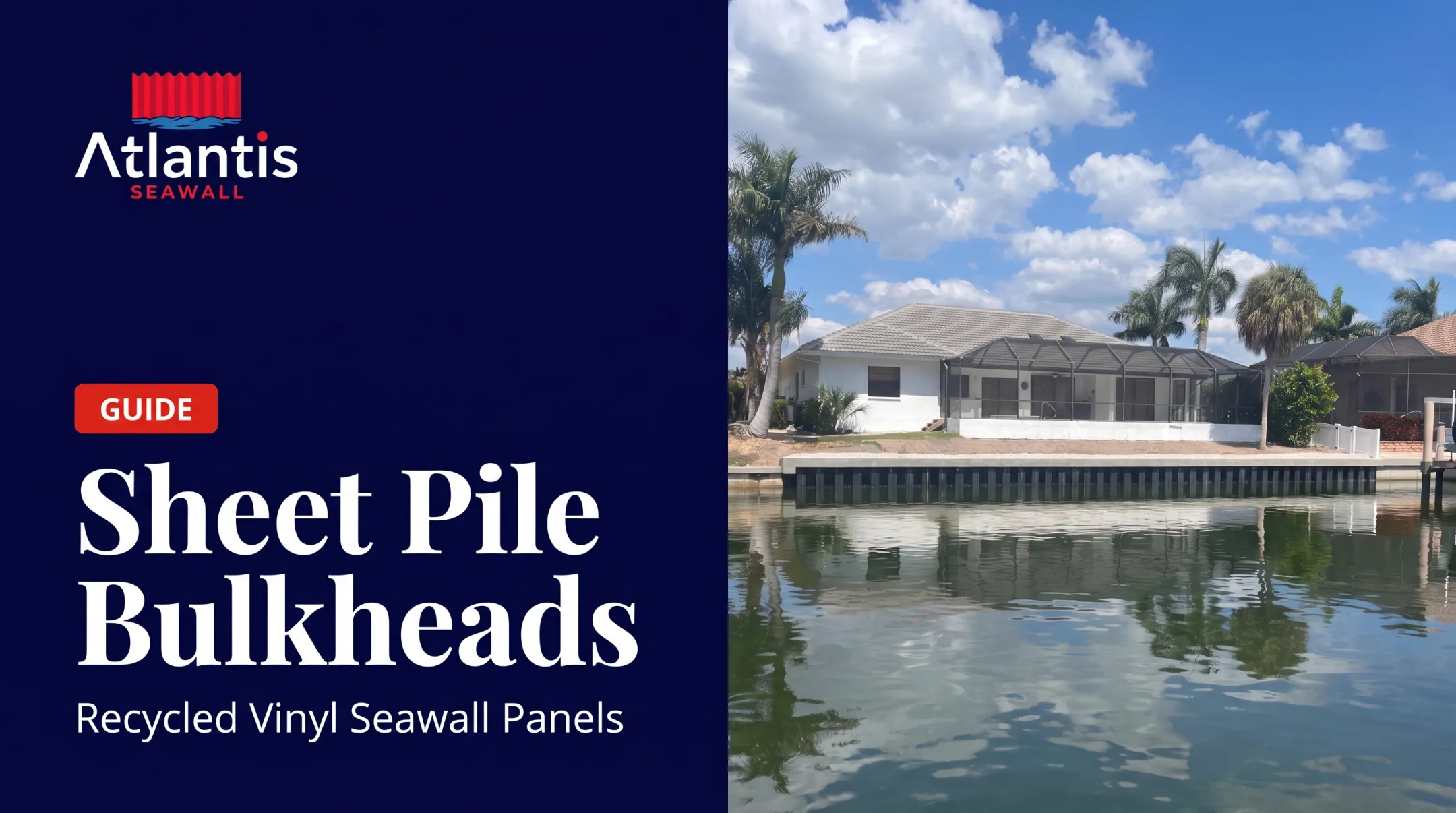
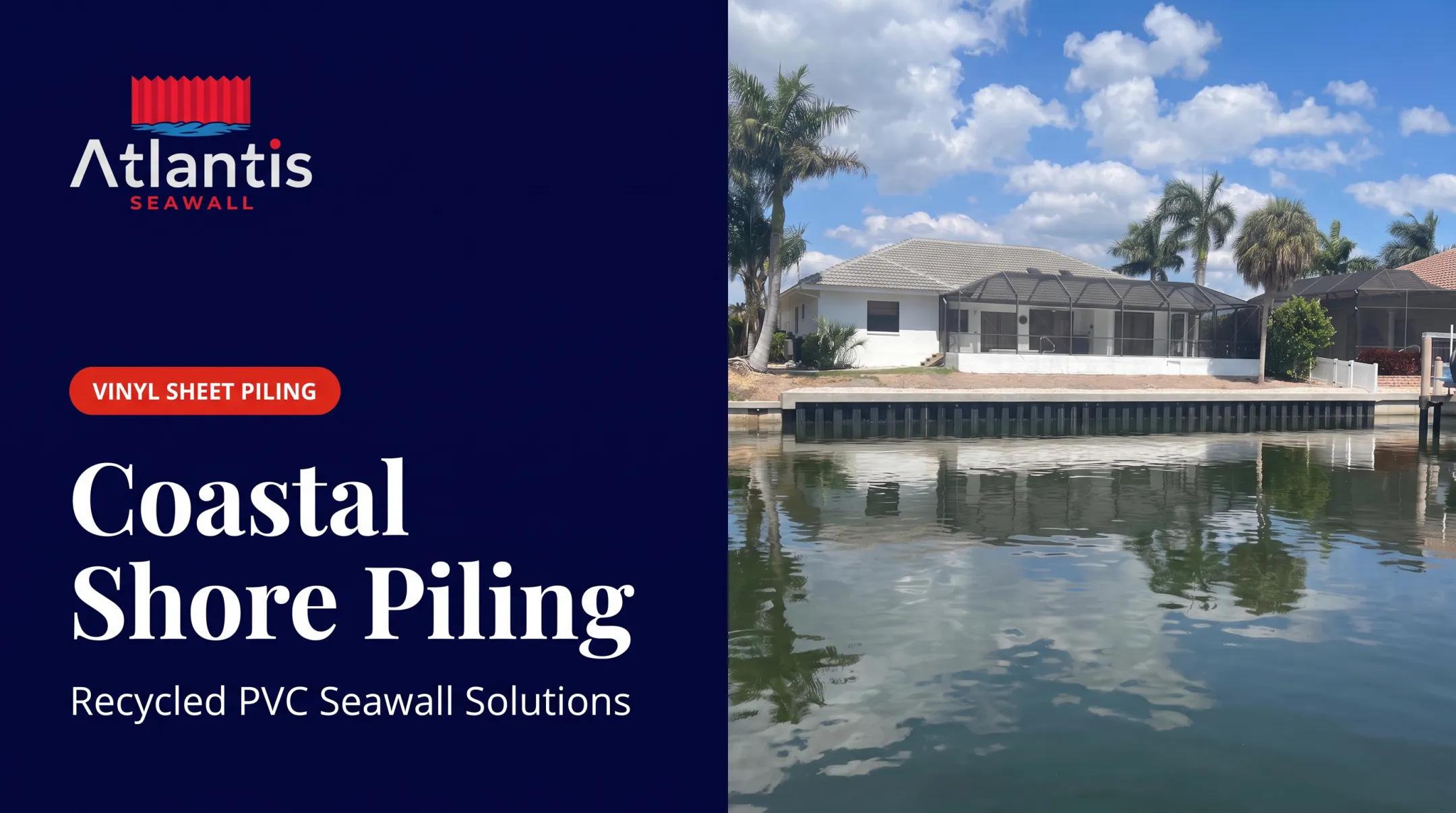
Rotting timber, rusting steel, and cracked concrete all end the same way: soil slumps, backfill washes out, and the shoreline retreats. PVC vinyl sheet pilings are interlocking panels driven into the ground to hold soil and block erosion at seawalls, ponds, canals, and docks.
Vinyl isn't a cure-all. Panel choice depends on soil, wall height, water exposure, and loads, and some walls need an engineer.
USACE guidance notes PVC has lower strength than steel and shouldn't be used where large debris, vessel, or ice impacts are likely.
This guide covers what the panels are, where they fit, how to select and install them, what drives cost, and what to ask a supplier.
Key Takeaways
- Vinyl sheet pilings are lightweight, corrosion-resistant panels that interlock into a continuous wall.
- Select panels by site conditions and loads, not price alone.
- Expect fewer rot and rust issues, but design, drainage, and installation still decide performance.
- Request itemized quotes covering panels, corners, caps, anchors, freight, equipment, and labor.
What Are PVC Vinyl Sheet Pilings?
PVC vinyl sheet pilings are interlocking panels that lock edge to edge to form one continuous barrier. The wall resists soil movement, erosion, and water pressure when properly designed.
"Sheet piling" describes this wall-forming function. It is not a deep foundation pile, which carries vertical loads through soil or rock bearing.
Material, profiles, and components
PVC doesn't rot or rust. Those properties resist two common failure modes, but they don't guarantee service life. Soil, UV exposure, impact, loads, drainage, and installation quality all still matter.
Profiles vary by maker. Published examples include:
- CMI ShoreGuard SG-650 Z: 10 in. deep, 18 in. wide, 0.39 in. thick
- EverLast ESP 4.1: 8 in. deep, 20 in. wide, 0.30 in. thick
- Atlantis Seawall: 12 in. wide, 9 in. deep Z-channel, 5.5 lb/ft, in five grades (300 to 600) from 0.300 to 0.620 in. thick, with allowable moments from 5,400 to 11,160 ft-lb/ft
Corners, caps, and anchoring components complete the system. Always compare section properties from each manufacturer's current documentation, since one maker's values aren't an industry benchmark.
How vinyl compares
| Material | Strengths | Trade-offs |
|---|---|---|
| Vinyl | Light, no rot or rust, easy handling | Lower strength and impact resistance; creep |
| Treated timber | Familiar, low upfront cost | Needs protection from marine borers; rot |
| Steel | High strength, impact tolerance | Corrosion, especially in the splash zone; heavy equipment |
| Concrete | Mass and durability | Rebar rust, spalling, cracking |
A 2023 inspection of about 15,405 linear feet of concrete bulkhead in Florida found rebar rust, spalling, and cracking.
When vinyl isn't enough
Get site-specific engineering where the wall supports structures, roads, or heavy equipment, or involves deep water, large surcharge loads, or unusual soils. FEMA guidance also says bulkheads generally suit low-to-moderate wave action and not ocean shorelines.
Why Use PVC Vinyl Sheet Pilings?
Durability and maintenance
A nonmetallic wall avoids rust, and vinyl doesn't rot. Warranties are long: Tidewall offers 60 years and EverLast and Atlantis Seawall offer 50 years. But these are limited warranties, not measured lifespans.
They exclude storms, misuse, and faulty installation, and typically exclude labor and freight. A 2003 Army Corps cold-regions study found roughly 10-year-old installations without significant degradation, while cautioning that results vary by product.
Handling and installation
Light panels are easier to unload, stage, and set than steel. Atlantis, for example, notes that 12-inch panels can be driven two or three at a time depending on soil, with less vibration.
Equipment needs still depend on profile, soil, wall size, and site access. No independent benchmark proves vinyl eliminates vibration, so verify with your installer.
Sustainability
Army Corps documentation says PVC sheet piles are commonly co-extruded with a recycled PVC substrate, about 90% of volume, under a UV-protected capstock. A 2020 life cycle study of a 100 m (about 330 ft) waterfront wall over 50 years found PVC indicators 2.2 to 4.4 times lower than one steel pile type.

Results are boundary-specific. Ask any supplier for recycled-content and end-of-life details before relying on environmental claims, and treat sustainability as a bonus on top of proper design.
Applications
- Seawalls and bulkheads
- Docks, marinas, and boat ramps
- Canals, ponds, and retention basins
- Parks, campgrounds, and community lakes
The same panel system works inland and on the coast, but wave action, tides, ice, water chemistry, and soil change the design. Federal specifications list bulkheads, quay walls, flood walls, cutoff walls, and retaining walls as uses for synthetic sheet piling.
Appearance
Color options, caps, corners, and transitions shape the finished look. Darker gray tones can make waterlines less obvious, but color doesn't prevent algae, staining, or debris.
How to Select PVC Vinyl Sheet Pilings for a Project
Start with the site
Gather these details before pricing:
- Shoreline length, wall height, and water depth
- Soil type, groundwater, and slope
- Equipment access and excavation limits
- Wave, wake, and ice exposure
- Nearby structures and expected loads behind the wall
U.S. Army Corps of Engineers guidance calls for soil profiles and strength, water levels, seepage, and surcharge. Complex or heavily loaded walls need an engineer or geotechnical professional. Check permit needs too: Section 10 and Section 404 can apply to work in navigable waters.
Match profile to conditions
Panel shape, thickness, formulation, wall height, embedment, interlock performance, and support systems all affect capacity. Use manufacturer-tested data and project calculations, not "strongest" claims. Atlantis Seawall, for instance, publishes allowable moments by grade with Ohio and Florida PE-stamped data. Your engineer still sets the final choice.

Plan lengths and components
Visible height is only part of panel length. Embedment is project-specific, and no generic percentage rule is reliable. Also plan:
- Corner components, including permanent interlocks
- Caps and transitions
- Tiebacks or deadmen
- A drainage collector behind the wall, as Corps guidance recommends
Check manufacturing and logistics
Confirm before you order:
- Available lengths and custom cuts
- Lead times and freight access
- Unloading requirements and minimum quantities
- Replacement panel availability
Atlantis Seawall, for example, manufactures recycled-PVC Z-profile panels in Cleveland, Ohio, offers custom lengths in 1-foot increments at no charge, and carries a 50-year limited transferable warranty. Verify current literature before ordering.
Questions for your supplier
- What tested performance data and section properties apply to this profile?
- Do you provide installation instructions and approved equipment guidance?
- Is engineering support available?
- Are corners, caps, and anchors compatible with the panels?
- What does the warranty exclude, and how are claims filed?
- Who is responsible for freight and unloading?
- Can you meet my location and schedule?
How PVC Vinyl Sheet Pilings Are Installed
Typical sequence
- Lay out the wall line and verify utilities before any digging or driving.
- Prepare access routes and stage panels near the work face.
- Set and plumb the first sheet; it controls alignment for the full run.
- Drive or press each panel, interlocking it with the previous one.
- Trim to grade and set corner profiles where the wall changes direction.
- Install caps and any required anchoring or deadman hardware.
- Place drainage and backfill in controlled lifts to limit surcharge on the face.
- Inspect the finished wall and clean up the site.
One manufacturer guide describes attaching a mandrel to a vibratory hammer with a flexible chain, then driving each sheet to the specified elevation. Mandrels also protect sheets from buried obstructions.

Soil and access
Sheet length and soil resistance steer equipment choice. Where soil permits, panels can be pressed with an excavator bucket or plate compactor. Treat pressing methods as manufacturer guidance, not a universal approval. Follow your manufacturer and engineer, and stop for refusal or buried obstructions.
Risks and quality checks
Watch for these common failure points during and after driving:
- Misaligned interlocks that bind or open the wall line
- Inadequate embedment for the design height and soil
- Damaged panels from driving on obstructions
- Uncontrolled backfill that surcharges the face too early
- Poor drainage behind the wall
- Unsupported or weakly tied corners
- Unplanned loads from equipment, fill, or waterfront use
FEMA also flags toe scour from wave action, so design the toe for local conditions. Document alignment, embedment, connections, drainage, and final condition before the wall goes into service. Faulty installation is a standard warranty exclusion.
Costs, Sourcing, and Maintenance
What drives cost
Installed cost per linear foot varies widely for vinyl, so budget from a project framework rather than a single average. Cost drivers include:
- Panel quantity, length, and profile
- Wall height and soil resistance
- Corners, caps, and anchoring
- Engineering and permits
- Mobilization, equipment, and labor
- Excavation, backfill, and disposal
- Freight, site access, and restoration
Get itemized quotes from qualified suppliers or contractors.
Comparing quotes
Compare like for like: profile, section properties, quantities, custom cuts, shipping terms, unloading duties, lead times, warranty, and whether installation support is included.
Atlantis Seawall is a US manufacturer in Cleveland, Ohio, shipping coast to coast, with a distributor program. Standard shipping is listed at 5 to 7 days, and full truckloads of 7,000+ sq. ft. ship free. Installation is coordinated through partner contractors in Ohio, not performed nationwide by the company.
Maintenance
NC Sea Grant recommends seasonal and pre- and post-storm inspections with photographs. Check for:
- Settlement, divots, or holes in the ground behind the wall
- Leaning, bowing, or wobble
- Exposed or damaged panels and open interlocks
- Failed caps and drainage problems
- Scum lines and debris
- New loads behind the wall
Vinyl reduces rot and rust upkeep, but no seawall is maintenance-free. Neglected soil, drainage, anchors, or adjacent structures will still cause failures. NC Sea Grant's roughly 25-year figure is generic bulkhead guidance, not a vinyl-specific life.
Frequently Asked Questions
How much does it cost to put in pilings?
Cost depends on wall dimensions, panel type and length, soil, access, equipment, labor, engineering, accessories, freight, and restoration. Request an itemized project quote rather than relying on an average.
What are PVC vinyl sheet pilings used for?
They form seawalls, bulkheads, docks, marinas, ponds, canals, retention basins, and other erosion-control or soil-retention walls.
How long do PVC vinyl sheet pilings last?
Service life depends on formulation, exposure, installation, loads, and site conditions. Warranties of 50 to 60 years exist, but they aren't lifespan measurements, so review manufacturer testing and terms.
How are PVC vinyl sheet pilings installed?
Interlocking panels are driven or pressed to the required embedment, with attention to alignment, corners, drainage, and anchoring. Follow manufacturer and engineer instructions for your site.
Are PVC vinyl sheet pilings suitable for oceanfront and inland projects?
They're used in both settings, but wave action, tides, wakes, saltwater, ice, soil, water levels, and structural loads must be evaluated first. Exposed ocean shorelines and impact-prone sites need particular caution.