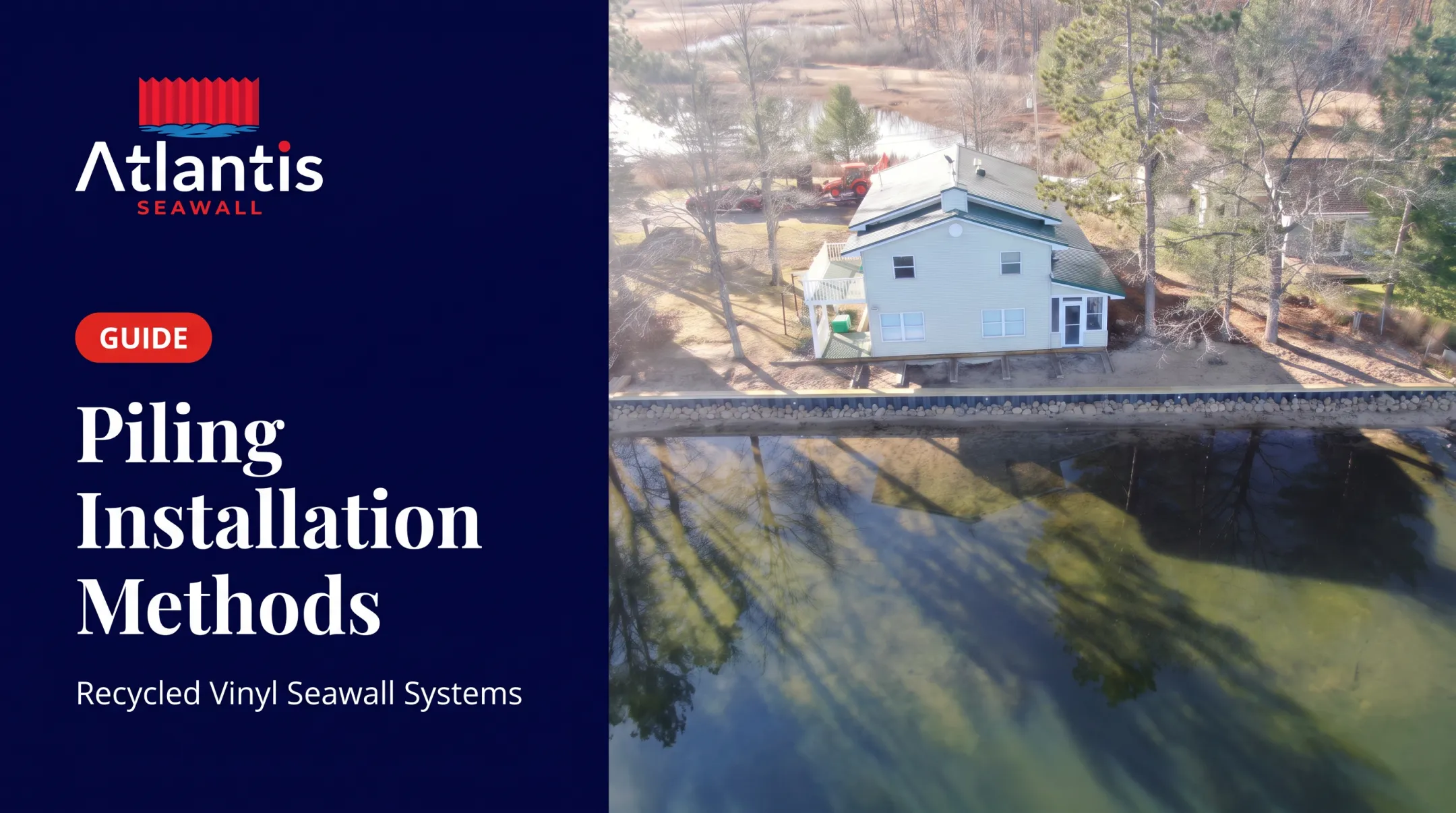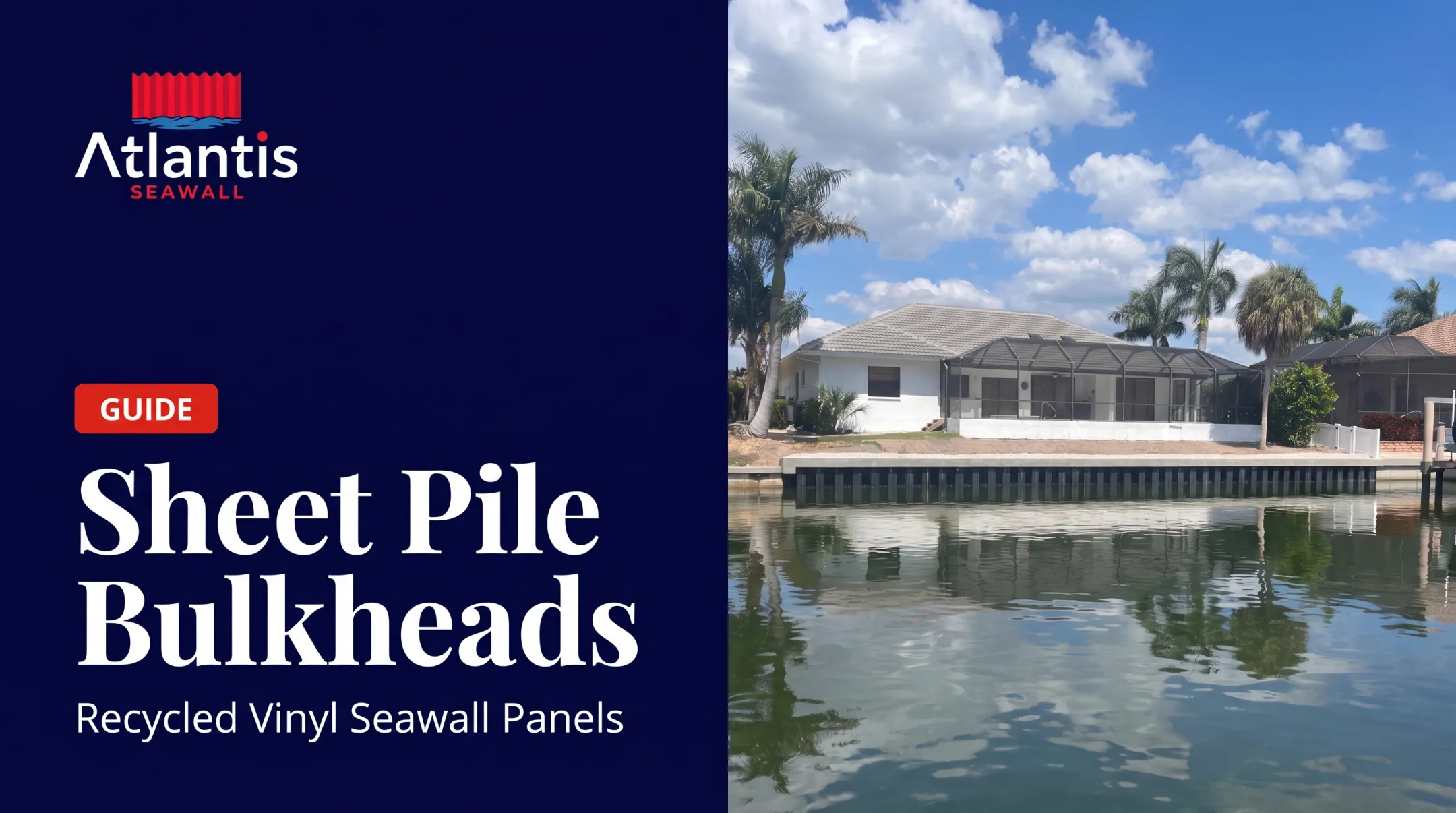

Coastal shore piling is a system of driven or installed piles, often interlocking sheets, that forms a retaining barrier along a shoreline, seawall, or bulkhead. This guide covers applications, materials, planning, installation, vinyl sheet piling, and maintenance. One theme runs through all of it: the wall needs site-specific engineering.
Key Takeaways
- Shore piling retains soil, limits erosion, and protects waterfront improvements.
- Soil, water forces, wall height, embedment, and local rules drive the right system.
- Steel, timber, concrete, composite, and vinyl each carry different tradeoffs.
- Drainage, anchors, caps, toe protection, and inspections matter as much as the pile.
What Is Coastal Shore Piling and Where Is It Used?
Coastal shore piling is a continuous wall of interlocking piles that separates retained soil from open water and resists lateral pressure. FHWA classifies a sheet-pile wall as an externally stabilized, flexible wall in its geotechnical engineering guidance.
How It Differs From Related Terms
- Foundation or pier piling transfers structural loads into deeper soil or rock.
- Shore piling generally forms a retaining or erosion-control wall.
- Marine piling is the broad category, covering piers, docks, bridges, ports, and offshore structures.
Common Applications
- Seawalls and waterfront bulkheads
- Marina and yacht-club edges, boat ramps
- Riverbanks, lakefronts, and canals
- Retention basins, ports, and parks
- Flood-defense structures
Forces and Failure Warning Signs
Walls face hydrostatic pressure, waves, currents, fluctuating water levels, storms, cyclic loading, and surcharge from vehicles or buildings. Each failure mode gives a visible hint:
| Failure concern | What you may see |
|---|---|
| Toe scour or undermined embedment | New divots or holes near the wall |
| Rotation or overstress | Leaning, bowing, or wobbling |
| Poor drainage or backfill loss | Soil cracking, seepage, sinkholes behind the wall |
| Corrosion (steel) | Rust staining, flaking, thinning sections |
| Timber decay | Soft, crumbling, or borer-damaged wood |
| Damaged interlocks | Gaps or separated sheets, soil escaping |
USACE documents sheet-pile wall failure modes and signs such as soil cracking and piping. NC Sea Grant adds leaning, bowing, and wobbling as warning signs. Treat any of them as a prompt for an engineer's inspection.

Coastal Shore Piling Materials and Systems
Comparing the Main Materials
| Material | Strengths | Watch for |
|---|---|---|
| Steel | Strength, stiffness, ductility; most common sheet material | Corrosion in salt or brackish water; needs coatings or cathodic protection and inspection |
| Timber | Traditional waterfront use | Decay, insects, marine borers; treatment must match exposure |
| Precast concrete | Mass, project-specific mixes for aggressive environments | Handling weight, cracking, impact |
| Composite (FRP) | Corrosion resistance | Design is project-specific |
| Vinyl (rigid PVC) | Light, rot- and rust-resistant | Limited wall heights in some specifications; avoid sharp corners without deflection control |
USACE calls steel the most common sheet-piling material and notes long service life when protected from corrosion. For timber, AWPA marine-use categories classify exposure by salt or brackish conditions and borer pressure. Neither source gives one service life for every coast.
Components That Make or Break the Wall
Profile geometry matters, but so does everything attached to it:
- Sheet width, section depth, wall height, and embedment
- Interlock design, corners, and caps
- Tie rods and anchors
- Drainage and toe protection
Atlantis Seawall's Vinyl Option
Atlantis Seawall manufactures one US-made vinyl option in Cleveland, Ohio. According to the company:
- 100% recycled PVC in a proprietary blend
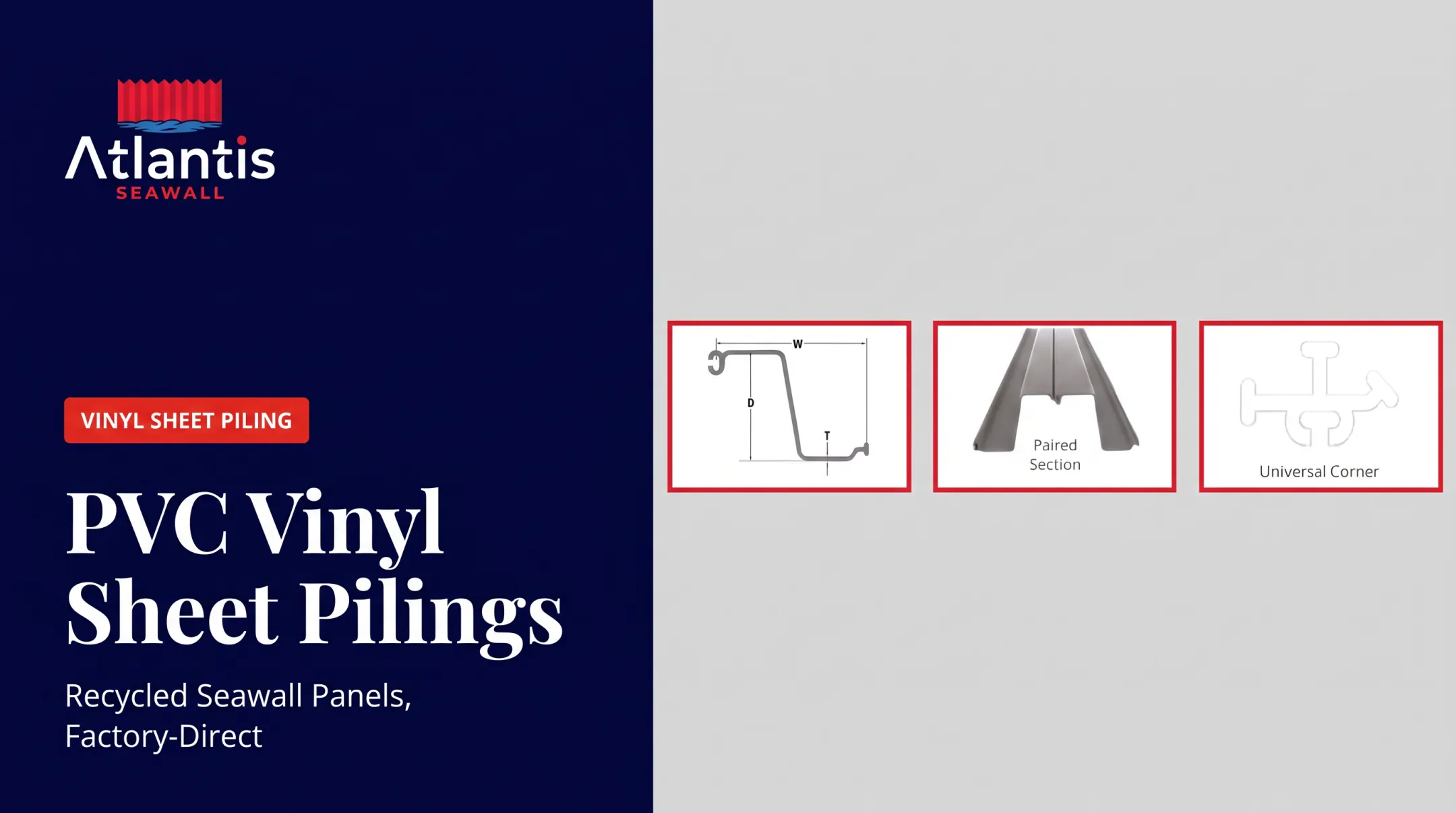
- 400 Series profile: 12-inch-wide by 9-inch-deep Z-channel, 5.5 pounds per foot
- Permanent interlock pairing and a universal corner
- Custom cuts in 1-foot increments at no charge
- A 50-year limited transferable warranty, suited to inland and oceanfront use
The warranty applies under approved engineering design and proper installation, and it excludes storm damage.
In practice, lightweight panels handle easily, and depending on soil, 2 to 3 panels can be driven at once with less vibration. The panels resist rot and corrosion. Slate Gray and Natural Gray are meant to make scum lines less visible. Shipping runs coast to coast.
Sustainability, Without Overstating It
Recycled content is a real point in vinyl's favor, but it isn't the whole picture. A European Commission LCA of PVC does not cover shoreline sheet piling, so it does not rank materials for shoreline use.
Total project impact also includes manufacturing, transport, maintenance, repair, and end-of-life. The NPS notes that seawalls can impede beach migration and accelerate erosion on adjacent beaches, a system-level effect no material choice removes.
How Coastal Shore Piling Is Planned and Installed
Site Investigation
Good design starts with data:
- Shoreline survey and inspection of any existing wall
- Water levels, wave and current exposure, and bathymetry where relevant
- Soil borings and groundwater
- Utilities, access limits, and nearby structures
From Data to Design
Engineers use these findings to set:
- Wall height, pile type, and section strength
- Embedment, alignment, and drainage
- Anchors or tiebacks and surcharge allowances
- Scour, corrosion, and biological protection
A qualified professional should complete or review the final design. It should reflect applicable US codes, standards, and site conditions.

Typical Installation Sequence
- Prepare the site. Set the wall line, remove or isolate failing material, and plan equipment access and staging.
- Install the first sheet. Drive or vibrate it, hold alignment, and engage each successive interlock.
- Complete the details. Build corners, returns, cutoffs, caps, anchors, and tiebacks as designed.
- Backfill and finish. Place suitable fill, add drainage or pressure relief, restore the shoreline, and add toe protection where required.
Method matters by material. USACE says vibratory hammers generally work best in granular soils, and it cautions against impact hammers on PVC sheets because of interlock damage risk.
Quality Assurance
Check these items during and after installation:
- Alignment and plumbness
- Interlock engagement
- Obstructions or refusal
- Damaged sections
- Anchor placement
- Backfill and final elevation
Keep installation records.
Safety, Environment, and Permits
Work near water brings several risks:
- Unstable equipment footing and changing tides
- Public access and debris
- Turbidity, noise, and habitat impacts
- Contaminated sediment
Permits vary by site. Nationwide Permit 13 covers bank stabilization, including bulkheads, only when its terms are met. Some jurisdictions limit new bulkheads or seawalls. Confirm requirements with local, state, and federal authorities before work begins.
How to Choose a Shore Piling System
Start with the site, then work toward the product:
- Shoreline type and wall height
- Soil profile and water exposure
- Expected wave and surcharge loads
- Access, equipment, and vibration sensitivity
- Project duration, available installers, and maintenance expectations
Those site conditions drive the wall type. FEMA supports bulkheads for low-to-moderate wave action and says they are not suitable for ocean shorelines. Seawalls handle higher wave energy where bulkheads fall short.

Different Buyers, Different Priorities
- Homeowners weigh property protection, appearance, access, lifecycle maintenance, and working with an engineer or installer.
- Contractors and public owners need dependable material availability, job-lot quantities, custom lengths, delivery schedules, and plan-ready specifications and documentation.
Compare Lifecycle Cost, Not Just Price
Add up material, transport, installation, anchoring, drainage, permitting, inspection, maintenance, and replacement. NC Sea Grant cautions that bulkheads can be cheaper to install, but long-term maintenance can cost far more than other shoreline choices.
Before ordering, request:
- A project-specific material list and section details
- The installation method
- Warranty terms and engineering assumptions
- A delivery schedule
Vinyl Sheet Piling as a Coastal Shore Option
Vinyl sheet piling can suit seawalls, bulkheads, lakefront and riverfront properties, marinas, canals, ponds, and retention basins. Suitability depends on engineering and site conditions. Wall height is a key limit, and specifications differ by agency.
Atlantis Seawall designs, manufactures, and sells vinyl sheet piling from Cleveland, Ohio, with shipping available across the United States. The company supports contractors, builders, suppliers, and waterfront construction professionals. Installation is coordinated through partner contractors and preferred installers, including local partners on Ohio projects.
Before contacting a manufacturer, distributor, engineer, or qualified installer, gather:
- Wall length and desired height
- Water exposure and soil information
- Access constraints
- Quantity and delivery location
- Whether you need engineering or installation support
Frequently Asked Questions
What is shore piling?
Shore piling uses driven or installed piles, commonly interlocking sheets, to form a retaining wall. It protects a shoreline, holds back soil, and limits erosion and water damage.
How long do pier pilings last?
Service life depends on material, water chemistry, marine organisms, loading, installation quality, scour, and inspection. NC Sea Grant cites about 25 years for bulkheads in general. Pier foundation piles serve a different function, so request project-specific engineering or manufacturer data.
What is the difference between coastal shore piling and marine piling?
Coastal shore piling generally forms a retaining or erosion-control wall along the shore. Marine piling is broader, covering piers, docks, bridges, ports, offshore structures, and coastal defenses.
What material is best for coastal shore piling?
It depends on soil, loads, water exposure, wall design, access, vibration limits, maintenance, and budget. Steel, timber, concrete, composite, and vinyl each fit some sites, and none is universally best.
How is coastal shore piling installed?
Crews investigate the site, finalize the design, and lay out the wall. They then position and interlock sections, drive or vibrate them, install anchors and drainage, place backfill, and inspect the finished wall.
Does coastal shore piling require an engineer or permit?
Many shoreline projects need professional design review and local, state, federal, or waterway approvals. Confirm requirements before construction begins.