This guide is for waterfront owners, contractors, builders, marinas, and municipal teams weighing a new bulkhead or replacing a failing one. It covers purpose, materials and profiles, design factors, installation, limitations, and the questions to answer before you pick a system.
Key Takeaways
- Interlocking sections driven into the ground retain soil and separate land from water.
- Steel, vinyl, timber, concrete, and composite differ in strength, corrosion resistance, handling, and cost.
- Embedment, drainage, anchors, water pressure, soil, and surcharge must be evaluated together.
- An engineer should verify the design; suppliers confirm panels, lengths, and delivery.
What Are Sheet Pile Bulkheads?
A sheet pile bulkhead is an earth-retaining wall built from connected sheet pile sections. The interlocks form a continuous wall that resists lateral soil and water pressure. The U.S. Army Corps of Engineers (USACE) analyzes these walls using a representative vertical slice, usually 1 foot wide.
A bulkhead retains backfill, reduces soil loss, and stabilizes a waterfront edge. That protects docks, access areas, and usable land.
Bulkhead vs. Seawall vs. Retaining Wall
- Bulkhead: retains land and prevents sliding; protecting the upland from waves is secondary.
- Seawall: typically more massive, built to resist greater wave forces.
- Retaining wall: holds a difference in soil elevation, on land or water.
Common Applications
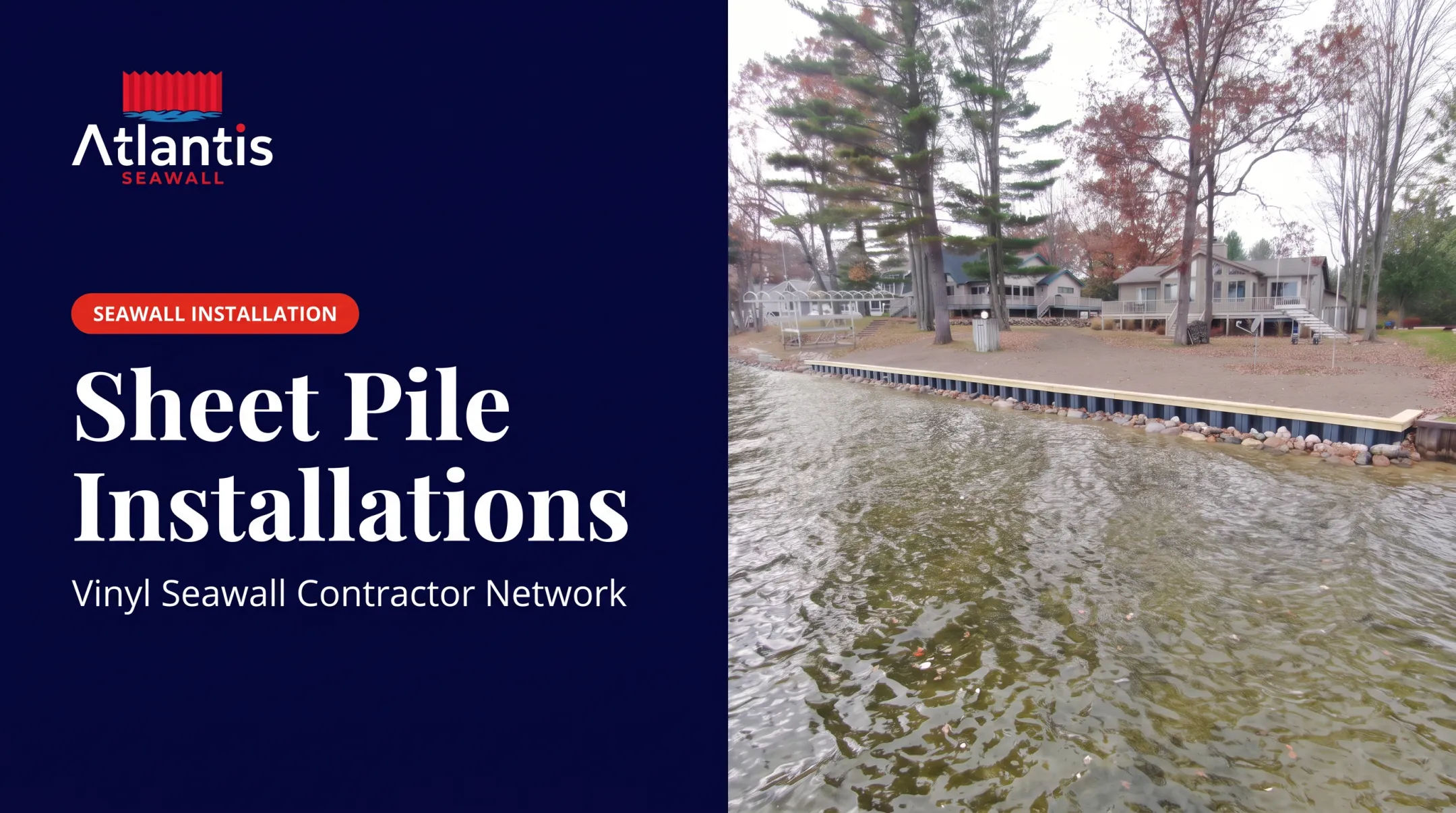
- Residential waterfronts and canals
- Marinas and boat ramps
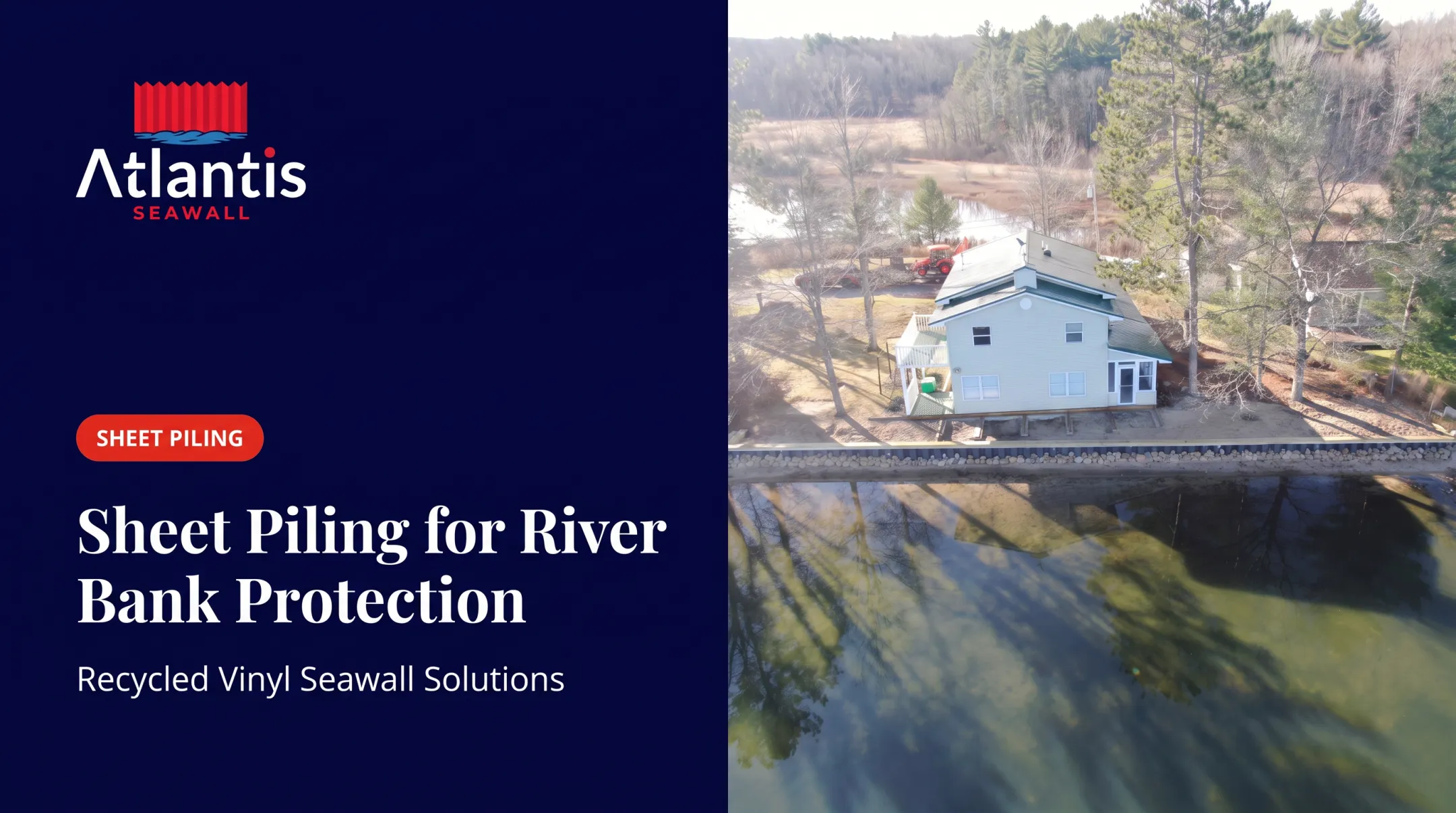
- Riverbanks, ponds, and retention basins
- Ports, quay walls, and excavation edges
Sheet Pile Bulkhead Materials and Types
Material Comparison
| Material | Strengths | Watch-outs |
|---|---|---|
| Heavy-gauge steel | Most common; strong, long service life when properly designed | Corrosion, worst in the splash zone; needs coatings or added thickness |
| Vinyl/PVC | Corrosion resistant, light, low maintenance | Deflection often governs design; suited to moderate exposed heights |
| Timber | Simple tongue-and-groove sheets | Limited to temporary or short-to-moderate walls |
| Precast concrete | Good for abrasive or marine settings | Heavy, higher cost, harder to install |
| FRP composite | Corrosion resistant, permanent use | Needs project-specific section properties |
Profiles and Permanence
Z-type piles are generally used where bending strength governs. U-type piles are common too, and doubled U-piles are crimped or welded at the connecting interlock. Profile geometry affects stiffness, handling, and wall continuity.

Permanence is the other major fork. Temporary walls and permanent bulkheads are different jobs, so service life drives material choice, coatings, detailing, and inspection. USACE points to timber and light-gauge steel mainly for temporary or minor structures.
Steel Sheet Piles
Steel suits heavy loads, deep retention, and difficult soils. The tradeoffs are weight, heavy equipment, and corrosion. USACE reports uncapped exposed steel losing roughly 2 to 10 mils per year depending on conditions, with fresh water the least corrosive and salt water the most.
Vinyl and PVC Sheet Piles
Vinyl often fits residential waterfronts, ponds, canals, and erosion control, where corrosion resistance and light handling matter. The federal UFGS specification calls PVC and FRP well suited where corrosion is a concern and exposed wall heights are under 20 feet. Site loads and engineering still decide suitability.
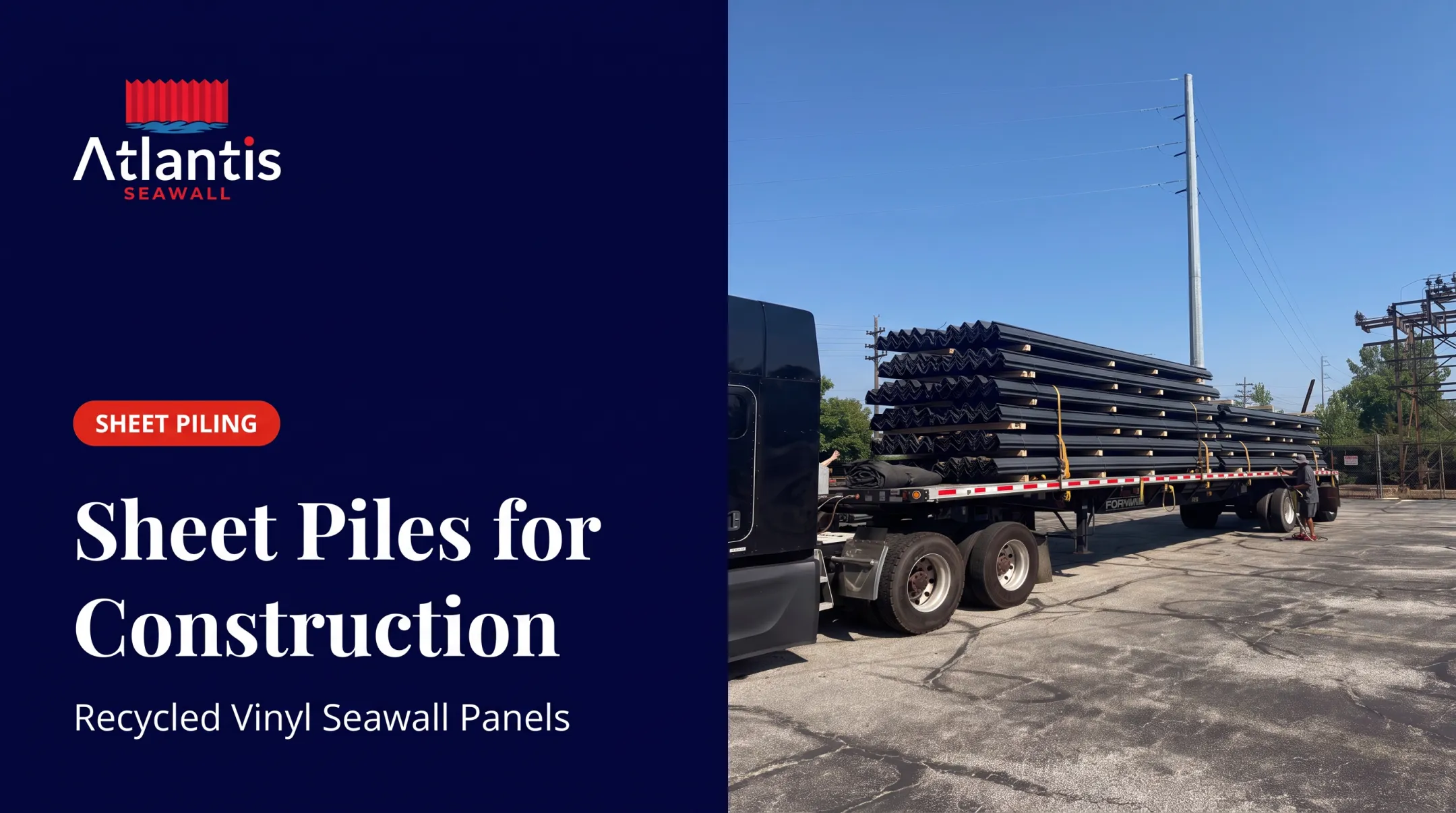
One example is Atlantis Seawall in Cleveland, Ohio: 100% recycled PVC, 12-inch-wide by 9-inch-deep Z-channel panels weighing 5.5 pounds per foot. Key specs:
- Five grades (300, 400, 450, 500, 600) with allowable moments of 5,400 to 11,160 ft-lb/ft
- Permanent interlock and universal corner, including 45°
- Color options in Slate Gray or Natural Gray
- Standard 8-30 ft lengths; custom lengths in 1-foot increments at no charge
- 50-year limited transferable warranty, with exclusions for storms, misuse, and faulty installation
Confirm all figures against current product documentation before specifying.
Design Considerations for Sheet Pile Bulkheads
Site and Environmental Assessment
Soil type, groundwater, water depth, tides, waves, currents, ice, and salt versus fresh water all shape the design. Document existing grades, shoreline geometry, adjacent structures, utilities, access limits, and any sign of settlement, scour, or backfill loss.

Loads, Stability, and Embedment
The wall must be checked for:
- Lateral earth pressure
- Hydrostatic pressure from water-level differences
- Surcharge from vehicles, stockpiles, or structures
- Waves, ice, and boat impact
- Construction loads
Embedment is not a fixed depth. USACE determines penetration through equilibrium and soil-pressure calculations, and cantilever walls need trial-and-error solutions.
Depth depends on soil strength, retained height, water conditions, and support.
Drainage and Backfill
Poorly drained backfill builds hydrostatic pressure and pushes walls outward. Upward seepage can reduce lateral support and cause piping.
USACE recommends a drainage collector system for walls retaining backfill. Use free-draining zones, filters, and outlets that stop soil migration. Compaction matters too: poor placement leads to settlement behind the wall.
Anchors and Structural Components
Taller or more heavily loaded walls may need wales, tie rods, deadmen, anchor walls, braces, caps, and corner connections. USACE reports that most anchored-wall failures occur in tie rods, wales, or anchors, so detail them carefully.
Engineering, Permits, and Environmental Review
Hire a qualified engineer. Then confirm permits before work starts:
- Section 10 of the Rivers and Harbors Act covers structures in navigable waters.
- Section 404 covers fill discharge into waters of the U.S.
- Nationwide Permit 13 covers bank stabilization, including qualifying bulkheads, but it is conditional, not blanket approval.
- States add rules, such as New Jersey's bulkhead permit pathways.
Check habitat, water-quality, and local shoreline rules too.
How Sheet Pile Bulkheads Are Installed
Preconstruction Planning
Before driving starts, lock down the site plan:
- Survey and lay out the wall line
- Locate utilities and plan access and staging
- Choose equipment for the ground and site limits
- Account for water levels, erosion controls, permits, and neighboring owners
Driving and Interlocking
Crews position, align, drive, and interlock each section. Vibratory hammers are the most common technique, according to a 2024 installation guide. Impact hammers, presses, or predrilling and water jetting suit harder ground, tight access, or noise limits.

Alignment matters. Guides with at least two levels keep the wall on line, and USACE warns that hard driving can unzip interlocks. Poor engagement leaves gaps and deflection.
Completing the Wall
Once the sheets are in, finish the system as the design specifies:
- Trim or cap the wall
- Install wales, tie rods, and anchors
- Add drainage, filters, and backfill
- Place erosion protection
Quality Control and Inspection
Check:
- Alignment and top elevation
- Embedment or refusal depth
- Interlock continuity and visible damage
- Connection installation
- Backfill and drainage performance
- Movement in adjacent ground or structures
Document the finished wall and monitor it afterward. Inspection reports show what neglect looks like: one NYC steel bulkhead was rated Poor after an isolated hole exposed fill, with corrosion and coating failure in the splash and tidal zones.
Benefits, Limitations, and How to Choose a System
Benefits
A well-chosen bulkhead delivers:
- Shoreline stability and reduced erosion
- Efficient use of waterfront space
- Suitability for residential, commercial, municipal, and industrial sites
Vinyl adds rot and corrosion resistance, light handling, low maintenance, and less installation disruption. Steel may still win where loads are higher or soils are tougher.
Limitations
No material fits every site. Key constraints include:
- Wall height and retained loads
- Soil resistance and driving conditions
- Temperature, access, and vibration limits
- Environmental rules and space for anchors
Don't buy on price or material label alone. Verify:
- Structural capacity
- Installation requirements
- Drainage design
- Design life and maintenance needs
Supplier and Product Checklist
Compare:
- Published section properties and panel dimensions
- Interlock details
- Available lengths and finishes
- Warranty terms and exclusions
- Accessories and corners
- Lead times, shipping, and technical support
- Compatibility with your installer's equipment
Talk to Atlantis Seawall
Contractors, builders, dealers, and waterfront professionals can request information on recycled PVC vinyl sheet piling, custom lengths, and project quantities. Atlantis ships from Cleveland across the United States, typically within 5 to 7 days, with free shipping on full truckloads of 7,000+ square feet. Installation is coordinated through partner installers in Ohio. Call Bob at 216-550-5737 for a quote.
Frequently Asked Questions
How deep should sheet piles go?
Embedment depends on soil, retained height, water pressure, surcharge, wall support, and stability calculations. A qualified engineer should set the depth for your site.
What's the difference between a bulkhead and a retaining wall?
Both retain soil. A bulkhead is generally tied to waterfront or marine edges, while a retaining wall serves a broader range of land-based uses.
What material is a bulkhead?
Steel, vinyl/PVC, timber, concrete, composite, or FRP. The right choice depends on loads, exposure, design life, installation, and maintenance.
What are the different types of sheet piles?
They vary by material and by profile, mainly U- and Z-shaped sections. Available systems and structural properties differ by manufacturer.
What is the purpose of sheet piles?
They form a continuous retaining or cutoff barrier that holds back soil, limits erosion, and separates water from land, in temporary or permanent work.
What is the main purpose of a bulkhead?
A bulkhead stabilizes a waterfront edge by retaining soil and resisting water-related forces. That protects land, structures, docks, and usable shoreline.