
Introduction
Two seawall quotes for the same shoreline can differ by tens of thousands of dollars. Wall length is only part of the story. Soil, water exposure, access, material, demolition, engineering, and permits all shape the number.
Most owners worry about the same things: what the quote actually covers, which costs show up later, how to compare bids fairly, and whether they need materials only or a full installation proposal.
This guide gives you a quote checklist, the factors that move price, a comparison method, and a short list of what to prepare before you call anyone.
Key Takeaways
- A solid quote names the system, dimensions, engineering assumptions, access, permits, restoration, exclusions, and payment terms.
- Length, height, soil, embedment, access, demolition, and permitting drive most of the price.
- Compare matching scopes, not bottom-line totals.
- Share measurements, photos, and access details to get accurate numbers faster.
What Should a Seawall Installation Quote Include?
Estimate, Quote, Bid, or Proposal?
Contractors and suppliers use these labels loosely. Procore's guide notes that terms vary and some professionals use "estimate" and "quote" interchangeably. A supplier "quote" is often just a materials price.
Don't assume the word "quote" means the price is fixed. Ask what can change and under what conditions.
| Label | Typical meaning |
|---|---|
| Estimate | Expected cost from specs, materials, and labor |
| Quote | Often a materials price; sometimes used like an estimate |
| Bid | Offer to perform defined work for a stated price |
| Proposal | Detailed document combining materials, labor, taxes, and overhead |
The Technical Scope
The quote should identify:
- Wall type, material, and panel or pile profile
- Linear footage, wall height, and top elevation
- Anticipated embedment and cap design
- Tie-backs, drainage, and backfill approach
- Structural assumptions behind the design
Why so much detail? Wall stability depends on soil and water pressure, wave loading, anchor forces, and toe scour. Scour can reduce effective embedment and lead to failure, which is why site data can change the proposed design.

Construction and Site-Work Costs
Look for line items covering:
- Mobilization and equipment
- Land or water access and temporary staging
- Demolition and disposal of an existing wall
- Driving or excavation, cap construction, and tie-backs
- Backfill, grading, landscaping, dock adjustments, and cleanup
Separate required work from optional upgrades. The quote should also say whether dewatering, water-based equipment, and protection of nearby structures are included.
Permits, Engineering, and Exclusions
These items should appear as separate lines or clear notes:
- Engineering and stamped plans
- Surveys and environmental review
- Permit fees, inspections, and utility coordination
If they don't, ask who pays.
Then read the exclusions. Common ones include:
- Unknown soil conditions and hidden damage
- Freight swings and unsuitable fill
- Weather delays and owner-provided work
- Regulatory changes
The FTC advises that a written agreement spell out scope and explain how change orders work.
Materials Versus Installation
A material quote covers products and delivery. An installation quote adds labor, equipment, site prep, engineering coordination, and completion.
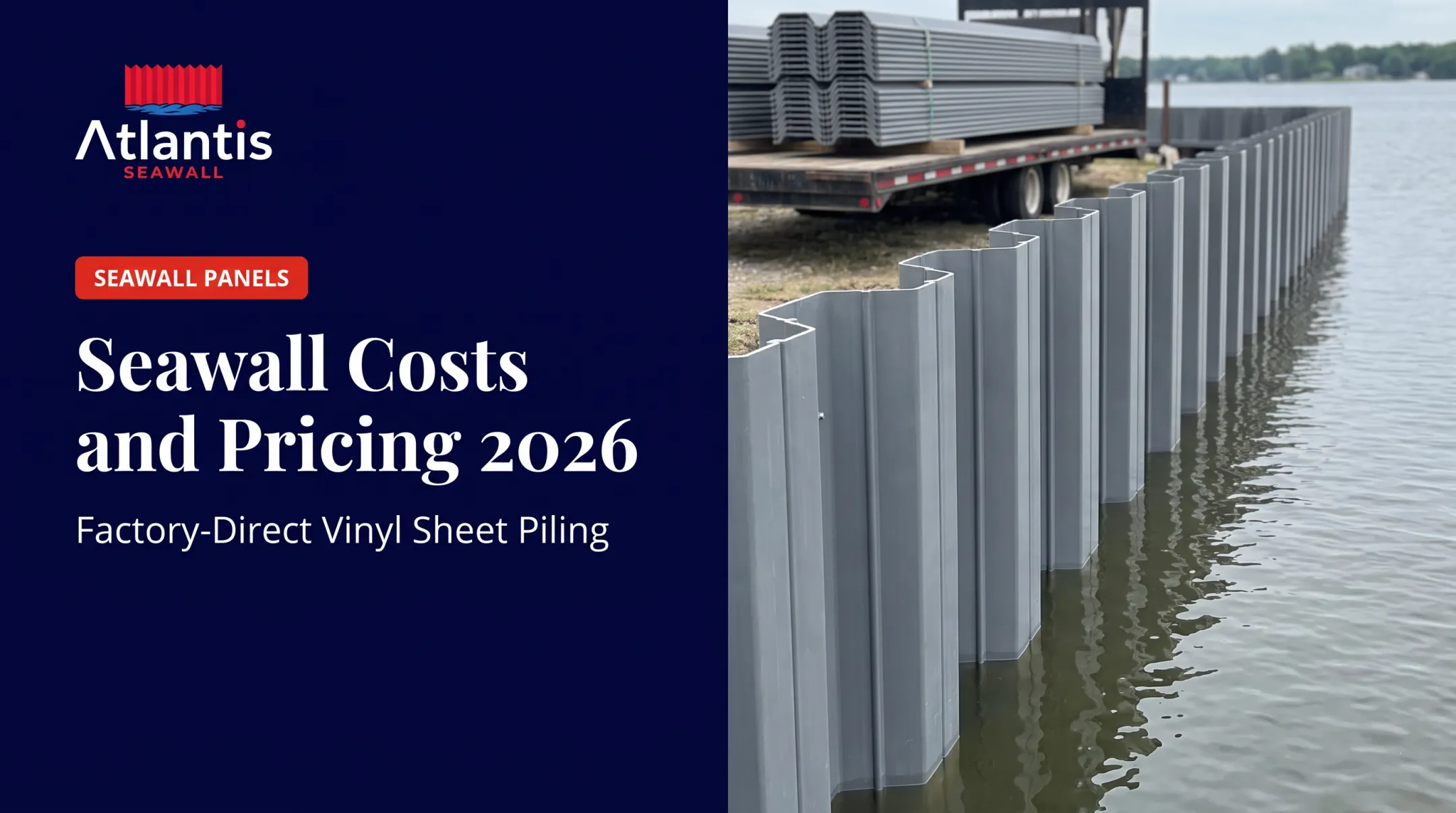
Atlantis Seawall manufactures recycled PVC vinyl sheet piling in Cleveland, Ohio, and ships across the United States. In Ohio it handles sales, delivery, and installation coordination through local partner installers. For projects elsewhere, confirm shipping and installer arrangements before you plan around them.
What Factors Affect a Seawall Installation Quote?
Wall Geometry
Longer, taller walls need more material, deeper embedment, heavier equipment, and more labor. Curves, corners, higher elevation targets, and more retained soil add complexity. Cantilevered walls generally suit lower heights, while taller walls usually need anchors or tie-backs.
Site Conditions and Access
Soil type, water depth, shoreline slope, wave or current exposure, seasonal water levels, and nearby structures all influence design and method.
Access matters too. Land-based work is usually simpler. Barges, cranes, tight staging areas, and restricted property access add mobilization and scheduling complexity. Water-access premiums vary by contractor and site, so ask each bidder to state its access and staging assumptions.
Existing Wall Condition and Scope
Scope can swing widely depending on what's there:
- A failed cap or localized void may point toward targeted repair
- A leaning wall, widespread deterioration, or lost backfill often supports replacement
- Building in front of an old wall avoids demolition but changes design and permitting
NC Sea Grant lists new leaning, ground holes, severe rust, missing pieces, and rotting boards as signs to investigate. Treat them as prompts for an assessment, not automatic replacement triggers.
Material and System Selection
Steel, concrete, timber, vinyl, and riprap all appear in shoreline work. Riprap is a sloped rock treatment rather than a vertical wall. Durability, corrosion or rot resistance, maintenance, appearance, and structural demand differ by site.
Be careful with price-per-foot claims. No reliable national installed range exists by material. One municipal example, a San Diego feasibility study, put a new 375-foot public seawall segment at roughly $3,723 per linear foot in 2022 dollars with a 25% contingency. That's a local public project, not a homeowner price. A material's purchase price also isn't its installed cost.

Regulations, Engineering, and Timing
Shoreline, floodplain, environmental, property-line, and waterway rules vary by jurisdiction. They affect design, documentation, review time, and fees. Freight distance, custom lengths, seasonal access, and weather can also shift cost and schedule.
How to Compare Seawall Installation Quotes
Put proposals side by side and normalize the basics first:
- Wall length, height, material, and profile
- Embedment, cap, tie-backs, drainage, and backfill
- Demolition and access method
- Engineering, permits, taxes, and freight
- Restoration and cleanup
Specifications, Performance, and Warranty
Compare design assumptions, product specs, corrosion or rot resistance, maintenance expectations, and warranty coverage. Spell out whether the warranty covers materials, workmanship, or both, who honors it, and for how long.
A lower price may reflect a shorter wall, shallower embedment, skipped restoration, omitted permits, provisional allowances, or excluded demolition. Those gaps mean a smaller job, not real savings.
Contractor Capability
Ask who handles engineering coordination, installation, equipment, permitting, inspections, delivery, and cleanup. Find out whether subcontractors are involved.
Also request:
- Waterfront references (the FTC suggests at least three similar projects)
- Proof of required licensing or insurance
- A written schedule and change-order procedures
- One clear decision contact
Red Flags
- Vague lump-sum pricing
- Missing dimensions, material, or embedment
- Unclear permit responsibility
- Verbal-only promises
- Large unexplained allowances
- Exclusions that push major site risk onto you
Run through this quick decision checklist:
- Is the scope complete?
- Is the design appropriate?
- Are assumptions stated?
- Is communication responsive?
- Are warranty terms clear?
Then judge total project value, not the lowest number.
Schedule and Payment Terms
The quote should outline design, permitting, procurement, mobilization, installation, inspection, and closeout. It should also state deposit, progress payments, retainage if used, weather contingencies, and what could change the completion date.

Tie payments to completed work, limit the down payment, and hold final payment until inspections pass. Down-payment limits vary by state.
How to Prepare Before Requesting a Quote
Gather this first:
- Approximate shoreline length and desired wall height
- Water-body type and property location
- Photos from multiple angles, including visible failure symptoms
- Existing wall age and material
- Whether this is a repair, replacement, or new installation
Next, tell bidders about site access and constraints:
- Driveways and staging space
- Docks, boat lifts, and utilities
- Neighboring structures and shoreline vegetation
- Any survey, prior plans, or known permit documents
Finally, prepare questions covering:
- Material options and maintenance needs
- Installation method and engineering responsibility
- Permit coordination and project schedule
- Warranty terms and site restoration
- What you must provide before work starts
Request a Seawall Installation Quote from Atlantis Seawall
Atlantis Seawall is a US manufacturer and supplier of vinyl sheet piling, vinyl seawalls, and bulkhead materials. Panels are made in Cleveland, Ohio, and ship nationwide, typically within 5-7 days. Sales and installation coordination are offered in Ohio.
To get a useful quote, send:
- Project location and approximate linear footage
- Photos and existing-wall condition
- Access details and intended use
- Desired delivery date
- Whether you need materials only or installation coordination
Confirm profile, custom lengths, colors, warranty terms, and shipping against your specific project. Request a project-specific quote rather than relying on a universal price.
Call 216-550-5737 or email Bob.F@seawallusa.com to start your quote.
Frequently Asked Questions
How much does it cost to install a seawall?
It depends on length, height, material, soil, embedment, access, demolition, engineering, permits, and restoration. No reliable national per-foot range is published, so get project-specific quotes.
What information do I need to get a seawall installation quote?
Location, approximate dimensions, photos, existing-wall condition, access details, water conditions, preferred material, and whether you need materials or complete installation.
What should be included in a seawall installation quote?
Materials, dimensions, engineering, permits, mobilization, demolition, installation, cap, tie-backs, backfill, restoration, schedule, exclusions, warranty, and payment terms.
Is vinyl less expensive than concrete or steel for a seawall?
Design loads, site conditions, access, maintenance, and installation scope all affect the total. Compare complete installed systems, not material prices alone.
How many seawall installation quotes should I get?
At least three written quotes, per New York Attorney General guidance. Quotes with inconsistent scopes can't be fairly compared, so request matching specifications.
Do I need engineering and permits for a seawall?
Usually, yes, though requirements vary by location, waterway, and agency. Ohio's Lake Erie shore, for example, requires an Ohio-registered professional engineer for a Shore Structure Permit. The quote should say who handles applications, fees, and inspections.