Marine piling is the installation of piles or interlocking sheet sections in, alongside, or beneath water to support structures, retain soil, and protect shorelines from erosion. This guide covers piling types, materials, applications, installation, cost factors, durability, and sustainability, so you can ask better questions before specifying anything.
Key Takeaways
- The right system depends on loads, soils, exposure, access, design life, and permits.
- Bearing piles carry loads; interlocking sheet piles retain soil and water.
- Site investigation and qualified engineering come before material selection.
- Lifecycle value includes durability, maintenance, installation impacts, and inspection.
What Is Marine Piling?
"Marine piling" is an umbrella term. It covers foundation piles, retaining-wall systems, dock pilings, and bank-protection systems, not one product or one installation method.
What marine piling does
Individual piles move structural loads into the ground. The FHWA deep foundations manual explains that load transfer happens mainly through end bearing when a competent layer exists, or through shaft friction when it does not. Many piles use both.
Sheet piles work differently. Interlocking sections form a continuous wall that resists soil and water pressure. The two should not be confused: a dock needs bearing piles, while a seawall needs a retaining wall.
A related distinction: a bulkhead is a soil-retaining partition meant to hold land in place, while a seawall is built to resist wave attack as well. A wall that does both must be designed for wave forces and earth pressure together.
How coastal conditions affect design
Several forces shape the design:
- Waves, storm surge, and tides
- Changing water levels
- Currents and sediment movement
- Scour at the base of piles and walls
- Saltwater and freeze-thaw exposure
- Soft or variable seabed soils
The most important engineering often sits below the waterline: embedment depth, anchoring, drainage, and soil interaction. Corrosion varies by zone too. USACE's sheet-pile design manual describes salt water as more corrosive than fresh water and the splash zone as more aggressive than full submersion.

Fresh water is not automatically gentle. A Wisconsin Sea Grant report documented one Great Lakes harbor where sheet-pile corrosion ran comparable to saltwater ports. That is a site-specific case, but it argues for testing rather than assuming.
Common applications
Piling systems appear in:
- Docks, piers, marinas, and boat ramps
- Wharves, bridges, ports, and quay walls
- Seawalls, bulkheads, and bank protection
- Riverbanks, canals, and retention basins
Types of Marine Piling and Materials
Driven bearing piles
Steel, timber, concrete, and composite piles are driven individually or in groups to carry vertical and lateral loads from docks, piers, and bridges. Length, section, embedment, and driving method come from project-specific engineering. No generic rule replaces it.
Sheet piling and bulkhead systems
Interlocking sheets form a continuous wall for shoreline retention, erosion control, excavation support, seawalls, and bulkheads. Material choices include steel, vinyl, and other composites. Compare them on:
- Corrosion or rot resistance
- Stiffness
- Installation equipment and vibration
- Handling weight
- Appearance and maintenance
Standards exist for each. ASTM A328 covers steel sheet piling, and ASTM D8427 covers rigid PVC profiles for sheet piling. Federal specification UFGS 31 41 16.16 covers permanent retaining structures made from PVC or FRP sheet piling.
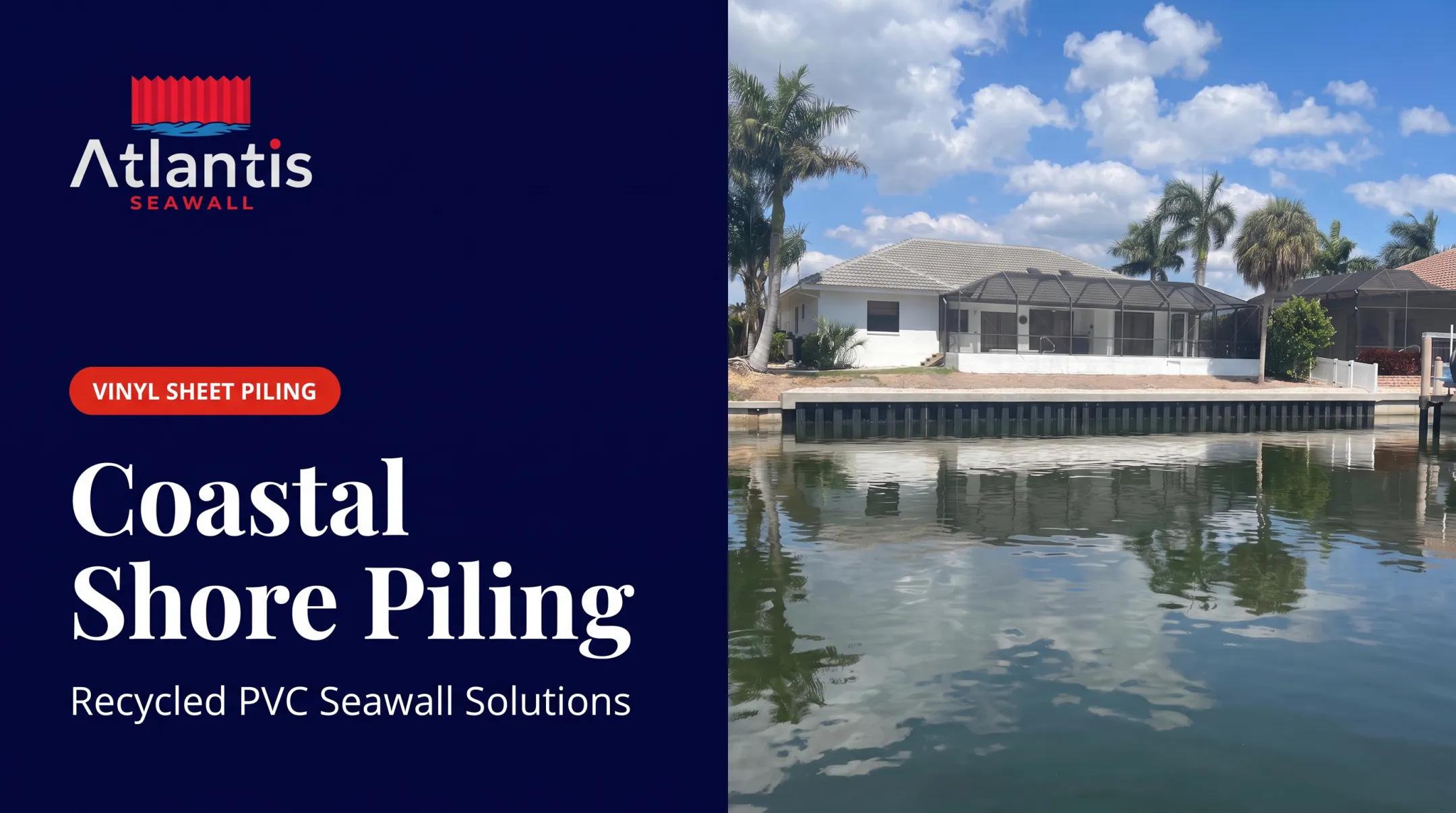
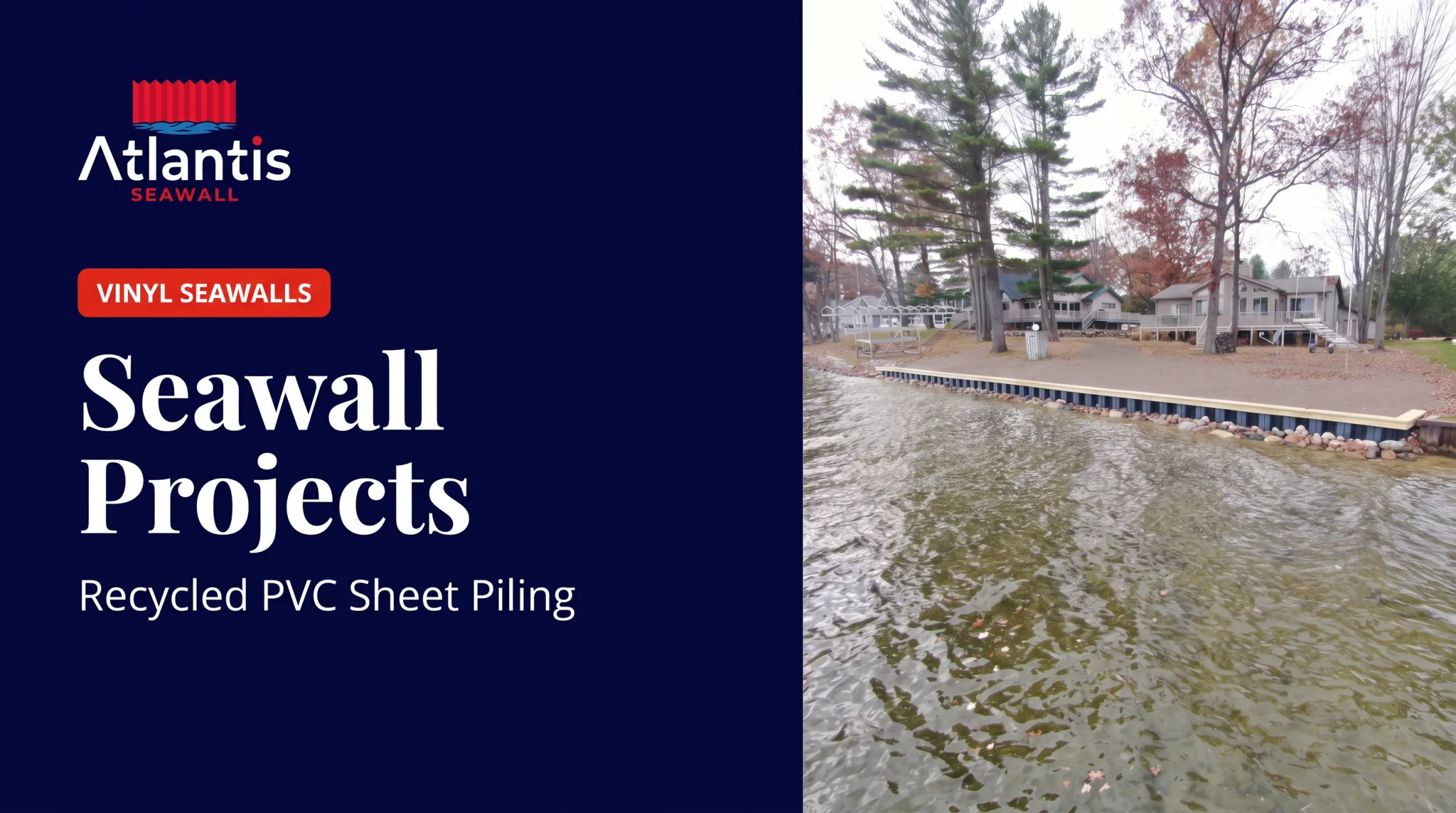
Atlantis Seawall is one example of a vinyl option. It manufactures 12-inch Z-profile panels from recycled PVC in Cleveland, Ohio.
Key product details:
- Five grades: 300, 400, 450, 500, and 600
- Thicknesses from 0.300 to 0.620 inches
- Weight of 5.5 pounds per foot
- 50-year limited transferable warranty with exclusions
Always confirm current specifications, profiles, and warranty terms with the manufacturer.
Tubular, bored, and drilled piles
Tubular steel piles, bored piles, drilled shafts, and cast-in-place systems come into play with high loads, difficult soils, vibration limits, or restricted access. Drilled shafts follow different procedures than driven piles, so the two should not be specified interchangeably.
Material comparison
| Material | Strengths | Main concerns |
|---|---|---|
| Timber | Familiar, easy to cut | Decay, marine borers; needs preservative treatment |
| Steel | High strength, deep driving | Corrosion, especially in the splash zone |
| Concrete | Abrasion resistance, axial capacity | Weight, cracking, settlement in soft soils |
| Vinyl (PVC) | Rot and rust resistant, light | Lower stiffness, impact damage, limited depth |
| FRP/composite | Corrosion resistant | Cost; values differ from PVC |
Do not treat PVC and FRP properties as interchangeable. Published values vary by product.
How to select the right material
Evaluate these factors before specifying:
- Design loads, soils, and scour potential
- Water chemistry, exposure zone, and marine organisms
- Appearance, equipment availability, and environmental requirements
- Service-life goals and whole-life cost
Then bring the owner, marine contractor, structural or geotechnical engineer, and supplier together before finalizing specifications.
Where Marine Piling Supports Coastal Infrastructure
Structural waterfront foundations
Bearing piles support docks, piers, jetties, bridges, wharves, marinas, floating-dock guides, mooring structures, and port facilities. Selection must account for live loads, vessel impact, wave action, wind, lateral forces, and changing water levels.
Shoreline stabilization and retaining systems
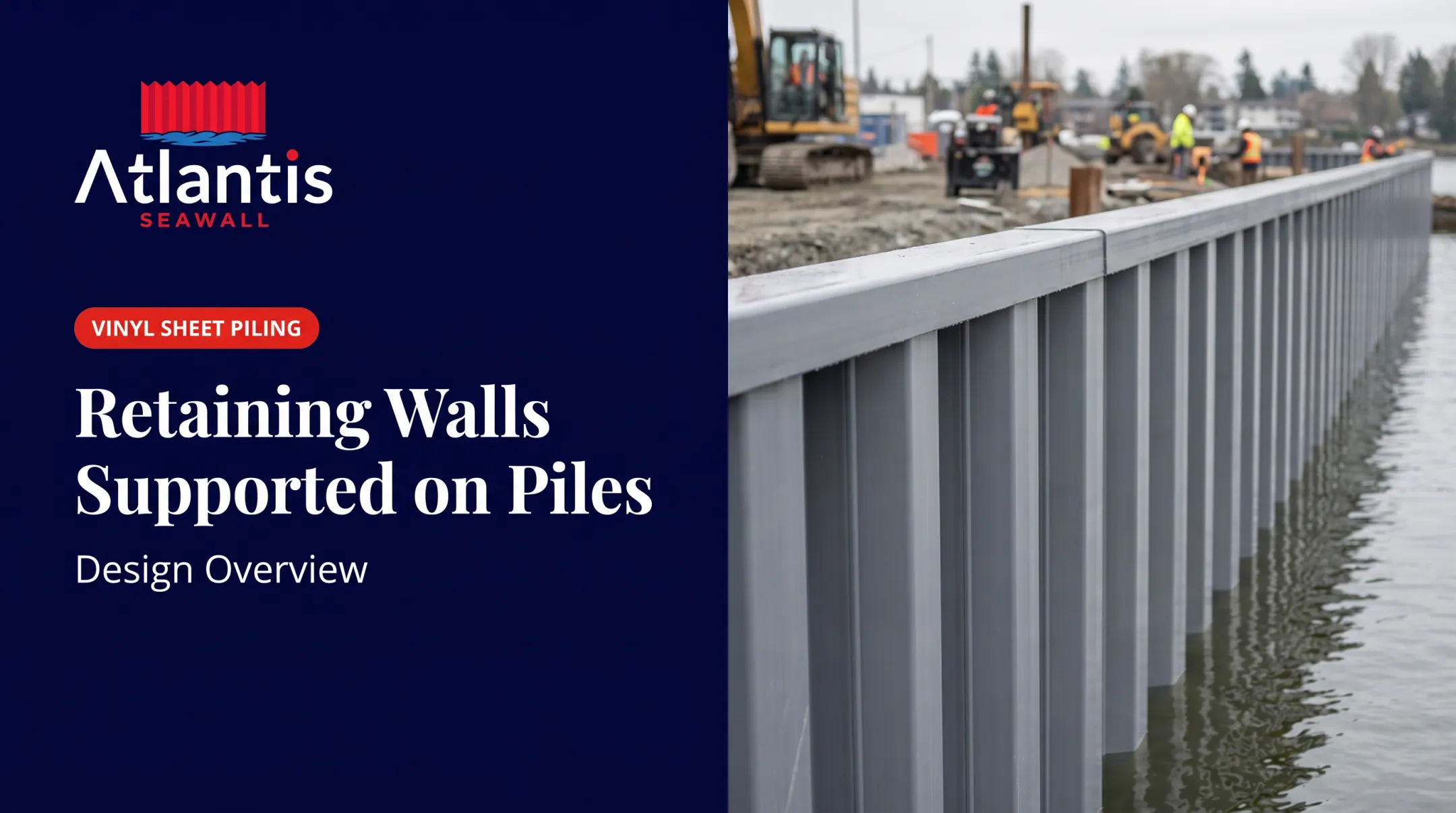
Sheet piling, seawalls, and bulkheads retain backfill, reduce bank erosion, and separate land from water. They also stabilize canals, ponds, and retention basins.
The wall itself is only part of the system. Success also depends on:
- Drainage and control of water pressure behind the wall
- Tiebacks or anchors where required
- Scour protection at the toe
- Cap and connection details
Public, commercial, and residential projects
Priorities differ by owner:
- Marinas and ports weigh durability and phasing
- Municipal parks and lake associations focus on procurement and low maintenance
- Homeowners often care most about appearance and access
Site type matters as well. Inland, riverfront, Great Lakes, and oceanfront locations have different exposure. According to NOAA GLERL, upper Great Lakes levels saw a record two-year rise beginning in 2013, with impacts to piers. Ice cover can also change quickly. The same structure name does not mean the same design requirements.

Planning and Installing a Marine Piling System
Site investigation and engineering
Before selecting a system, assess:
- Bathymetry and water levels
- Wave and current conditions
- Shoreline geometry
- Existing structures and utilities
- Access
- Soil borings
- Potential scour
Geotechnical and structural analysis then sets pile type, spacing, section, embedment, anchoring, capacity, alignment, and connections. General guidance does not replace project engineering.
Environmental, permitting, and safety planning
Federal and state review is project-specific. Common touchpoints include:
- Clean Water Act Section 404, since placing pilings can count as a fill discharge
- Rivers and Harbors Act Section 10 for work in navigable waters
- Clean Water Act Section 401 state water-quality certification
- Nationwide Permits, such as NWP 13 for bank stabilization, which carries length and fill limits
- Endangered Species Act and Essential Fish Habitat consultation where a federal action is involved
- State rules, such as Michigan's authorization for Great Lakes bottomland construction
Confirm requirements with the Corps district and your state agency early. Work windows and noise limits can drive the schedule.
Safety needs its own plan. OSHA 29 CFR 1926.106 requires life jackets, ring buoys, and a lifesaving skiff where workers are over or near water. Also plan for lifting, currents, barge stability, public access, and emergencies.
Equipment and installation methods
Impact driving, vibratory driving, drilling, and crane- or excavator-assisted installation each fit different conditions. Choose based on soil resistance, pile material, access, depth, vibration and noise limits, production needs, and nearby structures. Caltrans guidance addresses underwater sound from impact and vibratory driving.
Lightweight sheet piling can simplify handling. Atlantis, for instance, says its 12-inch panels can be driven two or three at a time depending on soil. The method still has to match the engineered design.

Typical installation sequence
- Mobilize and prepare the site
- Lay out the wall and set temporary works
- Align and drive or drill piles or sheets
- Engage interlocks
- Cut and cap
- Install anchors or wales
- Backfill
- Restore the site
Contractors should document pile position, verticality, installed depth, driving behavior, interlock condition, visible damage, connection quality, and any deviation from design.
Budget, procurement, and schedule
Cost and duration depend on:
- Material, quantity, and pile length
- Water depth, seabed, and access
- Mobilization, environmental controls, and labor
- Demolition, backfill, engineering, shipping, and restoration
A NOAA shoreline protection study found water access, equipment, shoreline conditions, and bulkhead size drive cost. There is no universal per-foot price.
For contractors buying vinyl panels, Atlantis ships from Cleveland across the United States, typically in 5 to 7 days, with free shipping on full truckloads of 7,000+ square feet and custom lengths in 1-foot increments. It coordinates installation through partner installers in Ohio rather than installing directly. Project quotes are required.
Durability, Maintenance, and Sustainability
Common causes of deterioration
- Steel corrosion
- Timber decay and marine borers
- Concrete cracking
- Impact damage to vinyl or composites
- Scour, settlement, and overloading
- Poor drainage
- Tieback or connection failure
The splash zone, fluctuating waterline, joints, caps, fasteners, and transitions deserve extra attention in design and inspection.
Protection and risk reduction
Common protection measures include:
- Coatings, galvanizing, and cathodic protection
- Pile wraps and treated timber
- Fenders and sacrificial components
- Scour protection and drainage
A NIST study evaluated coatings and cathodic protection for steel piles in natural seawater. These measures are material- and site-specific, so manufacturers, engineers, and marine contractors should confirm compatibility and upkeep.
Inspection and lifecycle maintenance
Set an inspection schedule based on exposure, structure type, loading, age, and failure consequences. Look for:
- Movement, settlement, and wall deflection
- Corrosion, rot, and impact damage
- Exposed embedment and backfill loss
- Erosion
FHWA's underwater inspection manual applies to bridges, not every dock or bulkhead.
Early repairs, debris removal, drainage upkeep, and scour monitoring keep small defects from becoming structural problems.
Sustainability and whole-life value
Weigh these factors together:
- Recycled content and end-of-life options
- Service life and maintenance frequency
- Replacement needs and protective treatments
- Installation vibration and transport
A single environmental claim is not enough. A 2012 life-cycle study compared CCA-treated wood, concrete, galvanized steel, and plastic marine piles, but it does not name a universal winner or evaluate recycled PVC specifically.
Atlantis states its panels use 100% recycled PVC. That is a manufacturer claim, and no independent environmental verification has been published for it. Ask for documentation, and note that warranty terms exclude storms, misuse, harmful chemicals, and faulty installation.
Frequently Asked Questions
What is marine piling?
Marine piling is the installation of piles or sheet sections in or beside water. Individual piles carry structural loads, while interlocking sheet piles form seawalls, bulkheads, and bank protection.
How much does marine piling cost?
Cost varies with material, quantity, length, water depth, soil, access, equipment, engineering, environmental controls, labor, and shipping. A site-specific quote is the only reliable number.
How long do pilings last in saltwater?
Service life depends on material, exposure zone, design, installation quality, protection, loading, scour, and maintenance. No single range applies across materials, so ask for project-specific data.
What is marine sheet piling?
Interlocking sheets are installed to form a continuous retaining wall or bulkhead. Common uses include shorelines, excavation support, erosion control, and waterfront protection.
How do you choose the right material for a coastal infrastructure project?
Weigh loads, soil, water chemistry, exposure, corrosion or decay risk, installation limits, maintenance, sustainability, design life, and budget. Engineering input should confirm the choice.
What factors affect marine piling installation time?
Project size, pile quantity and length, soil, water depth, weather, tides, access, mobilization, environmental restrictions, demolition, and inspection all matter. No universal benchmark exists.