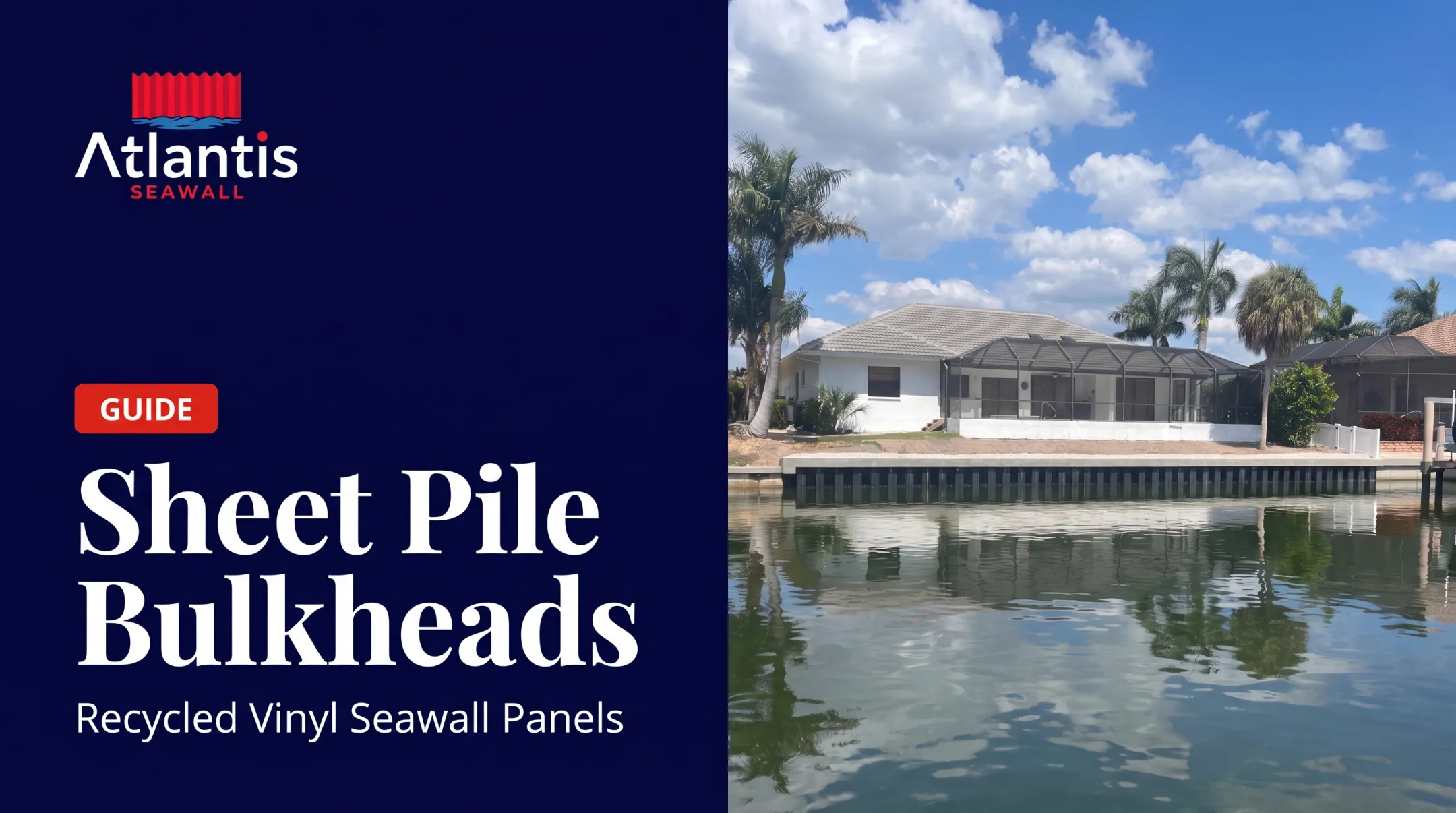
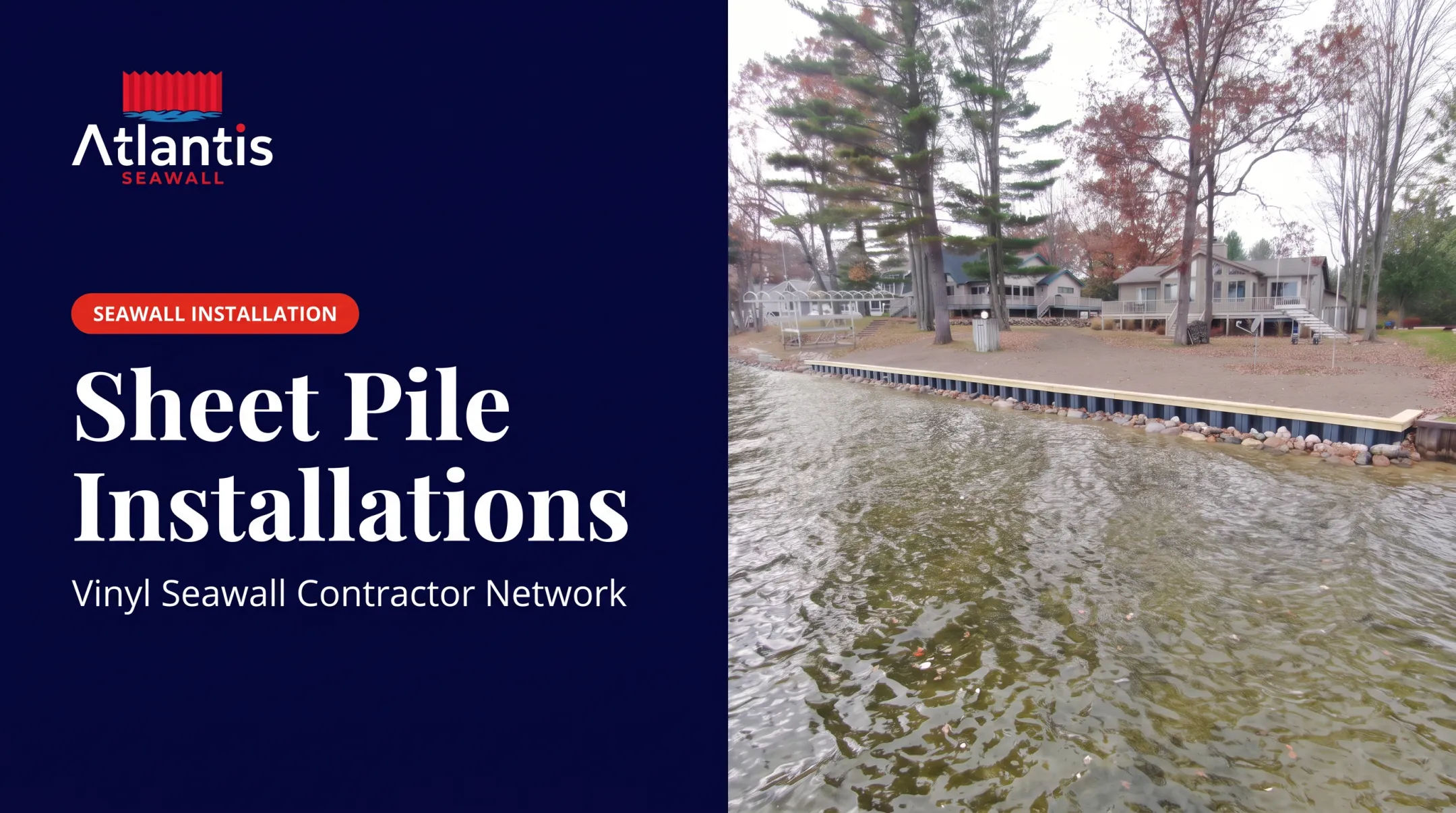
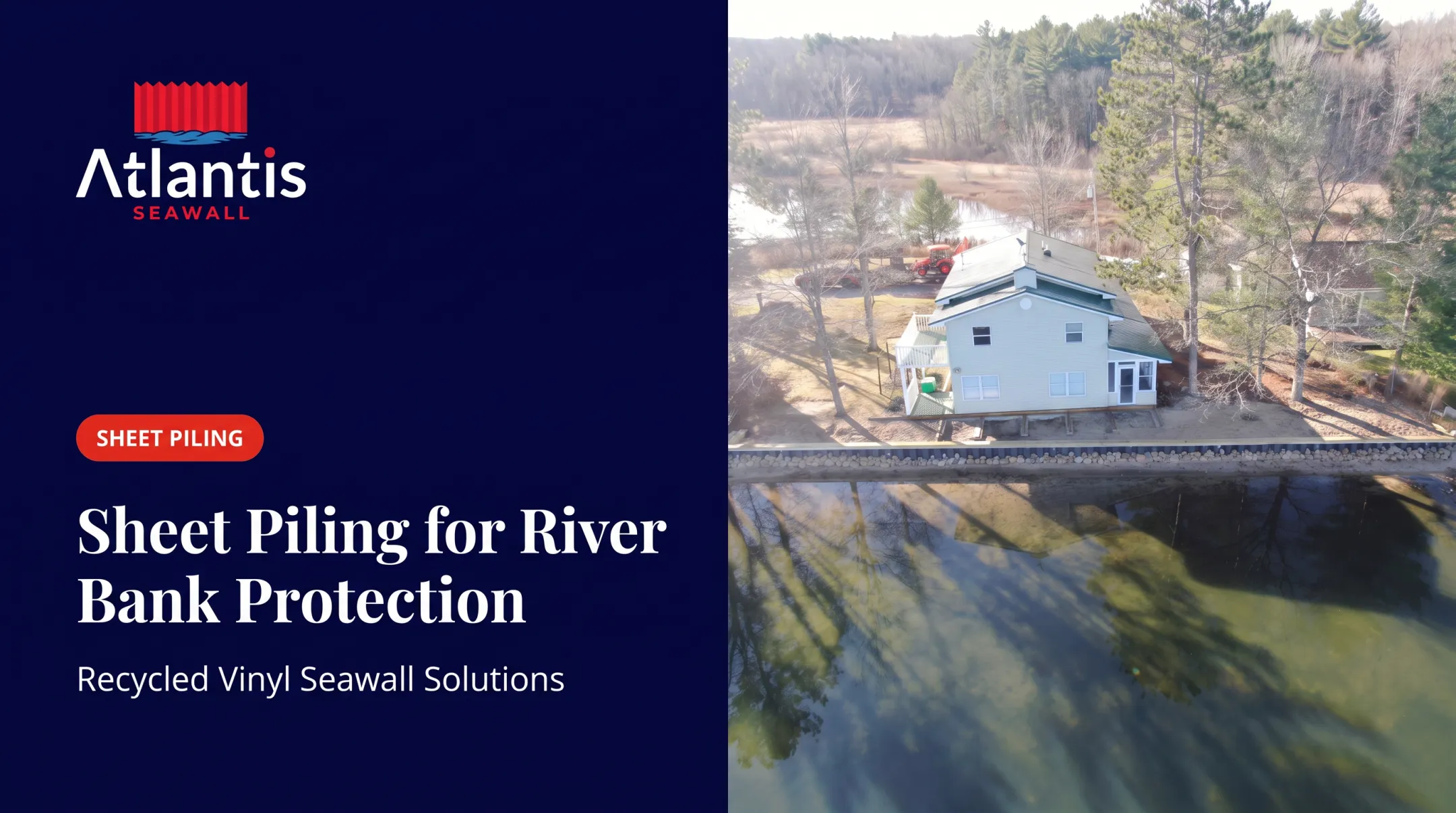
The hard part is the selection. Pile material, profile, length, and installation method all have to match soil conditions, lateral loads, water exposure, site access, project duration, and vibration limits. A wrong call shows up later as deflection, leakage, or a wall that can't be driven at all.
This guide covers sheet pile types, applications, installation methods, design considerations, and material selection for US projects.
Key Takeaways
- Sheet piles interlock into continuous retaining or cutoff walls.
- Z, U, and straight-web profiles differ in bending strength and interlock behavior.
- Steel, vinyl, timber, and concrete trade off strength, durability, and handling.
- Engineers must set embedment, anchorage, equipment, and safety requirements.
What Is Sheet Piling in Construction?
What "sheet pile" means
A sheet pile is a relatively thin structural section with interlocking edges that connects to its neighbors to form a continuous wall. Per the USACE manual](https://www.publications.usace.army.mil/portals/76/publications/engineermanuals/em_1110-2-2504.pdf), such a wall retains soil or water.
It differs from a bearing pile. Bearing piles carry structural foundation loads into deeper soil, while a sheet pile wall resists lateral earth and water pressure. Some systems, such as combination walls, can do both.
How a sheet pile wall works
The wall resists earth pressure, water pressure, erosion, and construction loads through:
- Pile stiffness and interlock continuity
- Embedment depth and soil resistance
- Anchors or braces, where used
A cantilever wall relies only on the soil around it. An anchored wall adds one or more mechanical restraints.
Interlocks limit soil and water movement, but they aren't automatically watertight. Tightness depends on profile, interlock condition, sealant, installation quality, and design. ArcelorMittal notes that interlocks generally tighten over time, while sealant controls immediate flow.
Temporary and permanent walls
Temporary walls serve as cofferdams, excavation support, and shoring. Extraction and reuse make them attractive, though driving may be a poor fit near vibration-sensitive improvements.
Permanent walls include seawalls, bulkheads, flood walls, bridge abutments, and retaining walls. These need an assessment of durability, corrosion, maintenance, and service life.
Uncapped exposed steel corrodes at an average of 2-10 mils per year, according to the USACE manual. USACE advises allowing for later cathodic protection on permanent installations.

Sheet Pile Types and Materials
Common profiles
Three profiles dominate: Z, U, and straight or flat. Interlock location and web and flange shape control section modulus, bending behavior, interlock tension capacity, and driving.
Box, composite, and cellular arrangements are specialized assemblies for high loads, large cells, or unusual waterfront conditions.
Z-type versus U-type
- Z sections put interlocks at the outer edges, far from the neutral axis. USACE identifies Z piling as predominant where bending strength governs.
- U sections have interlocks on the neutral axis. ArcelorMittal says shear transfer requires crimped double piles or intermittently welded interlocks, and section properties may still need reduction.
Always follow the manufacturer's engineering data for the chosen product.
Straight or flat piles and cellular structures
Straight-web piles suit circular or cellular cofferdams and gravity structures, where interlock tension matters more than bending. A cellular structure is a system of connected cells filled with soil or other material. It isn't a row of cantilever sheets.
Steel sheet piles
Steel comes hot-rolled or cold-formed. Cold-formed light-gage sheeting (ASTM A857) is 0.25 in. thick or less, so it suits lighter duty than hot-rolled sections.
Common US specifications:
- ASTM A328 for carbon steel sheet piling
- ASTM A572 for high-strength low-alloy grades
- ASTM A690 for marine corrosion resistance
No universal steel grade or service life applies. Check manufacturer data and corrosion-protection guidance for each site.
Vinyl/PVC, timber, and precast concrete
- Vinyl/PVC: Light and rot-proof. ASTM D8427 covers rigid PVC profiles, and design is often deflection-controlled.
- Timber: Treated wood suits marine exposure when the preservative matches regional marine borers. Dual treatment may be needed in some regions.
- Precast concrete: USACE describes 6-12 in. deep, 30-48 in. wide sections for marine and abrasive streambeds. Weight can cause settlement in soft soils, and joints can compromise watertightness.
A 2003 USACE CRREL study found vinyl creep under sustained load, faster at higher temperatures, and a notable drop in impact strength after five years of exposure.
Atlantis Seawall manufactures vinyl sheet piling in Cleveland, Ohio, from 100% recycled PVC. Its panels are 12 inches wide and 9 inches deep in a Z-channel profile, weigh 5.5 lb per foot, and come in Slate Gray and Natural Gray.
Five duty grades run from 300 to 600, with allowable moments of 5,400 to 11,160 ft-lb/ft. They fit seawalls, bulkheads, shoreline retention, ponds, and canals. The company states a 50-year limited transferable warranty with conditions, so confirm current specifications and terms before specifying.
Common Construction Applications and Benefits
Where sheet piles are used
Below-grade and earth retention:
- Basement and underground parking excavations
- Utility trenches
- Retaining walls and bridge abutments
- Slope and scour protection
Water and marine work:
- Seawalls, bulkheads, and quay walls
- Cofferdams and canals
- Levees and flood barriers
- Marinas, ports, and ponds
- Environmental cutoff walls
A US example: the Mantoloking, New Jersey dune restoration used 45-ft SKZ 34 steel piles made to A690, built from July 2014 to January 2015 for storm protection.
Sheet pile walls versus pipe pile walls
A conventional wall is built from interlocking sheets. A pipe-sheet combination wall uses large-diameter pipes that take most of the bending load. Sheets between the pipes transfer load to the pipes and soil, and the pipes can also carry vertical loads.

Neither option is always better. The right choice depends on bending demand, vertical loads, wall height, water and soil conditions, corrosion exposure, available equipment, and the engineer's design.
Advantages and limitations
Advantages:
- Narrow footprint and fast wall formation
- Works for temporary or permanent jobs
- Less excavation
- Reusable in some temporary systems
- Low-vibration installation options
Limitations:
- Hard driving and buried obstructions
- Alignment control
- Equipment access
- Noise and vibration
- Interlock leakage
- Corrosion or material degradation
- Engineered embedment and bracing requirements
Sheet Pile Installation Methods
Preconstruction planning
Gather these before mobilizing:
- Geotechnical investigation and soil layering
- Groundwater level, retained height, and surcharge loads
- Nearby structures, utilities, and environmental limits
- Site access and required wall tolerances
The designer and contractor must coordinate profile, length, hammer or press, guide frame, sequencing, bracing, anchors, and water control.
Primary methods
- Impact driving: hydraulic or other hammers. Effective in many soils, but manage noise, vibration, pile damage, and nearby structures.
- Vibrodriving: vibration reduces soil friction. NASSPA says it suits granular soils, especially saturated sand and gravel, while dewatered sands can resist it.
- Pressing or jacking: hydraulic force reacting against previously installed piles. Low noise and vibration, but it needs access, suitable equipment, and matched sections.
FHWA recommends documenting existing conditions and considering vibration monitoring near structures. Louisiana DOTD's 2012 study suggested peak particle velocity thresholds of 0.5 in/s in general cases and 0.1 in/s in sensitive ones. Those are study recommendations, not national limits.
Pitch-and-drive versus panel driving
- Pitch-and-drive: Sets and drives piles one at a time. Works where access or equipment is limited.
- Panel driving: Assembles several interlocked piles in a guide frame and drives them in stages. NASSPA recommends it to hold verticality and alignment and to cut the risk of driving out of interlock, especially for long piles or hard ground.
Driving assistance and site controls
Pre-drilling reduces soil resistance, and jetting can ease penetration. Both change the ground. FHWA cautions that they affect pile compression, uplift, and lateral capacity, so design should account for them. They can also alter groundwater movement and contamination pathways.
Site controls include:
- Pile inspection before driving
- Guide frames and verticality checks
- Interlock monitoring
- Obstruction and refusal procedures
- Documented tolerances
Completing the wall system
After driving, the wall may need:
- Tie rods, anchors, walers, and braces
- Caps, corner connectors, and sealants
- Drainage, backfill, and scour protection
Final details depend on the engineered system. Follow manufacturer instructions, project specifications, and OSHA rules.
OSHA requirements include protective systems for excavations 5 ft or deeper, daily competent-person inspections, and keeping workers clear while piling is hoisted into leads.
How to Select Sheet Piles for a Construction Project
Define performance requirements
Start with the loads and site conditions the wall must handle:
- Retained height, water levels, and hydrostatic pressure
- Surcharges, wave action, current, and scour
- Seismic loading where applicable, plus any vertical loads
From there, the design sets embedment, stiffness, allowable deflection, anchorage, interlock performance, drainage, and construction-stage loading.
For scale, WSDOT notes cantilever walls are commonly most cost-effective at retained heights of 12-15 ft or less in cut applications. That's guidance, not a limit.
Match material and profile to the site
Compare steel, vinyl, timber, and concrete against:
- Loads and soil abrasiveness
- Corrosion, biological exposure, and UV
- Service life, handling, and maintenance
UFGS describes PVC as suited to corrosion-prone sites with exposed wall heights under 20 ft.
Verify that profiles, interlocks, connectors, corners, and replacement sections are compatible. Don't mix visually similar products without manufacturer confirmation.
Account for installation constraints
Factor in equipment and site limits:
- Crane capacity, driving or pressing equipment, and headroom
- Access, platform stability, and nearby buildings or utilities
- Noise limits and seasonal water levels
The cheapest material isn't always the cheapest installed wall. A section needing specialized equipment, heavy bracing, or lengthy prep can erase the savings. Lightweight panels, such as 5.5 lb/ft vinyl that can be driven 2-3 at a time depending on soil, reduce handling effort.

Evaluate durability and project life
Steel needs corrosion protection and inspection. Vinyl and timber raise questions about UV, creep, impact, chemicals, temperature, and rot or borers. No authoritative universal service life exists for any sheet pile material. Use manufacturer test data, specifications, standards, and a qualified durability assessment.
Plan procurement and delivery
Your purchasing checklist:
- Profile, material, and section properties
- Pile length and quantity
- Corners, connectors, caps, and sealants
- Anchors and accessories
- Drawings and installation guidance
- Certifications and mill test reports
- Delivery timing and replacement availability
Public work may add domestic-origin rules. Iowa DOT, for example, requires US-melted steel and approved sources.
Atlantis Seawall is one US vinyl supplier. It offers custom lengths in 1-foot increments with no charge for custom cuts, factory-direct shipping coast to coast in 5-7 days, and free shipping on full truckloads of 7,000+ sq ft.
Confirm current lead times, shipping terms, specifications, and warranty conditions before ordering.
Before you buy, get a site-specific design review and a supplier quote. That matters most for permanent seawalls, deep excavations, high surcharges, and heavy water pressure.
Frequently Asked Questions
What is a sheet pile wall?
A sheet pile wall is a continuous wall of interlocked sections that retains soil or water. It can be temporary, such as a cofferdam, or permanent, such as a seawall.
What are sheet piles used for?
They support excavations and form retaining walls, seawalls, bulkheads, and cofferdams. They also protect bridges, control floods, and serve as environmental cutoff walls.
What are the different methods of sheet piling?
The main methods are impact driving, vibrodriving, and pressing or jacking. Soil, access, noise, vibration limits, and project constraints decide which one fits.
How long does sheet piling last?
It varies with material, corrosion or degradation exposure, soil and water chemistry, design, installation, and maintenance. Rely on project-specific manufacturer and engineering data, not a universal number.
What are the key differences between pipe pile walls and sheet pile walls?
Sheet pile walls interlock thin sections into a continuous barrier. Pipe or combination walls use large-diameter pipes for most of the bending and vertical load, with sheets between them. Structural demand and site conditions decide.
What is the difference between U-type and Z-type sheet piles?
Z sections place interlocks far from the neutral axis, which is efficient in bending. U sections put interlocks on the neutral axis and may need crimping or welding for composite action. Manufacturer data and engineering design control the final choice.