
In this article, "bulkhead" means a shoreline retaining wall built along the edge of a body of water. It does not mean a ship's internal partition or a rooftop enclosure on a building.
Below, we cover how bulkheads work, how they're built, common materials, how they differ from seawalls, and which site conditions decide whether one makes sense.
Key Takeaways
- A shoreline bulkhead is a vertical or near-vertical wall that retains soil and stabilizes the land-water edge.
- Construction is a full system: assessment, piles or panels, support, drainage, backfill, and finishing.
- Material choice depends on soil pressure, water exposure, waves, ice, wall height, and access.
- Permits and engineered design are often required, especially below the waterline.
What Is Bulkhead Construction?
What a shoreline bulkhead is
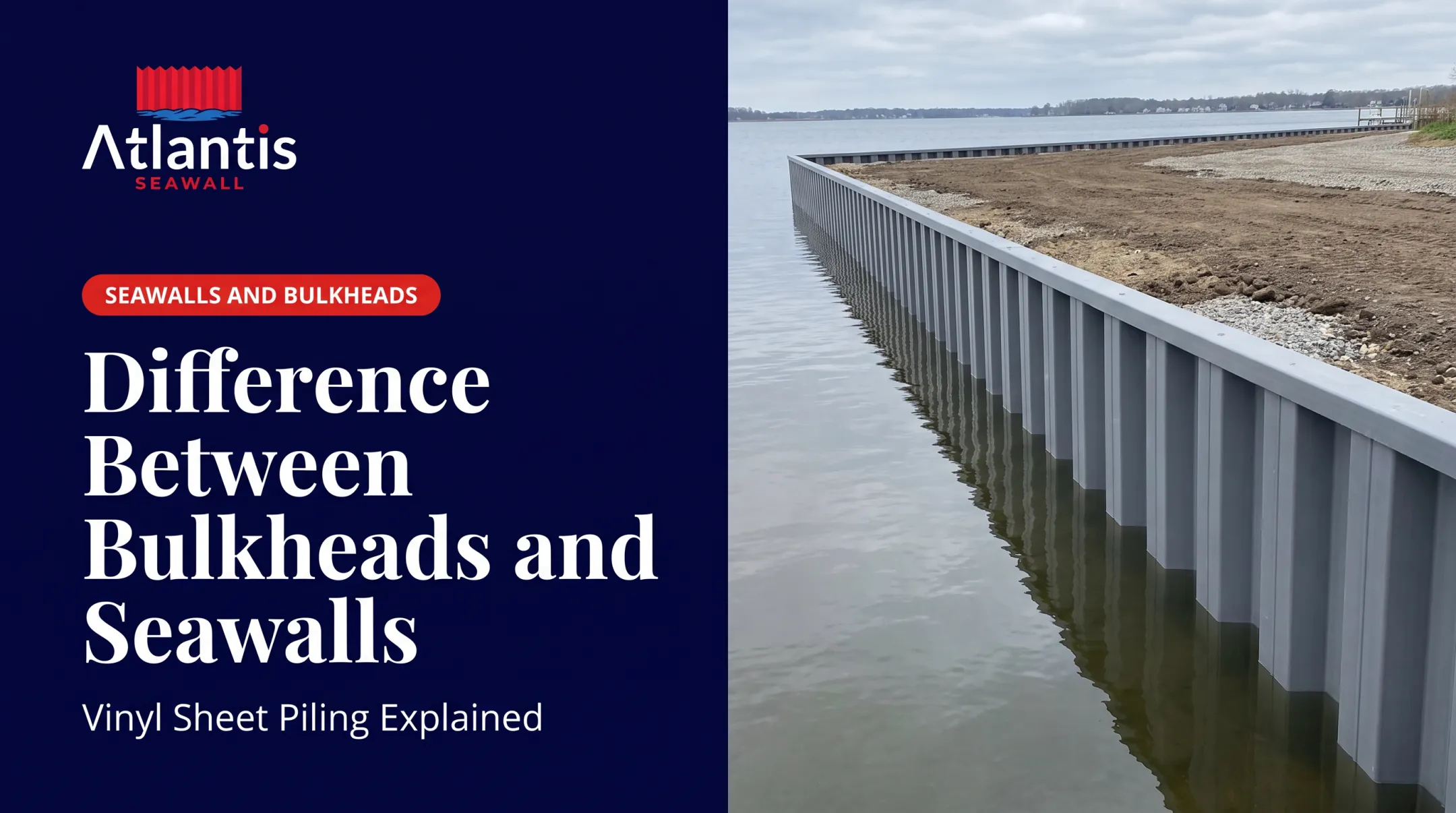
A bulkhead is a retaining structure installed along a shoreline to hold back soil, reduce bank slumping, and create a stable waterfront edge. USACE engineering guidance describes its primary function as retaining land or preventing sliding, with wave protection secondary.
That makes it a structural element, not a decorative barrier. The wall has to resist lateral soil pressure and water-related forces every day.
How bulkheads protect waterfront property
A well-designed bulkhead limits the movement of soil and backfill into a lake, river, canal, pond, or marina basin. That helps preserve shoreline access, landscaping, docks, roads, and buildings.
It cannot eliminate every flood, wave, or storm risk. Treat it as bank stabilization, not storm immunity.
Where bulkheads are commonly used
- Residential lakefront and riverfront lots
- Marinas, yacht clubs, and campgrounds
- Canals and municipal waterfronts
- Ponds, drainage channels, and retention basins
These are mostly low- to moderate-energy settings. Exposed shorelines with heavy wave action, storm surge, or long fetch may call for a more robust seawall or other engineered system.
Forces a bulkhead must withstand
USACE lists active soil and water pressure behind the wall, passive soil pressure on the water side, anchor forces, waves, seepage, toe scour, and ice effects. In practice, that means:
- Saturated backfill and hydrostatic pressure
- Soil type and wall height
- Surcharge loads from vehicles, buildings, or stored material
- Boat wakes, currents, and ice
- Scour at the base
An engineer or qualified marine contractor should evaluate these forces. The look of the existing shoreline isn't enough to go on.

Other meanings of "bulkhead"
Ships use watertight and fire-resistant bulkheads as internal partitions. Architects use the term for enclosed ceiling drops and mechanical access areas. You may run into either while searching, but neither applies here.
How Is a Bulkhead Constructed?
Exact sequences vary by project, but most follow this general path.
Site assessment and design
Construction starts with a full site evaluation. Key factors include:
- Shoreline geometry, water levels, and soil conditions
- Existing erosion, wall height, and nearby loads
- Equipment access, utilities, and neighboring structures
- Environmental constraints
The design has to account for the land behind the wall and the water-side conditions in front of it. Ignoring either side is how walls fail.
Permitting and project preparation
Local, state, and federal approvals may apply, depending on the water body and the work below the ordinary or high-water mark. Under the Rivers and Harbors Act, USACE Section 10 authorization covers structures in navigable waters, and its examples expressly include bulkheads as bank protection.
Ohio's Lake Erie program shows how layered this gets: a state shore structure permit, possible submerged-lands lease, and plans sealed by an Ohio-licensed engineer. Requirements differ elsewhere.
Preparation usually includes:
- Documenting the existing shoreline
- Confirming property boundaries
- Arranging equipment access
- Protecting nearby improvements
- Removing or isolating a failing wall
Installing piles or panels
Interlocking sheet piles or panels are set along the planned alignment and installed to the design depth, commonly by driving. Equipment and method depend on soil resistance, nearby structures, vibration, water depth, and access.
Federal specifications for PVC sheet piling call for shop drawings showing driving sequence and pile locations, plus installation records.
Adding structural support
Taller or more heavily loaded walls often need tie rods, anchors, wales, or deadmen to carry soil loads away from the wall. Layouts vary with wall height, soil, loading, and water conditions, so none of this is a universal detail.
A public Miami-Dade project, for example, used steel sheet piling, a continuous waler, tie rods, an anchor wall, and a concrete cap. That is one design, not a template.
Installing drainage, filter fabric, and backfill
Filter fabric, weep holes, and free-draining backfill reduce trapped water pressure and keep soil from washing through joints. USACE recommends filtered weep holes where a close-fitting pile wall is essentially watertight.
Backfill must be placed and compacted carefully. Sloppy compaction creates settlement and new pressure problems.
Capping, finishing, and inspection
Finishing typically includes:
- Installing a cap
- Tying the wall into the adjacent bank
- Restoring the shoreline surface
- Coordinating with docks, walkways, and landscaping
A final inspection should check:
- Alignment and interlocks
- Visible damage
- Drainage performance
- Backfill settlement
- Any sign the wall is moving or being undermined

Bulkhead Materials and Components
Common bulkhead materials
NC Sea Grant lists wood, steel, concrete, and vinyl among common materials. Each trades off differently:
| Material | Typical concerns | Notes |
|---|---|---|
| Timber | Rot, boring organisms | Familiar, but deterioration shows as rotting boards |
| Steel | Corrosion | High capacity; rust and corroded tie-rod hardware are common findings |
| Concrete | Cracking, spalling, exposed rebar | Heavy; needs equipment access |
| Vinyl (PVC) | Wall height limits | Rot- and corrosion-resistant; lightweight |
Service life depends on material quality, water chemistry, ice, waves, soil, installation, and maintenance. Anyone quoting a flat lifespan for a material without knowing your site is guessing.
Vinyl sheet piling as a bulkhead option
Vinyl resists rot and corrosion, is light to handle, locks together with interlocks, and needs little maintenance. Federal specifications describe PVC piling as suited to cases where corrosion is a design concern and exposed wall heights stay under 20 feet. ASTM D8427 covers rigid PVC sheet piling.
Atlantis Seawall, based in Cleveland, shows how vinyl systems are typically specified. Its panels are USA-made from 100% recycled PVC, with a 12-inch-wide, 9-inch-deep Z-profile weighing 5.5 pounds per foot.
They come in five duty grades, interlock for permanent pairing, and are available in custom lengths in 1-foot increments. Atlantis ships coast to coast, typically within 5 to 7 days.
Installation is coordinated through partner contractors rather than performed in-house, and shipping alone doesn't equal local installation service. Ask about coverage for your location.
Components beyond the wall face
The visible wall is only part of the structure. Failure can start behind it, beneath it, or at its ends. Key components:
- Interlocks that join panels
- Wales and tie rods
- Anchors and deadmen
- Filter fabric and drainage
- Backfill
- Caps and end transitions
Selecting a material for the site
Match the material to the site:
- Wall height and soil pressure
- Water chemistry, waves, wakes, and ice
- Equipment access
- Desired service life and maintenance capacity
- Appearance and budget
The cheapest material isn't always the cheapest choice. NC Sea Grant notes that bulkheads can cost less to install, but long-term maintenance can run four times as much as other options. A material that needs frequent repair or doesn't suit the site drives higher costs over time.
Sustainability and environmental considerations
Hardened shorelines carry tradeoffs. NOAA guidance notes that bulkheads can reflect wave energy and cause toe erosion, and that hardening can reduce shallow habitat and vegetation.
A more responsible project might combine:
- Recycled-content materials
- Durable construction and careful installation
- Good drainage
- Vegetation where feasible
- Living shoreline alternatives on suitable sites
No single material is environmentally right everywhere. Site conditions decide.
Bulkhead vs. Seawall: What's the Difference?
Primary purpose and structural demands
Bulkheads primarily retain land and soil. Seawalls are designed to intercept waves, with direct exposure to storm surge, overtopping, and wave uplift. According to USACE, intense wave action often requires more massive concrete seawalls.
Terminology varies. Hawaii's coastal guidance notes the two terms are often used interchangeably. The design, loading criteria, and site conditions matter more than the label.
When a bulkhead may be appropriate
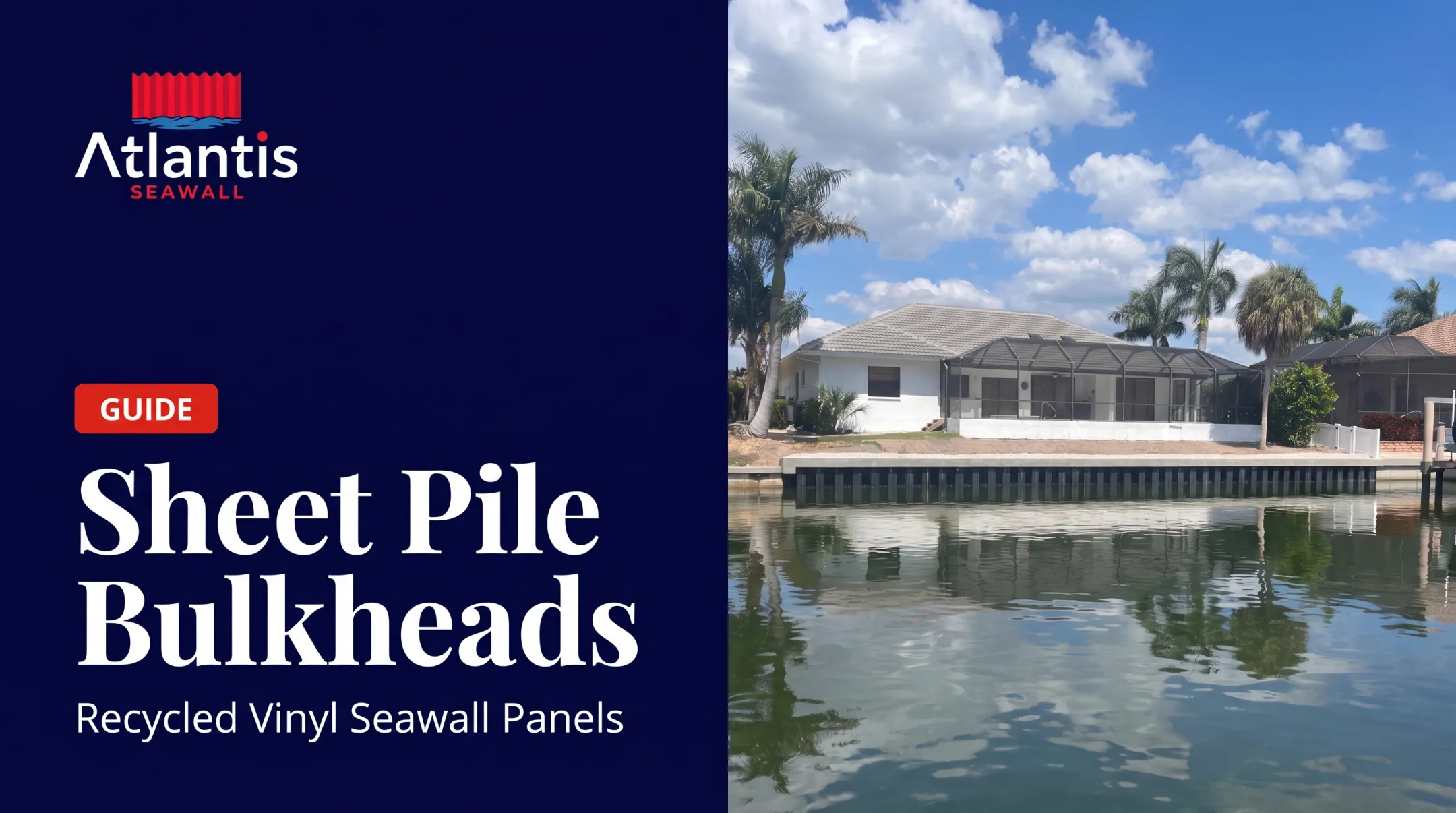
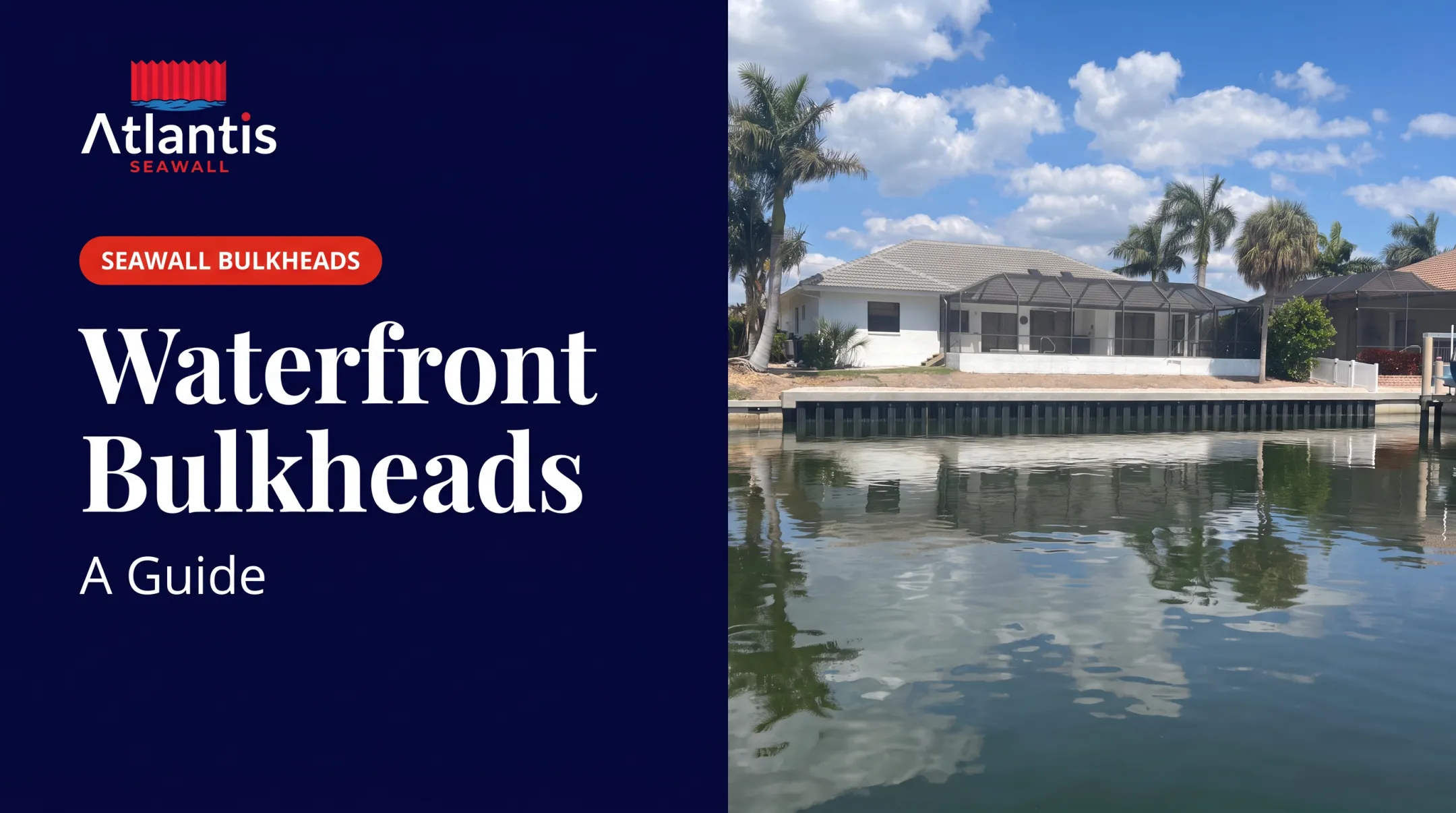
- Protected canals and quiet marinas
- Sheltered rivers
- Inland ponds
- Lakefront areas where the main need is bank stabilization
A bulkhead is usually the wrong choice where large waves are frequent, storms are severe, scour is substantial, or high-value infrastructure needs a structure built for more energy.

Limitations and alternatives
Common drawbacks include:
- Reflected wave energy
- Toe scour and end erosion
- Overtopping
- Habitat disruption
- Ongoing inspection and repair
Alternatives include vegetated or living shorelines, graded banks, riprap, and hybrid systems. Michigan Sea Grant cautions that softer options may not hold up in high-energy parts of the Great Lakes, so compare options site by site.
Planning a Bulkhead Project
Signs that an existing bulkhead needs evaluation
- Leaning, bowing, or wobbling
- Shifting panels or separated interlocks
- Rotting timber or severe rust
- Divots, sinkholes, or voids near the wall
- Soil loss or settlement behind it
- Exposed anchors or drainage problems
- Erosion at the ends
Photograph changes before and after major storms. Call a professional when you see movement, undermining, or rapid backfill loss. Sudden failures are possible.
Questions to answer before construction
- Which water body, and how do seasonal levels vary?
- How much wave or wake exposure and ice is there?
- What are the soil type, wall length, and wall height?
- What loads sit nearby?
- Can equipment reach the site?
- Where are property boundaries and existing structures?
- How will the shoreline be used?
Also consider appearance, maintenance expectations, future dock or landscaping work, and what a failure would cost.
Choosing a qualified marine construction partner
Look for:
- Shoreline experience on similar sites
- Site-specific recommendations
- Clear material specifications and installation scope
- Drainage details
- Warranty terms, insurance, and references
- Help navigating permits
A marine construction company may design, supply, install, repair, or coordinate waterfront work, but verify the services offered for your location. Licensing varies too. Florida, for instance, has a dedicated marine seawall contractor license, which isn't a national standard.
Frequently Asked Questions
What is a bulkhead in construction?
A shoreline bulkhead is a retaining wall that stabilizes the land-water edge and helps prevent soil loss. The design must match site conditions.
What is a marine construction company?
A marine construction company specializes in waterway structures and work such as bulkheads, seawalls, docks, pilings, shoreline stabilization, and waterfront repairs.
Is a bulkhead the same as a seawall?
Usually not. Bulkheads retain soil, while seawalls defend against waves and storms. Regional terminology overlaps, so look at the design purpose.
What materials are used to build a bulkhead?
Common options are timber, steel, concrete, and vinyl sheet piling. Selection depends on site forces, maintenance, design, and regulations.
How long does a bulkhead last?
Service life varies with material, water exposure, soil, ice, installation quality, storms, and maintenance. No reliable single figure applies across materials, so ask for site-specific guidance.
Do you need a permit to build a bulkhead?
Permits are commonly required for shoreline work but vary by location, water body, scope, and jurisdiction. Confirm requirements with local, state, and federal authorities before construction.